Comparing screw, spring, screwless, and pluggable PCB terminal blocks? This article breaks down cost, assembly speed, vibration resistance, and field serviceability to help you choose.
Walk through any industrial electronics production line, and you will see PCB terminal blocks on nearly half of all control boards and power modules.
Most design and procurement teams treat terminal blocks as simple commodity parts. They often pick the lowest-cost option and move on with the BOM. But this casual selection leads to real field issues.
The gap between screw, spring, screwless, and pluggable terminal blocks goes far beyond component cost. It impacts production efficiency, long-term equipment reliability, vibration tolerance, and years of on-site maintenance work.
This practical industrial comparison guide covers the four mainstream terminal block types. We use real manufacturing and field service perspectives to help you select the best option for your control cabinet and industrial equipment projects.
Overview of 4 Main PCB Terminal Block Types
Each terminal block design serves distinct production and field scenarios. Before detailed comparisons, we clarify the core working principles and industry search terms for each type.
Screw Terminal Blocks
This is the most traditional and widely used design. A metal clamp plate is driven by screw torque to firmly fix stripped wires. It features mature technology and full-spec coverage. Common industry search terms include “PCB screw terminal block” and “screw terminal block connector”.
Spring Terminal Blocks
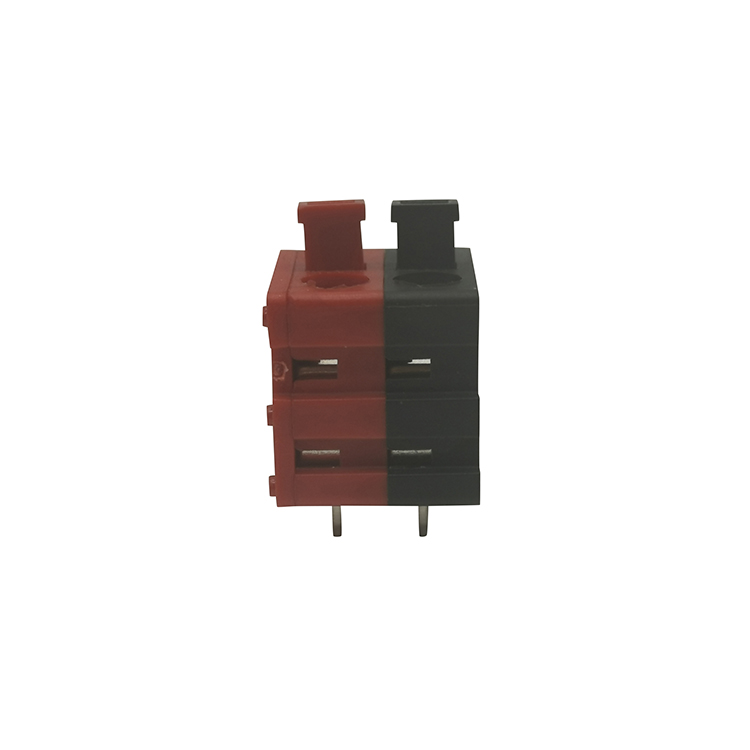
It replaces manual screw locking with a built-in spring cage. Wires are inserted against spring tension and fixed automatically. Most models require no tools, delivering fast and stable wiring.
Screwless Terminal Blocks
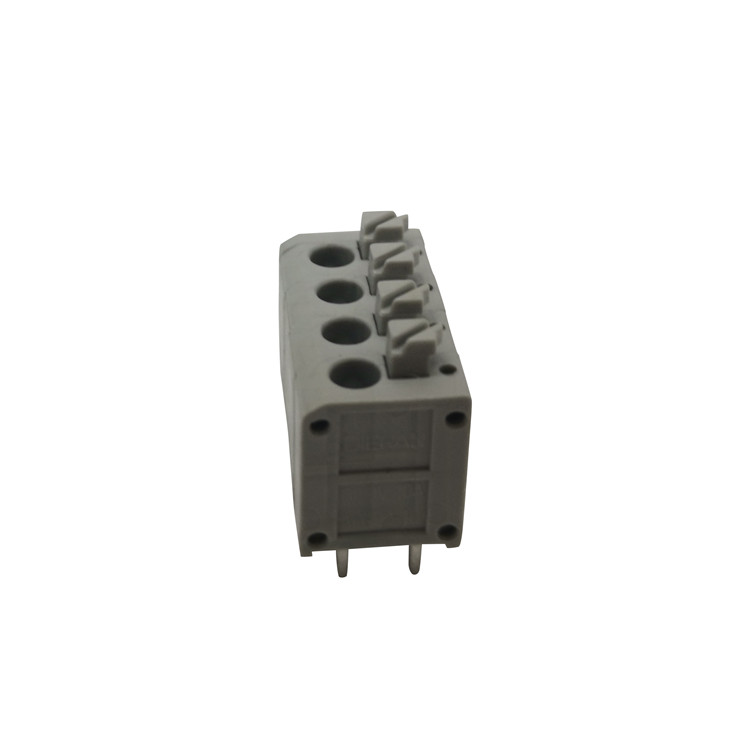
An upgraded iteration of spring-type structures, mostly operated by levers or push buttons. Open the lever, insert the wire, and close to lock. The keywords “screwless terminal block” and “screwless terminals” cover this full product series, ideal for high-efficiency wiring scenarios.
Pluggable Terminal Blocks
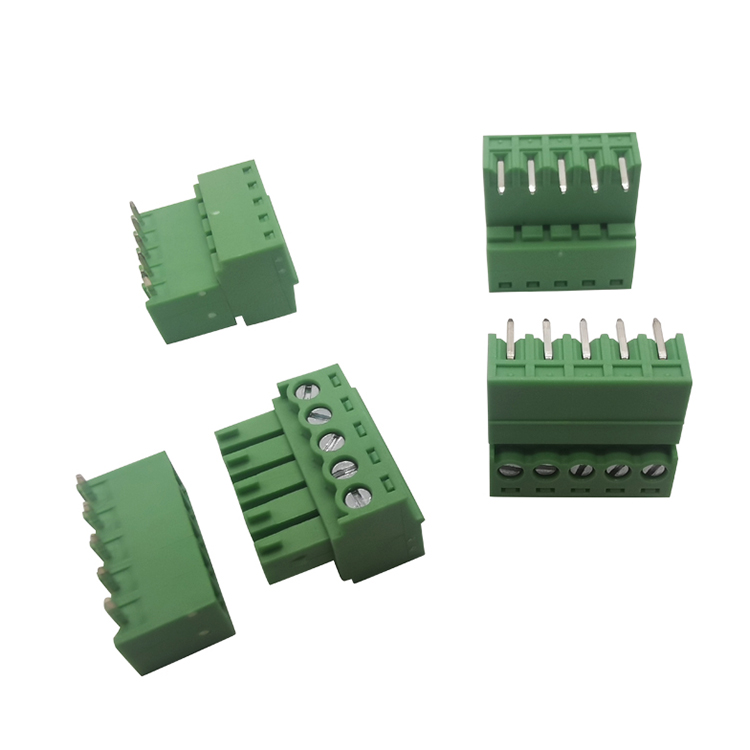
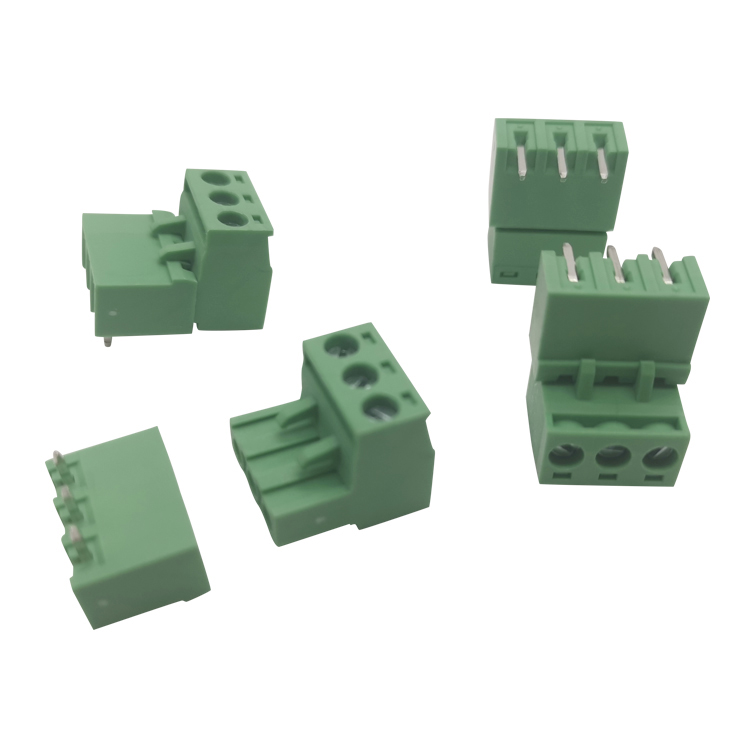
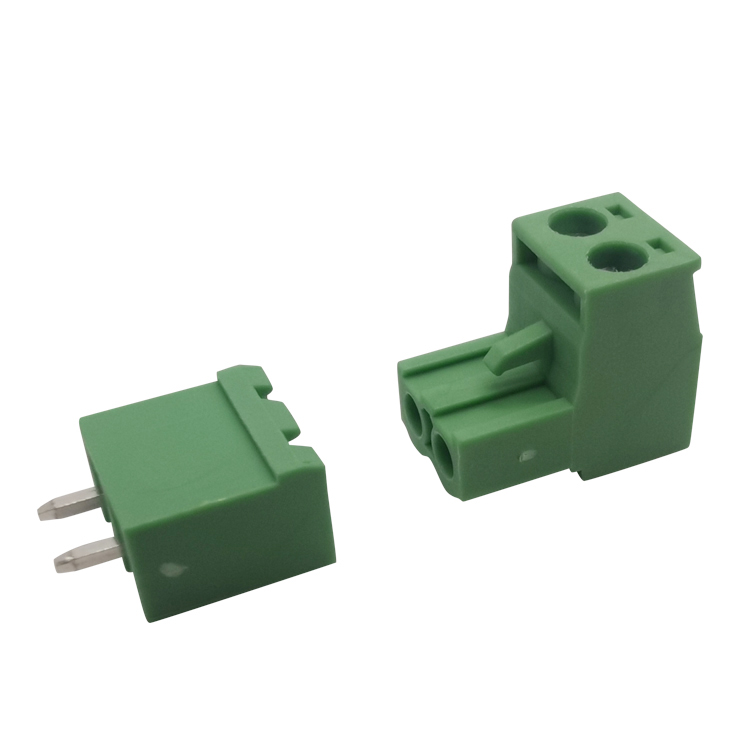
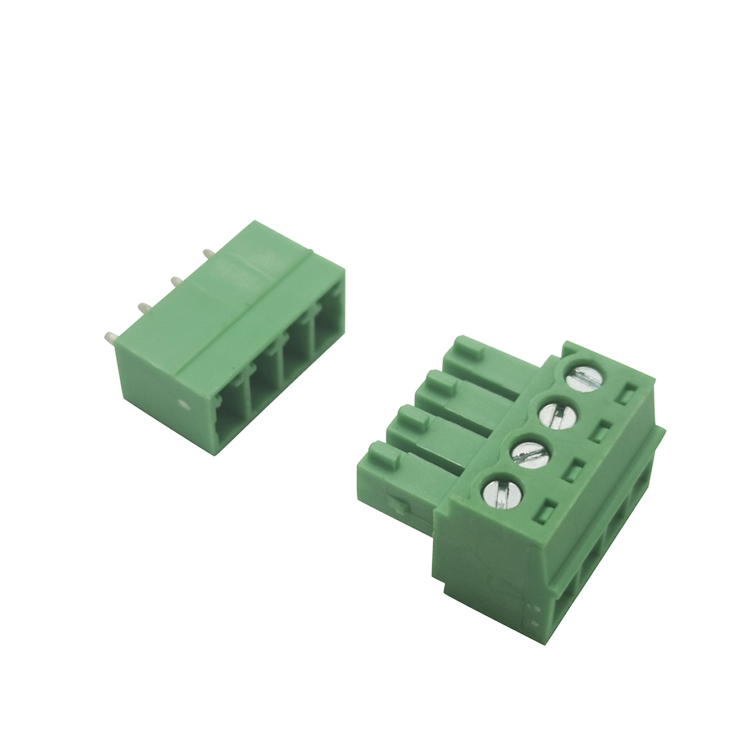
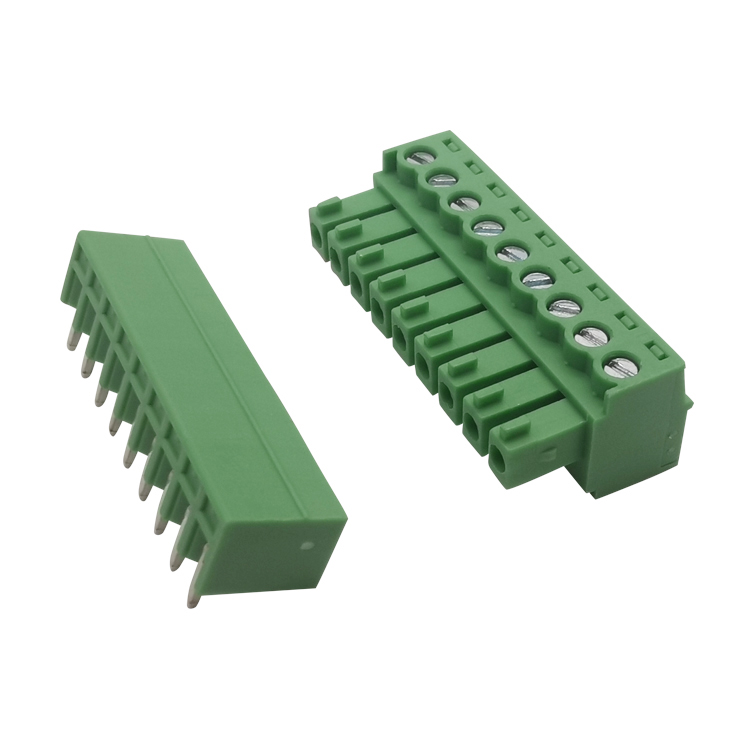
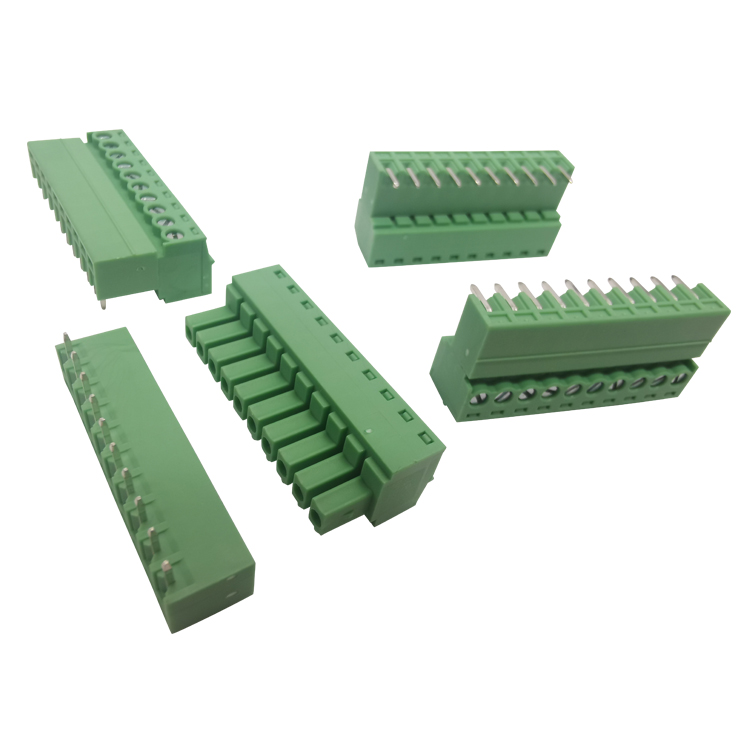
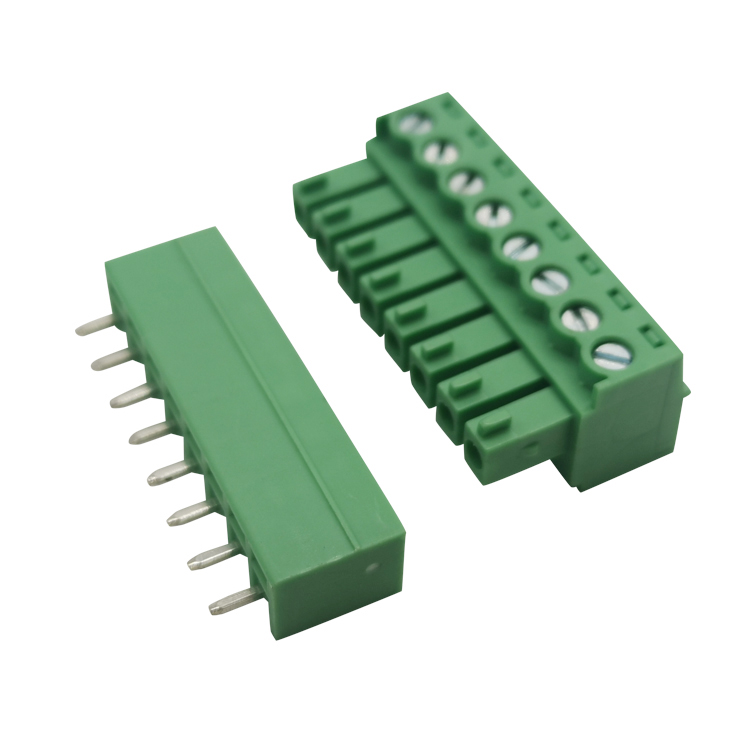
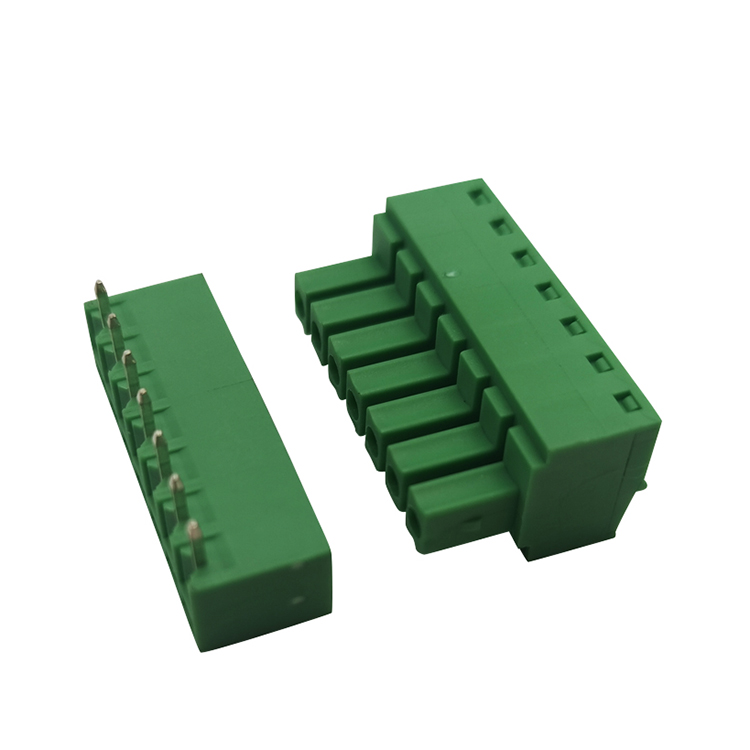
A two-piece separable structure, consisting of a PCB-soldered fixed header and a detachable wire plug. The entire wire harness can be plugged and unplugged as a whole without rewiring single cores. Popular search terms: “pluggable PCB terminal block” and “pluggable terminal block connector”.
Barrier Terminal Blocks
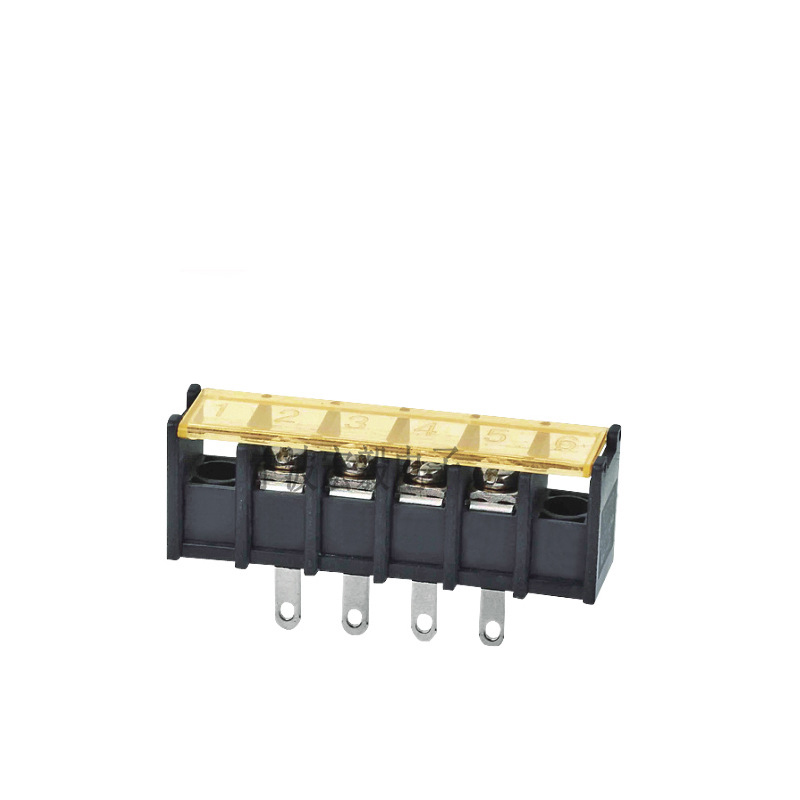
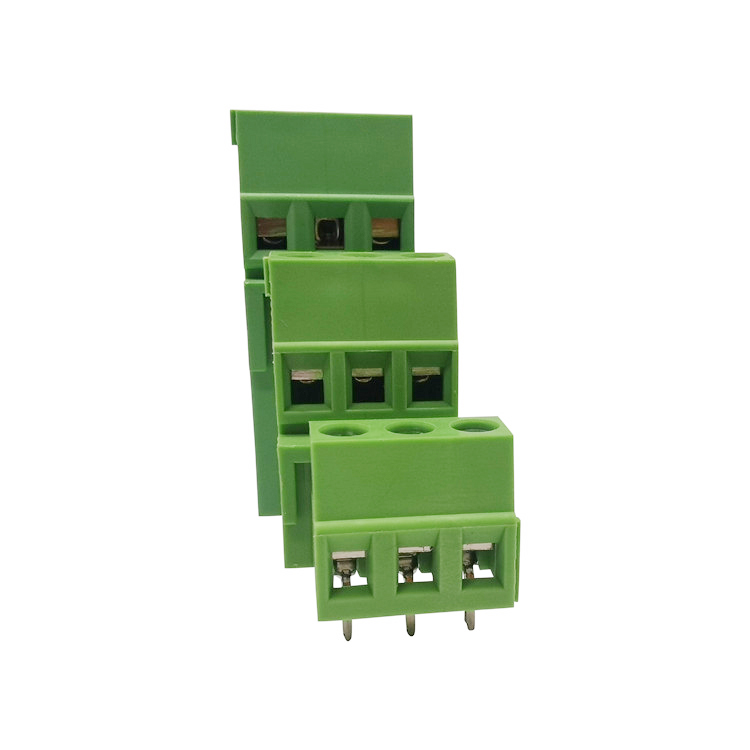
A specialized screw-type variant with independent plastic isolation barriers between adjacent poles. It provides sufficient creepage and clearance distance, tailored for high-voltage industrial power distribution scenarios. “Barrier screw terminal block” is a high-volume industrial search term.
Terminal Block Full-Dimension Comparison Table
For quick selection and BOM evaluation, we summarize core indicators including cost, assembly efficiency, vibration resistance, field maintainability, and wire compatibility of all mainstream models.
Terminal Block Type
Unit Cost Level
Assembly Speed
Vibration & Shock Resistance
Field Serviceability
Wire Gauge Tolerance
Best Industrial Application Scenarios
Screw Type
Lowest
Slowest (tool-dependent)
Average (prone to loose over time)
Poor (full wire re-termination required)
Wide (24–12 AWG, high tolerance)
High-volume low-cost equipment, static indoor control cabinets, cost-sensitive projects
Spring/Screwless Type
Medium (+20%~50% vs screw type)
Very fast (tool-free wiring)
Excellent (self-locking anti-vibration)
Medium (fast re-wiring, no integral disassembly)
Narrow (fixed diameter range only)
Mass production lines, motor equipment, vehicle-mounted/railway industrial devices
Pluggable Type
Highest (dual-part structure)
Fast wiring, slow initial assembly
Good (stable mating structure)
Excellent (one-click harness disassembly)
Depends on plug internal termination type
Field-maintained equipment, modular control boards, replaceable industrial modules
Barrier Screw Type
Medium-High
Slow manual assembly
Good (stable pressure-bearing structure)
Medium
Wide, suitable for high-current thick wires
High-voltage power distribution, motor control, new energy inverter equipment
Cost Analysis: Lowest Component Cost Does Not Equal Lowest Total Cost
Screw terminal blocks have the lowest single-unit cost. The mature structure and standardized production process make them the most cost-competitive option for high-volume BOM matching.
Spring and screwless terminal blocks cost 20% to 50% more per pole. The precision spring steel parts and customized plastic shells raise manufacturing costs.
Pluggable terminal blocks are the most expensive. They adopt a dual-body structure of header and plug, with stricter mating tolerance requirements.
From on-site engineering perspective, component unit cost is misleading. Screw blocks require manual screwdriver operation for each pole. For thousands of mass-produced boards, the accumulated labor costs far exceed the price difference of spring or screwless blocks. Choosing slightly more expensive tool-free models effectively reduces overall production costs.
Assembly Speed: Tool-Free Structures Dominate Mass Production
Assembly efficiency is the biggest advantage of non-screw terminal blocks.
For screw terminal blocks, every independent pole requires repeated operations: wire insertion, screwdriver tightening, and torque inspection. A 12-pin terminal block needs 12 independent tightening steps. This severely restricts beat speed on automated and manual assembly lines.
Spring terminal blocks support direct wire insertion and automatic clamping. Lever-style screwless blocks only need simple opening, wire feeding, and closing actions. Each wiring operation takes less than one second.
For high-volume industrial and commercial equipment, the labor savings brought by spring and screwless blocks completely offset the higher component cost. For small-batch customized cabinet equipment, the efficiency gap is negligible.
Vibration Resistance: The Most Underrated Reliability Indicator
Vibration and shock resistance directly determine the long-term stable operation of industrial equipment, which is easily ignored in early design.
Traditional screw connections suffer from micro-relaxation after long-term vibration. The clamping force slowly decays over thousands of operating hours, causing poor contact or open circuits. This fault is extremely common in motor drives, mobile mechanical equipment, and vehicle-mounted control cabinets.
Spring and screwless terminal blocks feature passive self-tightening structures. Vibration will not loosen the connection; instead, it makes the wire fitting more compact. This is why they are standard for railway, automotive, and heavy industrial vibration scenarios.
Screw blocks are only suitable for static indoor equipment with stable operating environments.
Field Serviceability: Pluggable Blocks Completely Optimize Maintenance
On-site board replacement and fault maintenance are the core pain points of after-sales engineering.
When screw or spring terminal block boards fail, technicians need to disassemble, mark, and sort each wire one by one. After replacing the new board, all wires must be re-terminated and calibrated. A 16-pin board replacement takes nearly 20 minutes, with high risk of wrong wiring and secondary faults.
Pluggable terminal blocks change the maintenance logic. The overall wire harness plug is separated from the PCB header in one step. Replace the new board and re-plug the integral harness. The whole process takes only 2 minutes, with zero risk of wire sequence errors.
The only tradeoff of pluggable structures is larger vertical board height. For control cabinets with limited internal space, the outline size must be verified in advance.
Wire Adaptability & High-Voltage Compliance Scenarios
Screw terminal blocks have the strongest wire compatibility. The adjustable clamping structure adapts to 24 AWG to 12 AWG wires, fitting different wiring specifications in multi-region installation scenarios.
Spring and screwless models have fixed wire diameter adaptation ranges. Ultra-thin wires cannot be clamped firmly, and ultra-thick wires cannot be inserted. Designers must strictly check the datasheet parameter range.
For high-voltage scenarios above mains voltage, conventional small-pitch terminal blocks cannot meet IEC and UL creepage and clearance standards. Barrier terminal blocks solve this problem through isolated plastic barriers and 7.5mm/7.62mm large pitch design, which is the mainstream compliant choice for power distribution and new energy inverter equipment.
Mainstream Manufacturer Selection & Supply Reference
Two brands dominate the global industrial terminal block market: Phoenix Contact and Degson.
Phoenix Contact is a German high-end brand with comprehensive product lines and high global recognition, widely used in high-standard industrial projects in Europe and America.
Degson provides full-spec, cost-effective terminal block products, with strong supply chain advantages in cost-sensitive global projects and Asian markets.
Both brands cover screw, spring, screwless, pluggable, and barrier series. When customizing non-standard parts, prioritize models compatible with these two mainstream standards to ensure secondary supply availability and avoid supply chain risks.
Practical Engineering Selection Rules
There is no universal best terminal block. The optimal choice depends on your equipment’s operating environment, production mode, and after-sales maintenance mode.
•Cost-sensitive high-volume static equipment: Choose screw terminal blocks for maximum cost performance.
•Mass production or vibration-prone equipment: Choose spring or screwless terminal blocks to improve efficiency and long-term reliability.
•Field-maintained modular equipment: Choose pluggable terminal blocks to greatly reduce after-sales labor costs and wiring faults.
•High-voltage power distribution and industrial power equipment: Choose barrier screw terminal blocks to meet safety isolation standards.
FAQs: Common Terminal Block Selection Questions From Engineers
Below are five frequently asked questions about PCB terminal block types, focused on real industrial design, production, and field maintenance concerns.
1. Are spring terminal blocks more reliable than screw terminal blocks for industrial equipment?
Spring terminal blocks deliver better long-term reliability in dynamic industrial environments. Screw-type blocks can lose clamping force over time due to equipment vibration and thermal cycling, leading to intermittent connection faults. Spring and screwless blocks maintain consistent clamping pressure passively, making them more reliable for motors, moving machinery, and vehicle-mounted control systems. For static indoor cabinet applications, properly torqued screw blocks remain sufficiently reliable.
2. Is it worth upgrading to pluggable terminal blocks for standard control boards?
Pluggable terminal blocks are worthwhile if your equipment requires on-site servicing, repair, or board replacement. Although they cost more and require extra vertical PCB space, they cut field maintenance time from 20+ minutes to under 2 minutes per board. They also eliminate human error from manual wire re-termination. For fixed, non-serviceable OEM boards with no after-sales replacement needs, standard screw or spring blocks are the more cost-effective option.
3. What is the biggest risk of using mismatched wire gauge on spring terminal blocks?
Spring terminal blocks have a strict fixed wire diameter range. Using overly thin wires causes insufficient clamping force, resulting in loose contacts and signal dropout under minor vibration. Using overly thick wires cannot fully insert into the spring cage, leading to exposed copper and short-circuit hazards. Unlike screw terminal blocks with high wire tolerance, spring models offer almost no on-site adjustment margin — always match the wire gauge to the datasheet specs.
4. When should I choose barrier terminal blocks instead of regular screw blocks?
Choose barrier terminal blocks for mains-level and high-voltage power distribution, motor control, and inverter designs. The isolated plastic barriers between poles extend creepage and clearance distances, fully complying with IEC and UL industrial safety standards. Regular screw terminal blocks with small pitches cannot meet high-voltage insulation requirements and face safety risks during long-term operation.
5. Do tool-free screwless terminal blocks reduce production quality stability?
No, standardized screwless lever-type terminal blocks improve production consistency. Screw block quality relies heavily on worker operation — inconsistent torque leads to uneven clamping force. Screwless structures adopt mechanical fixed positioning, ensuring every wire obtains identical clamping tension. This reduces batch production defects and is ideal for high-volume automated assembly lines.
For industrial equipment and control cabinet wiring, safety and stable power transmission are always the top priorities.
On high-power equipment and complex wiring systems, ordinary terminal blocks often bring hidden safety risks. This is why most field engineers prefer barrier terminal blocks for heavy-duty projects.
These terminals feature independent physical barrier walls between every wiring position. This simple but effective structure is specially designed for high-current scenarios. It greatly avoids short-circuit faults and improves the overall safety of equipment power circuits.
What Makes Barrier Terminal Blocks Different from Ordinary Terminals
Barrier terminal blocks are also known as American-style terminal strips. They adopt screw fastening connection methods. Every terminal point is separated by raised insulating barriers.
In actual on-site wiring, loose copper wire strands are very common during wire crimping and assembly. These tiny metal scraps easily touch adjacent terminals and cause short circuits after long-term equipment vibration.
The independent insulating barriers solve this practical problem perfectly. They physically isolate each circuit. This structure effectively cuts off the risk of cross-contact between wiring points.
Core Advantages of Barrier Terminal Blocks in Industrial Wiring
1. Higher Electrical Safety for Cabinet Wiring
The biggest advantage of PCB barrier terminal blocks is their integrated isolation barriers.
These barriers increase the creepage distance and electrical clearance between live parts. For high-voltage industrial equipment, sufficient insulation distance is essential. It keeps the circuit stable and safe during long-time operation, fully meeting industrial electrical safety standards.
In actual cabinet assembly, this design also reduces arc discharge and electric leakage risks caused by dense wiring.
2. Reliable High-Current Bearing Capacity
Miniature PCB connectors are only suitable for low-current signal transmission. They cannot bear long-term high-power load.
Barrier terminal blocks use thickened pure copper conductive contacts and reinforced screw structures. The contact is tight and stable. It does not loosen easily under continuous high current.
For industrial power lines and motor drive wiring, these terminals avoid overheating and burnout problems. They are the most practical choice for main power connection of mechanical equipment.
3. Tough Structure for Harsh Working Conditions
Most industrial control devices work in environments with vibration, dust and temperature changes.
Barrier terminal blocks are built with thick flame-retardant plastic shells and high-strength locking screws. The overall structure is sturdy and wear-resistant. It can adapt to long-term on-site use and repeated wiring maintenance.
Most models support optional transparent protective covers. In field application, this cover can prevent staff from accidentally touching live wires during debugging. It also blocks dust and metal debris from falling into the wiring gaps, extending the service life of terminal connections.
Common Industrial Application Scenarios
Barrier terminal blocks are widely used in equipment that requires high safety and stable power supply:
Power equipment: UPS uninterruptible power supply, switching power supply equipment
Industrial control: Heavy machinery control cabinets, motor driver equipment
Household electrical appliances: Large white household appliances that require stable mains connection
Transportation industry: Automotive power distribution panels, railway electrical control systems
How to Choose Suitable Barrier Terminal Blocks for Your Equipment
Engineers need to select terminals according to actual project design and cabinet layout. Here are the key selection points:
Single Row vs Double Row Terminals
Single-row barrier terminals save cabinet internal space with simple wiring. They fit equipment with fewer power circuits.
Double-row designs provide more wiring points in the same installation area. They are ideal for compact control cabinets with dense circuit requirements.
Rated Current Matching
This is the most critical selection standard. Always match the terminal rated current with the equipment’s actual maximum load current.
In actual engineering experience, do not run terminals at full load for a long time. Proper current margin can effectively prevent heating failure.
Installation Mode Selection
Choose PCB mount terminals if you need direct soldering on circuit boards.
Choose panel mount terminals for external cabinet wiring and on-site assembly wiring. Flexible installation types adapt to different equipment structural designs.
FAQ for Barrier Terminal Blocks
Q1: What is the function of the transparent cover of barrier terminal blocks?
A: The transparent protective cover is a very practical on-site accessory. It prevents accidental electric contact during equipment inspection and maintenance. Meanwhile, it isolates dust, iron filings and moisture in the workshop environment. It keeps the wiring terminals clean and ensures stable electrical performance for a long time.
Q2: Can barrier terminal blocks be used for signal wiring?
A: Although these terminals are mainly designed for power distribution circuits, they are also suitable for signal wiring in special working conditions.
For equipment with severe vibration or scenarios requiring strict circuit isolation, barrier terminals can avoid signal crosstalk and loose wiring. They provide more stable connection than ordinary signal terminals in harsh industrial environments.
Q3: Do you support customized barrier terminal blocks?
A: Yes, we are a professional terminal block manufacturer. We can customize terminal pole numbers, special mounting accessories and different pin pitches according to customer project requirements.
We support non-standard size modification and structural customization to perfectly match special control cabinet and equipment design needs.
Feature
Single-Row Barrier Terminal Blocks
Double-Row Barrier Terminal Blocks
Core Strength
Space-saving footprint, simple wiring layout
Higher connection density within limited PCB/panel space
Ideal Use Case
Designs with fewer connection points, tight linear layout
Multi-circuit power distribution where board space is constrained
Assembly Characteristics
Easier individual wire access during maintenance
Denser wiring, requires careful wire routing to avoid congestion
Cost Profile
Lower unit cost for low-channel configurations
Slightly higher cost, greater value for high I/O count designs
Stuck selecting PCB terminal blocks for your control cabinet or industrial equipment design? You’re not alone.
Most electrical and procurement engineers face the same issue. The BOM only lists “terminal block” with no specific specs. With dozens of types, pitch sizes, and pole counts available, picking the wrong model leads to assembly delays, field failures, and rework costs.
This hands-on guide skips textbook theory. It delivers real-world engineering knowledge to help you select the ideal PCB terminal block for industrial control boards, power supplies, and drive equipment. We’ll cover core types, standard pitch sizes, key selection rules, and common field mistakes to avoid.
What Is a PCB Terminal Block & Why It Matters
A PCB terminal block is a modular board-mounted connector. It secures electrical wires to a printed circuit board without soldering individual wires directly.
The working principle is simple. Wires are inserted into the block, then fixed via screw, spring, or lever clamping structure. Power and signals transmit through internal pins to the PCB.
While the structure looks basic, the clamping method and dimensional specs determine assembly efficiency, vibration resistance, current carrying capacity, and field serviceability.
Three core parameters define all PCB terminal blocks:
•Clamping mechanism: Screw, spring, screwless, or pluggable
•Pitch size: Center-to-center distance between adjacent poles (mm)
•Pole count: Number of independent circuits per block
Getting any parameter wrong causes practical issues. Poor fit with equipment housings, insufficient current tolerance, or slow production line assembly are all common on-site problems from improper selection.
PCB Terminal Block Types: Pros, Cons & Industrial Use Cases
Four types of terminal blocks dominate industrial cabinet and equipment design. Each has clear application boundaries. We’ve summarized their on-site advantages, drawbacks, and typical scenarios for quick comparison.
Terminal Block Type
Working Principle
Key Advantages (On-Site)
Common Drawbacks
Typical Industrial Applications
Screw Type
A metal plate presses and fixes stripped wires via screw torque
Low cost, ultra-reliable, compatible with wide wire gauge ranges, easy on-site maintenance
Slow manual assembly; loose connections easily occur under long-term vibration if torque is unstandardized
General power boards, fixed control cabinets, low-cost industrial equipment
Spring Type
Built-in spring cage clamps wires automatically after insertion
Tool-free quick wiring, excellent vibration resistance, stable long-term connection
Narrow wire gauge adaptation range, higher unit cost than screw types
Transportation equipment, vibration-prone machinery, industrial automation control boards
Screwless (Lever/Button)
Open via lever/button, insert wire, close to lock tightly
Zero tools needed, fastest field wiring, suitable for high-volume wiring scenarios
Higher procurement cost, limited applicability for ultra-thick wires
Building automation, lighting control systems, on-site batch wiring projects
Pluggable Type
Split structure: fixed PCB header + detachable wire plug
Board and wire harness separable, ultra-convenient for equipment maintenance and replacement
Higher cost, requires precise pitch matching for mating
Field-serviced equipment, replaceable control boards, modular industrial devices
Barrier Type
Independent plastic barrier between poles, screw + washer wire clamping
Strong insulation, high voltage resistance, durable heavy-duty performance
Large board footprint, bulky structure, slow assembly
Power distribution equipment, motor control boards, high-voltage industrial systems
Common Pitch Sizes: Specs, Capacity & Application Scenarios
Pitch size is the core dimension affecting board layout, wire compatibility, current load, and insulation clearance. For industrial design, pitch selection directly determines equipment safety and space utilization.
Standard Pitch Size
Core Performance Features
Current & Voltage Level
On-Site Application Scenarios
2.54mm (0.1")
Minimum standard pitch, compact footprint
Low current, signal level only
Small signal control boards, sensor signal transmission, space-constrained low-power equipment
3.5mm / 3.81mm (0.15")
Most versatile industrial pitch, balanced size and performance
Medium low current, general industrial voltage
Universal industrial control boards, PLC peripheral modules, standard cabinet signal and power integration circuits
5.0mm / 5.08mm (0.2")
Supports thicker wires, higher load capacity
Medium current, conventional power voltage
Switching power supplies, inverters, motor drive boards, industrial power modules
7.5mm / 7.62mm
Maximum creepage & clearance distance, strong insulation
High current & high voltage
High-power industrial equipment, heavy machinery control, high-voltage power distribution terminals
Field engineer quick rule: For 90% of general industrial PCB designs, choose 3.81mm or 5.08mm pitch. Select 2.54mm only for compact signal circuits, and 7.5mm+ exclusively for high-power, high-voltage loads.
Pole Count Selection: Match Circuit Design & On-Site Maintainability
Pole count refers to the number of independent circuits in one terminal block. Standard industrial stock models range from 2P to 16P, with 2/3/4/6/8/12P being the most common and readily available.
Basic pole count matching logic:
- 2P: Single circuit (positive/negative, line/neutral)
- 3P: Power circuit with ground wire or three-phase single loop
- 4P+: Multi-group signal circuits or three-phase + ground integrated circuits
Two practical on-site tips for pole count selection:
First, do not over-rely on single high-pole blocks. A 12P block can be replaced with two 6P blocks. Split design makes on-site wiring, troubleshooting, and component replacement much easier.
Second, prioritize modular stackable models. Most screw and pluggable terminal blocks support free combination of 2P/3P/4P units. This flexible combination adapts to multi-SKU equipment with different I/O counts and reduces inventory pressure.
Step-by-Step Terminal Block Selection Flow for Industrial Design
Follow this engineering-oriented selection process for new board designs to avoid matching errors:
1. Confirm current and voltage load first
Load parameters determine pitch size. Below 10A low-voltage scenarios apply 2.54mm–3.81mm pitch. For currents above 15A, strictly choose 5.08mm or 7.62mm high-load pitches to avoid overheating and burnout.
2. Verify wire gauge compatibility
Check the datasheet’s wire gauge range (most cover 12–24 AWG). Focus on the maximum on-site wire thickness to ensure full clamping and avoid poor contact from mismatched gauges.
3. Match production and assembly conditions
For mass production and high-efficiency wiring projects, select spring or screwless terminal blocks to cut manual working hours. For cost-sensitive standard equipment, traditional screw blocks are the most cost-effective option.
4. Consider field maintenance requirements
If the control board needs regular replacement, debugging, or after-sales maintenance, invest in pluggable terminal blocks. The wire harness stays fixed on-site, and only the PCB is replaced, greatly shortening maintenance downtime.
5. Check equipment vibration environment
Motor equipment, mobile machinery, and vehicle-mounted industrial devices cannot use ordinary screw terminal blocks (prone to loose wires from vibration). Spring and screwless clamping structures provide persistent fastening force for stable long-term operation.
6. Confirm supply availability
Stick to mainstream models from reliable brands like Phoenix Contact and Degson. Prioritize standard pitch and pole count stock parts. Custom non-standard specs lead to long lead times and inconvenient after-sales replacement.
FAQs About PCB Terminal Blocks for Industrial Designs
Below are five frequently asked questions from control cabinet designers and equipment procurement engineers, focusing on real on-site selection and wiring pain points.
1. What is the most universal PCB terminal block pitch for industrial control boards?
3.81mm and 5.08mm are the two most universal pitch sizes for industrial applications. 3.81mm works for most signal and low-power circuits under 10A, while 5.08mm covers medium-current power circuits for inverters, power supplies, and motor drives. These two sizes fit nearly all standard control cabinet layouts and avoid space or current load issues for general-purpose designs.
2. Are pluggable terminal blocks worth the extra cost?
Pluggable terminal blocks deliver clear value for field-serviced equipment. Though more expensive than standard screw blocks, they separate the wire harness from the PCB, allowing fast board replacement and on-site debugging without rewiring. They effectively reduce equipment downtime and after-sales labor costs, making them cost-effective for modular industrial devices and frequently maintained control systems.
3. Which terminal block type is best for high-vibration industrial environments?
Spring and screwless terminal blocks are the top choices for vibration-prone scenarios such as motor equipment, mobile machinery, and vehicle-mounted industrial devices. Traditional screw terminal blocks tend to loosen after long-term vibration due to torque decay. Spring-loaded clamping structures provide constant, stable fastening force to prevent loose wiring and intermittent circuit faults.
4. Can I mix different pitch sizes on the same PCB?
It is not recommended. Similar pitch sizes (3.5mm vs 3.81mm, 5.0mm vs 5.08mm) look visually identical but have non-interchangeable pin spacing. Mixed pitches will cause mating failure for pluggable headers, lead to assembly errors, and even result in short circuits. Always unify pitch specs for consistent wiring and assembly compatibility on a single board.
5. What pole count should I choose for custom industrial PCBs?
Prioritize standard stock pole counts (2/3/4/6/8/12P) and avoid special odd-pin models. For complex multi-circuit boards, split a single high-pole block (e.g., 12P) into multiple low-pole modular blocks. This design improves on-site wiring clarity, simplifies troubleshooting, and supports flexible combination for multi-SKU equipment to reduce inventory costs.
6 Common On-Site Selection & Wiring Mistakes to Avoid
Most terminal block failures occur not in the lab, but in long-term field operation. These are the most frequent engineering errors:
- Ignoring standard wire strip length: Too short stripping causes insufficient clamping; too long stripping exposes bare copper, bringing short-circuit risks. Always follow the datasheet’s recommended strip size.
- Mixing similar pitch sizes: 3.5mm and 3.81mm blocks look identical visually, but mismatched pitches cause pluggable header mating failure and assembly scrap.
- Reserving insufficient wiring space: Neglecting wire bending radius leads to no operating space for on-site wiring when terminal blocks are too close to housings or capacitors.
- Overtightening screw terminals: Excessive torque breaks wire strands and cracks plastic housings. Strictly follow the standard torque value in the official datasheet.
- Unmatched pole count redundancy: Blindly using high-pole blocks causes wiring chaos and wasted board space.
- Ignoring vibration resistance grade: Using ordinary blocks for vibrating equipment leads to intermittent circuit failures after months of operation.
Final Engineering Takeaway
PCB terminal blocks are humble but critical components for industrial control equipment. They are the key interface between PCBs and on-site electrical wiring.
Improper selection does not cause immediate failure in testing. It triggers hidden troubles like loose wiring, poor contact, and equipment shutdown after long-term field operation. The time spent on precise terminal block selection in the design stage is far less than the cost of on-site after-sales maintenance and product rework.
In modern manufacturing and control cabinet production, wiring efficiency directly impacts project lead time and on-site delivery. Traditional screw-type terminal blocks rely on manual screw tightening for every wire connection. For complex PCB layouts and large control panels, this repetitive work consumes massive labor hours and slows down overall assembly progress.
Screwless terminal blocks have solved this industry pain point perfectly. Powered by precision spring tension technology, they cut down on-site wiring time significantly. More importantly, they deliver far better vibration resistance and long-term connection stability compared with conventional screw terminals, making them a future-oriented wiring solution for industrial equipment.
How Do Screwless Terminal Blocks Work?
Screwless terminal blocks, also known as spring terminal blocks or push-in terminal blocks, eliminate the traditional screw fastening structure entirely. They adopt high-strength stainless steel spring components as the core clamping structure.
During on-site wiring, operators only need to insert stripped wires into the terminal holes. The built-in spring will automatically apply stable, constant pressure to lock the wire tightly against the conductive strip. This realizes fast, tool-free wiring and creates a reliable conductive connection.
Why Upgrade to Screwless Wiring Technology?
Most cabinet manufacturers and equipment engineers switch to screwless terminals for three core practical benefits, which address the most common pain points of traditional wiring:
1. Dramatically Faster On-Site Assembly
Speed is the biggest advantage of push-in screwless terminals. Traditional screw terminals require aligning wires, tightening screws, and checking fastening tension one by one — a tedious process for mass production.
Screwless terminals support direct wire pushing without any tools. Field test data from our assembly teams shows this solution reduces wiring time by up to 50%. It greatly improves production efficiency for batch control cabinet assembly and equipment wiring work.
2. Zero Maintenance Long-Term Reliability
Loose wiring is one of the most common on-site equipment faults. Screw-type terminals are prone to loosening under long-term equipment vibration and alternating temperature changes. Loose contacts will cause heating, poor conduction, and even unexpected equipment shutdowns.
The spring structure of screwless terminals provides continuous dynamic clamping force. The tension stays stable all year round, no matter in high-frequency vibration environments or temperature fluctuation scenarios. Engineers do not need to re-tighten terminals during regular equipment maintenance, saving long-term after-sales labor costs.
3. Ultra-Compact Design for High-Density Layout
Screw terminals require reserved space for screw heads and tool operation, which limits PCB layout density. SMD screwless terminal blocks remove bulky screw structures completely. They feature an ultra-low profile and ultra-small footprint.
This compact design is ideal for high-density PCBs, mini control devices, and LED lighting equipment with limited internal space, helping designers optimize cabinet and product structure layout.
Screwless vs Screw Terminal Blocks: Core Performance Comparison
To help engineers quickly select the right terminal blocks for project design, we sorted out a practical on-site performance comparison of the two mainstream wiring solutions:
Comparison Item
Screwless Terminal Blocks
Traditional Screw Terminal Blocks
Wiring Speed
Fast, tool-free push-in installation, 50% time saved
Slow, requires manual screw tightening for each wire
Vibration Resistance
Excellent, constant spring tension prevents loosening
Poor, screws loosen easily under long-term vibration
Subsequent Maintenance
Zero maintenance, no re-tightening required
Regular inspection and re-tightening necessary
Space Occupancy
Ultra-compact, suitable for high-density layout
Large space occupation, limited miniaturization
Service Life Stability
Long-term stable clamping force, low failure rate
Prone to aging and loose contact after long-term use
Typical Application Scenarios
Thanks to efficient wiring and stable anti-vibration performance, screwless terminal blocks have become the standard preferred solution for multiple industries:
- LED Lighting: LED drivers, modular lighting systems, and commercial lighting fixtures
- Smart Home Devices: Security alarm systems, smart thermostats, and IoT terminal equipment
- Telecommunication Equipment: Network routers, communication power supply modules, and signal transmission devices
- Vibration-Prone Machinery: Wind power equipment, elevator control systems, and rail transit electrical panels
Key Selection Guide for Screwless Terminal Blocks
When purchasing screwless PCB terminals for equipment projects, engineers can focus on three core indicators to avoid on-site wiring failures:
1. Operation Mode
Two mainstream types are available in the market: tool-operated and button-operated. Tool-type terminals need a flat screwdriver to pry open the spring for wire insertion and removal. Button-type terminals support fully tool-free wire release, offering more convenient on-site operation and higher maintenance efficiency.
2. Mounting Technology
Choose THT (Through-Hole Technology) terminals for traditional plug-in assembly processes. Select SMD (Surface Mount Technology) terminals for automated SMT production lines. Matching the mounting type with your production process can greatly improve assembly efficiency.
3. Wire Stripping Length
This is a detail easily ignored in on-site construction. Each screwless terminal has a standard stripping length. Strictly following the manufacturer’s recommended size ensures the spring clamps the wire core fully. Too short or too long stripping will cause poor contact or hidden safety hazards.
FAQ About Screwless Terminal Blocks
Q1: Are screwless terminal blocks safe in high-vibration environments?
Yes, they are safer and more stable than traditional screw terminals in vibration scenarios. The stainless steel spring provides continuous dynamic clamping force. It will not loosen with equipment vibration. In contrast, screw terminals will gradually lose tension over time, leading to loose connections and equipment faults.
Q2: Can stranded flexible wires be used for push-in screwless terminals?
Yes, but you need to follow standard construction specifications. For tool-free direct push-in installation, you must crimp a ferrule terminal on the stranded wire. If no ferrule is equipped, you need to press the release button or pry open the spring with a tool before inserting the bare stranded wire to ensure a firm connection.
Q3: Are screwless terminal blocks reusable?
Absolutely reusable. You can release the spring mechanism via the integrated button or a small screwdriver to pull out the wires easily. The spring structure will not be damaged after repeated disassembly and wiring. It supports multiple rewiring and maintenance operations, reducing equipment upgrade and modification costs.
Whether it’s EV charging stations for new energy vehicles,or large power cabinets in regular factories,safe electrical connection always comes first.
Loose wiring is a huge hidden risk.It causes random shutdowns.It leads to local overheating.In the worst cases, it even sparks fire hazards.
Below we break down how to pick the right terminal blocksfor different working conditions.
1. Ideal choice for high power and high voltage use
Heavy-duty power cabinets often run with thick wiresand sudden high current surges.In these scenarios, barrier screw terminal blocksstill stay as the most reliable option.
It features raised insulated baffles on every pole.This simple structure stops messy wires and stray debrisfrom causing short circuits.
For three-phase main power input,engineers widely use standard 3 pole terminal blocks.Strong screw clamping force holds wires firmly in place.It keeps high current stable,and greatly cuts down overheating risks.
2. Vibration resistance and tool-free wiring, the new mainstream
Many devices work under continuous strong vibration.Wind power units, heavy industrial machinery, you name it.Standard screw terminals will slowly loosen over time,purely from constant shaking.
This is why spring terminal blocks are getting more popular.Built-in high-toughness springs deliver steady, lasting pressure.Wires stay locked tight all the time, no loosening at all.
This screwless design saves plenty of on-site work.Workers don’t need to keep checking and tightening screws.No routine re-tightening work later on.It speeds up field installation and daily maintenance a lot.
3. Smart purchasing tips and reasonable cost control
If you manage procurement for smart buildingsor large-scale lighting projects,bulk sourcing cost-effective low-voltage terminal blocksis an easy way to keep your budget under control.
Unstable product quality always brings extra rework cost.It’s smarter to team up with a qualified terminal block wholesaler.Look for suppliers with full product lines and complete certifications.
Long-term cooperation lets you finish one-stop purchasing.It also meets the complicated power distribution needsof modern building systems.
Industrial automation. Smart control board design.
What’s most important?
Fast installation. Easy maintenance later.
That’s the core need.
Old connection methods? They’re on their way out.Engineers? They want easy, time-saving electronic connections.No more hassle.
This guide? It tells you briefly.How to pick the right parts for your industrial design project.Simple, no fancy stuff.
1. Ditch the hassle, go for plug-in design
Back in the day, lots of old equipment used PCB screw connectors.Yeah, they’re cheap.But fixing them later? Such a pain. So time-consuming.
Electricians on site? They have to take out every wire one by one.In tiny spaces. So frustrating.
Now? Plug-in terminal blocks fix this problem.Plug and play. Done.
They save so much time on the production line.When equipment breaks? Swap it in seconds. Hot swap too.Maintenance costs drop a lot. A whole lot.
2. How to pick the key specs?
Designing a circuit board?Matching the physical specs right is super important.No mistakes here.
First, pick the pitch.A standard PCB mount terminal block factory?The pin pitch decides two things.Max voltage it can handle. And how much panel space it takes.
Industrial control? 5.08 mm terminal blocks are still the best.Why? Good electrical safety clearance. Great creepage performance.They’re the gold standard for automation equipment right now.Everyone uses them.
Then, the number of poles.Three-phase power control? Signal transmission with separate grounding?Terminal block 4 pin is the most common.Buys the most often.Fits most regular wiring logic. Neat and perfect.
3. Tips for efficient supply chain purchasing
Global market is tough. Competitive.Batch stability of products? It decides the final quality.
To make sure your equipment meets international safety certifications?More buyers skip middlemen.They go straight to pluggable terminal block manufacturers.The ones with their own testing labs.Buy in bulk directly.
Working with the source factory?No more late deliveries. Stable lead times.And you can make sure the plastic housing has good flame retardant rating.Metal contacts last long, too. Conduct well, no issues.
Time is everything in modern industrial automation.When equipment goes down — whether it’s a motor control center, PLC module, or power panel —it costs real money.
That’s why industrial pluggable terminal blocks have become the top choice for engineers.They’ve completely changed how machines get installed and maintained.This article shows why your next automation project should use pluggable design.
1. Real modular design. Plug and play, simple.
With old wiring, replacing a broken module means removing every wire one by one.It takes time.And people often wire things wrong.
But with good plug-in terminal block connectors,you can pull out a whole control board or sensor in seconds and swap it.This works really well in spring terminal block applications.Faster assembly.Easier on-site maintenance.
2. Handle high loads and motor control
Industrial sites use high voltage and high current.Regular terminals can overheat or even fail under constant heavy use.
That’s why a dedicated pluggable terminal block for motor control is so important.They use high-purity conductive materials and strong housings.Perfect for servo motors and inverters.
For industrial boards that need extra strength,heavy duty PCB mount terminal blocks keep good contact even under strong vibration.
Why choose Homnecks as your industrial connection supplier?
In industrial control, there’s almost no room for mistakes.You need a highly reliable custom terminal block factory in your supply chain.
Homnecks has years of experience making industrial connectors.Our pluggable terminals go through strict testing: temperature rise, flame resistance, plug life.Built for the highest standards in automation.
We offer standard wholesale and custom solutions.As a source factory, we give you great quality at a good price.
Get our industrial automation selection guide today.
Standard parts work for 80% of cases.But if your R&D team is designing a new, breakthrough hardware product?Off-the-shelf connectors won’t fit.Not your PCB layout. Not your design.
That’s when you need an OEM pluggable terminal block factory.One with strong engineering skills.It’s the key to getting your product to market faster.Faster, way faster.
1. Break free from standard sizes and structures
Compact devices. Odd-shaped PCBs.They always run out of wiring space. Always.
A good factory? They don’t just do standard 5.08mm or 3.81mm pitch.Give them your Gerber files.They’ll redesign pin length. Bend angles. Even multi-layer stacking.
This custom pluggable PCB terminal blocks service?Game-changer.Hardware engineers don’t have to change their perfect circuit designjust to fit a terminal block.No more compromising.
2. Color coding and anti-misplug design
Complex control cabinets?Wiring mistakes are the main reason tests fail.So annoying.
With custom services?You can order custom color plug-in terminal blocks.Special printing. Specific colors.Green for power. Blue for signals. Whatever you need.
Even add unique physical keying on plugs and sockets.No more wrong connections.Installers won’t mess up. At all.
3. Fast response from concept to mass production
Need an OEM PCB mount terminal block with stronger clamping force?Or a bespoke spring terminal block with special vibration resistance?
Factories with in-house mold shops?They cut prototype time way down.Way down.
So your product can finish prototype testing on time.Smoothly move to mass production.No delays. No hold-ups.
Work with Homnecks: Turn Your Connection Idea into Reality
Homnecks isn’t just a standard parts supplier.We’re an extension of your R&D team.Really.
We have experienced structural engineers.Advanced mold processing centers.
Need to tweak an existing product?Or design a fully customized screwless terminal block from scratch?We do it fast. We do it right.Top-notch OEM/ODM services.
Go to www.homnecksterminal.com.Contact our engineering support team.Let’s talk about your next innovative project.We’ll build the perfect custom connection solution for you.Easy. No hassle.
I. What is the Pitch?
Pitch means the distance between the center points of two adjacent pole,
Here is the normally pitch : such as 7.62mm, 9.5mm, 11.0mm, 13.0mm, and 15.0mm.
In isolated HOMNECKS screw terminal blocks, HONG YI ELECTRONIC pitch determines the insulation distance between HOMNECKS terminal blocks,the current carrying capacity, installation space layout, and safety certification standards.
II. Why is Pitch Crucial for High-Current Applications?
1. Creepage Distance and Electrical Safety:
larger pitch means bigger physical distance, for terminal block,HONG YI ELECTRONIC help product to improve creepage distance and clearance, reducing the risk of short circuits.
2. HONG YI ELECTRONIC Determines Current Carrying Capacity: A larger pitch typically means thicker copper components and stronger contact pressure, thus supporting higher currents.
3. HONG YI ELECTRONIC Affects Heat Dissipation and Long-Term Reliability: A suitable pitch helps dissipate heat, reduces temperature rise, and extends product life.
4.Affects Overall Equipment Layout Design: HONG YI ELECTRONIC Pitch directly affects the space utilization of the control cabinet, PCB size, and mounting hole layout.
III. Typical Current Ranges for Different Pitches
7.62mm: 20A–30A
9.5mm: 30A–50A
11.0mm: 50A–75A
13.0mm and above: 75A–150A
Actual selection needs to be confirmed based on specific structural design and material specifications.
IV. Engineering Selection Recommendations
Step 1: Confirm the maximum continuous current.
Step 2: Confirm the system voltage level.
Step 3: Assess environmental factors (humidity, dust, vibration).
Step 4: certification (UL, CE, etc.).
V. Common Misconceptions in B2B Procurement
• Focusing only on price while ignoring pitch
• Considering only rated current while ignoring temperature rise
• Ignoring the impact of long-term load
• Failing to calculate installation space
VI. Summary
Pitch is not only a structural dimensional parameter, but also a key indicator of electrical safety, heat dissipation performance, and system reliability.
For our customer, HONG YI ELECTRONIC choosing the right pitch to reduce after-sales risks, improve product stability, and enhance market competitiveness.
Sourcing electronic parts for industrial manufacturing? Its a big deal.Pluggable PCB terminal blocks are one of the most important components.They balance stable wire connections and easy maintenance—quick to disconnect when you need to fix things.
But there are hundreds of suppliers out there.Finding a reliable pluggable PCB terminal block factory?Super confusing, right?
If you’re stuck on how to choose plug-in terminal blocks,this guide tells you what to look for when picking a manufacturing partner.
1. Check material quality + customization ability
When you’re looking for a direct terminal block factory for wholesale,don’t just go for the cheapest price. Don’t do it.
Good factories use high-grade copper alloy for the contacts.And flame-retardant plastic—like PA66 that meets UL94V-0—for the housing.
Your project might need a specific pitch, color, or silk screen.A good custom pluggable PCB terminal blocks supplier?They have their own R&D and mold departments.So they can handle those custom needs. No hassle.
2. How wide and deep is their product line?
Top manufacturers have a variety of products.For different engineering uses, you know?From standard PCB mount terminal block headers,to high current pluggable terminal blocks for high-power equipment.
A full product line means they have mature production processes.And real technical experience—no fly-by-night operation.
3. Skip middlemen, work directly with the factory
A lot of companies accidentally buy from trading companies, not the actual factory.Bad idea.
Choose a good China PCB mount terminal block manufacturer directly.You’ll get smoother communication.Stricter quality control.And factory-direct prices.That cuts your BOM cost a lot. A real money-saver.
Why Homnecks is your go-to manufacturing partner
Looking for a supplier that checks all these boxes?It takes forever.
But at Homnecks? We’re a leading terminal block factory.We care about quality and innovation—seriously.We make tough, durable pluggable PCB terminal blocks and plug-in terminal blocks.For customers all over the world.
We have our own testing lab. Automated production lines.And prices that are hard to beat.We keep your supply chain running smoothly.And your products working perfectly.
Contact Homnecks’sales team today.Get a competitive quote. Or a custom solution for your specific PCB design.
In the world of power electronics and industrial controls, even one tiny component failure can lead to catastrophic results, ranging from ruined equipment to hazardous electrical fires. When you are sourcing connectors for new control boards, cutting corners on safety is a risk that your business simply cannot afford to take.
While good conductivity is essential, it is not enough on its own. The quality terminal block factory you choose must adhere to rigorous international safety regulations to ensure long-term stability. This guide will walk you through the critical tests and certifications that define a high-performance, reliable terminal block.
1. Flame-Retardant Materials: Your First Line of Defense
During a current overload or a short circuit, the terminal's plastic shell must be capable of self-extinguishing to prevent fire from spreading. Leading factories prioritize the use of PA66 with a UL94V-0 flame rating as a non-negotiable standard for both traditional screw terminals and modern spring terminal blocks.
A high-quality housing is engineered to withstand an 850°C glow-wire test without issue. By stopping fire at the source, these materials keep the entire power cabinet secure, providing a truly safe environment for sensitive electronic components.
2. Why UL and CE Certifications are Non-Negotiable
Selling equipment to North America or Europe without certified parts poses a massive risk at customs and within the legal market. Using UL-listed pluggable PCB terminal blocks ensures that your product has passed tough evaluations for temperature rise, electrical clearance, and tracking index.
Similarly, a CE-certified plug-in terminal block is your essential ticket to the EU market, confirming that your equipment meets the stringent requirements of the Low Voltage Directive (LVD). Without these marks, international expansion becomes nearly impossible.
3. Managing High Current with Temperature Rise Testing
Running a terminal at high load for extended periods requires that the contacts remain cool to avoid thermal failure. For industrial applications demanding high current, it is vital to use pcb mount screw terminal blocks that have been validated through repeated temperature rise cycles.
Our high-grade copper contacts are designed to resist loosening caused by constant heating and cooling. This structural integrity prevents bad connections and ensures zero-failure performance in even the harshest electrical environments.
Homnecks: Safety Built into Every Connection
Homnecks is a globally trusted screwless terminal block manufacturer dedicated to quality and safety. All our products listed on www.homnecksterminal.com undergo rigorous internal lab testing, including plug-in life tests, salt spray tests, and extreme thermal cycling.
No matter how tough your conditions, Homnecks delivers 100% compliant, reliable connections you can trust. Click here to view our certifications and technical specifications—let’s ensure your next project is safe and successful.
Homnecks Isolated terminal blocks vs Homnecks pluggable terminal blocks: Which is better suited for your high-current applications?
I. What is an Homnecks Isolation Terminal Block?
An isolation Homnecks terminal block is a Homnecks terminal structure with a physical isolation barrier, HONGYI ELECTRONIC effectively preventing short circuits between adjacent lines and improving insulation safety. It is commonly used in high-voltage, high-current, and harsh environment scenarios.
Key Features:
• Clear isolation barrier structure for enhanced insulation performance
• High current carrying capacity (typically 30A–150A or more)
• Excellent vibration resistance
• Suitable for power systems, frequency converters, and distribution equipment
II. What is a Homnecks Pluggable Terminal Block?
A pluggable Homnecks terminal block is a modular connection structure, HONGYI ELECTRONIC typically consisting of a male connector and a female connector, facilitating quick plugging and unplugging for maintenance.
Key Features:
• Supports quick installation and replacement
• Saves maintenance time
• Common spacing specifications such as 5.08mm and 7.62mm
• Suitable for medium current applications (typically 10A–40A)
III. Core Comparative Analysis for High Current Applications
Comparison Dimensions:
• Current carrying capacity: Isolated terminals have higher current carrying capacity
• Insulation safety: Isolated terminals are superior
• Vibration resistance: Homnecks Isolated terminals have stronger vibration resistance
• Maintenance efficiency: Homnecks Pluggable terminals have higher maintenance efficiency
• Suitable scenarios: High-power equipment vs. modular equipment
IV. How to Choose for High-Current Applications?
Situations where isolated Homnecks terminal blocks are recommended:
• Current exceeding 50A
• Environments with strong vibrations
• High-voltage power supply systems
• Extremely high safety requirements
Situations where pluggable terminal blocks are recommended:
• Current in the 10A–40A range
• Equipment requiring frequent maintenance or replacement
• Primarily for control signals
• PCB mounting structure
V. Key Technical Indicators for Engineer Selection
Focus on the following during selection:
• Rated Current
• Rated Voltage
• Contact Resistance
• Insulation Material Class (UL94 V-0)
• Operating Temperature Range
• Conductor Cross-sectional Area (AWG)
VI. Conclusion In high-current applications, there is no "best" terminal block, only the "most suitable" choice.
For high-power, high-safety-requirement scenarios, Homnecks isolated terminal blocks are recommended.
For scenarios emphasizing maintenance efficiency and modular design, Homnecks pluggable terminal blocks are preferable.
Proper selection is essential to ensure system safety and long-term stable operation.
 English
 English
 Deutsch
 Español
 عربي
عربي हिंदी
हिंदी

 Contact Us



 IPv6 network supported