Terminal blocks look like simple, generic components. But they are the weakest link in many electrical control cabinet failures.
Most field issues—intermittent shutdowns, terminal overheating, loose connections, and short circuits—stem from one root cause: wrong terminal block selection.
For panel designers and equipment procurement engineers, picking terminals based only on price or basic size leads to costly after-sales repairs. Every project has unique circuit loads, installation environments, and production demands.
After years of on-site cabinet assembly and troubleshooting, we summarize5 non-negotiable key factors for terminal block selection. This guide delivers practical, field-verified rules to help you match the best terminals for your project and avoid common engineering mistakes.
1. Electrical Rating Matching (Current & Voltage Safety Margin)
Electrical rating is the foundation of terminal block selection. It is also the most frequently underestimated parameter in project design.
Many engineers select terminals strictly according to the circuit’s rated current. This leaves zero margin for peak load, temperature rise, and current fluctuation.
From field experience, long-term operation will degrade terminal conductivity. Running terminals at full rated current inevitably causes overheating and aging.
Practical engineering rule: Reserve at least 150% current safety margin. The terminal’s voltage rating must also exceed the system’s maximum voltage, including transient surge voltage.
For industrial high-humidity and dusty workshops, prioritize terminals with larger creepage and clearance distances. They prevent arcing and surface discharge under harsh working conditions.
2. Wire Gauge Compatibility & Connection Stability
Mismatched wire gauge and terminal clamp range is a top hidden fault in mass production projects.
A terminal that is too large cannot clamp thin stranded wires tightly. Loose wire strands create high contact resistance and trigger overheating. A terminal that is too small will crush thick wires, damaging conductors and reducing current carrying capacity.
Another common on-site mistake: using stranded wires without ferrules. Scattered fine strands easily cause phase-to-phase short circuits under vibration.
Always confirm the terminal’s applicable wire range (AWG or mm²). Match solid wire, stranded wire, and flexible wire types to avoid connection failure risks.
3. Terminal Connection Type (Match Production & Maintenance Needs)
Screw, barrier, screwless push-in, and pluggable terminals each fit different project scenarios. No single type works for all circuits.
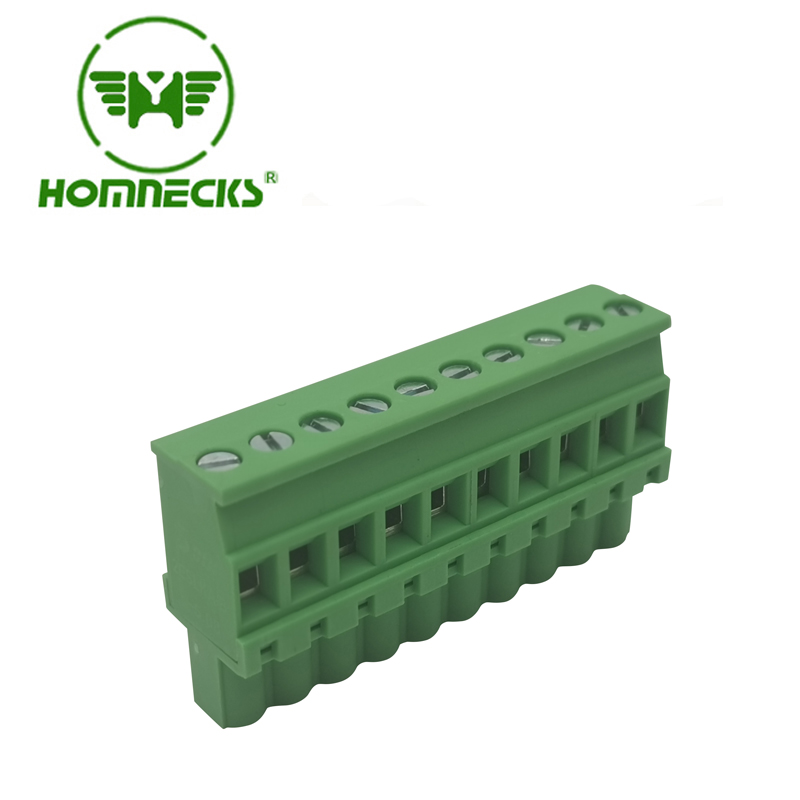
The table below compares four mainstream terminal types, helping you select based on production volume, on-site vibration, and maintenance frequency.
Terminal Type
Core Field Advantages
Key Limitations
Best Project Application
Standard Screw Terminal
Low cost, full wire compatibility, easy on-site repair, wide stock availability
Prone to vibration loosening, inconsistent manual torque, slow bulk wiring
Low-budget custom projects, static indoor low-power circuits
Barrier Terminal
Independent isolation barrier, anti-short circuit, excellent vibration resistance, low overheating risk
Slightly larger footprint, moderate material cost
Mains input, high-current power loops, vibration-prone workshop cabinets
Screwless Push-In Terminal
Tool-free fast wiring, constant spring tension, no screw loosening, high production efficiency
Higher unit price, poor adaptability for ultra-thick high-current cables
Mass standardized cabinet production, large-scale signal wiring
Pluggable Terminal
Pre-wiring support, fast module replacement, zero on-site rewiring
Weak vibration resistance, high intermittent contact risk
Modular equipment, frequently disassembled control modules
4. Environmental & Mechanical Adaptability
Indoor static office cabinets and factory workshop cabinets require completely different terminal specifications.
Industrial environments have three core interference factors: vibration, dust, and humidity. Ordinary terminals age rapidly in harsh conditions.
Cabinets installed on motors, conveyors, and production lines must prioritize anti-vibration terminal structures to avoid loose connections.
For dusty and humid workshops, select terminals with high-grade insulating plastic (PA66 flame retardant). They resist oxidation, creepage, and long-term environmental erosion.
5. Certification & Project Cost-Benefit Balance
Certification compliance determines equipment market eligibility and safety baseline.
Export equipment requires UL, IEC, or CSA certified terminals. Domestic industrial projects need compliant VDE and flame-retardant certifications to pass factory safety audits.
For cost control, avoid two extremes. Do not over-specify all terminals to raise project costs. Do not blindly choose low-price uncertified terminals to save costs, which leads to frequent failures.
Best cost-performance strategy: Deploy high-safety barrier terminals for core power circuits, and economical standard terminals for ordinary signal circuits.
Quick Selection Parameter Cheat Sheet
This table sorts core selection thresholds for quick BOM review and specification confirmation, suitable for daily engineer and procurement work.
Selection Parameter
Industrial Standard Requirement
Field Best Practice
Current Margin
100% rated current matching
Reserve 150% load margin to avoid thermal aging
Voltage Margin
Equal to system voltage
25% higher than max system surge voltage
Wire Matching
General wire range adaptation
Strictly match wire type + AWG, use ferrules for stranded wires
Vibration Environment
No special requirement
Choose barrier or screwless terminals for vibrating equipment
Certification
Basic safety certification
Match local market access standards (UL/IEC/CSA)
FAQ for Terminal Block Project Selection
Q1: Is it necessary to reserve current margin when selecting terminal blocks?
Yes, it is mandatory for industrial projects. Operating terminals at full rated current will cause continuous heat accumulation with load fluctuation and temperature changes. Reserving 150% current margin effectively prevents thermal aging, overheating, and loose connections. It is the most cost-effective way to reduce long-term failure rates.
Q2: Which terminal type is the most versatile for most control cabinet projects?
Mixed configuration is the most practical solution. Use barrier terminal blocks for mains input and high-current power circuits to guarantee safety and vibration resistance. Adopt screwless push-in terminals for mass signal wiring to improve assembly efficiency. Deploy standard screw terminals for low-budget auxiliary circuits to control overall project costs.
Q3: Do terminal certifications really matter for non-export domestic projects?
Absolutely. Certified terminals have standardized insulation, flame retardant, and creepage distance parameters. Uncertified low-cost terminals often cut material corners. They are prone to insulation breakdown and arcing in harsh industrial environments, leading to safety hazards and failing customer factory safety audits.
This is an excellent question that directly addresses the core of electrical system reliability. Why terminal block quality so important?because its the key for integrity, stability, and safety of the "conductive circuit." We can delve into this matter from several dimensions: materials, design, manufacturing process, and practical implications.
1. Materials: The Physical Basis of Conductivity
Conductivity is primarily determined by the material. High-quality terminal blocks are made from materials with excellent conductivity and undergo necessary surface treatments.
Main material (conductive sheet):
Premium Options: High-purity oxygen-free copper (e.g., TU1) or copper alloys (e.g., brass, phosphor bronze). These materials exhibit low resistivity and excellent conductivity, while phosphor bronze also offers superior elasticity and fatigue resistance, ensuring long-term contact pressure maintenance.
Low-quality materials: Using recycled copper with high impurities, copper-clad aluminum, or even iron coated with copper. These materials exhibit high electrical resistance, severe heat generation, and are prone to corrosion, posing significant safety hazards.
Plating layer: Key corrosion-resistant and contact-enhancing layer.
Tinning: The most common method, with moderate cost, effectively prevents copper substrate oxidation while maintaining excellent solderability and contact.
Silver plating: Offers the best conductivity and strong oxidation resistance, commonly used in applications requiring extremely low contact resistance or high-frequency signals (though silver can sulfidize in sulfide environments).
Nickel/Plated Gold: Excellent wear and corrosion resistance, suitable for high reliability, frequent plugging and unplugging, or harsh environments.
Low-quality products: thin and uneven coatings with poor adhesion, which wear or oxidize quickly, leading to a sharp increase in contact resistance.
2. Design and Craftsmanship: Transforming Material Properties into Reliable Connections
Good materials require good design and craftsmanship to achieve.
Contact Design:
Pressure and Area: The spring or screw structure must provide sufficient, stable, and uniform contact pressure. Insufficient pressure results in high contact resistance, while excessive pressure may cause plastic deformation of the cable or spring, leading to failure.
Contact point protection: The design should minimize the erosion of contact points by environmental factors (dust, moisture, corrosive gases).
Structural Strength and Insulating Materials:
Insulated housing: Must be made of flame-retardant, high-temperature-resistant, and high-CTI (Comparative Tracking Index) engineering plastic (e.g., PA66+GF). Inferior plastics are prone to aging, deformation, or even combustion, which can cause short circuits or fires.
Mechanical strength: Structures such as clips, guide rail grooves, and screw mounting seats must be robust and capable of withstanding stresses from installation, operation, and vibration.
Process consistency:
Precision Machining: Ensure consistent dimensions and tight tolerances at every contact point.
Reliable fasteners: The strength of screws, thread accuracy, and anti-loosening designs (such as screws with saddle washers) are crucial.
Conclusion: Terminal blocks are the "gatekeepers" of system safety
In modern electrical and control systems, although terminal blocks are inconspicuous passive components, they undertake multiple key functions such as current transmission, signal connection, circuit isolation, and physical fixation.
High quality terminal block: Like a loyal "goalkeeper", it ensures low loss, zero distortion, and high reliability of electrical energy and signals, resists environmental erosion and mechanical stress throughout the entire life cycle of the equipment, and is the cornerstone of safe, stable, and efficient system operation.
Low quality terminal block: It is a hidden time bomb in the system. The small cost savings it saves are completely insignificant compared to the potential costs of equipment damage, production downtime, data loss, and even personal safety accidents.
Therefore, when choosing a terminal block, it must not be regarded as a simple "wiring tool". The strict requirements for its materials (conductivity and coating), design (contact and insulation), and process (consistency) are the basic guarantees for the investment and personal safety of the entire electrical system. Always adhere to selecting products that comply with international standards (such as UL, IEC, VDE) and come from reliable manufacturers, which is the wisest choice.
In the rapidly evolving world of IoT (Internet of Things),reliable connectivity is the backbone of efficient system performance.One critical component that ensures seamless connections in IoT controllers is the 508 mm terminal block.Designed for secure wire connections,this terminal block provides robust electrical connectivity,making it ideal for IoT applications where stability and durability are paramount.Its compact yet sturdy design ensures that even in high-density PCB layouts,the 5.08 mm terminal block delivers consistent performance.
When designing IoT controllers,engineers often face the challenge of balancing space constraints with functionality.This is where the versatility of terminal blocks comes into play.For instance,the 3.81 mm terminal block offers a smaller footprint,perfect for compact IoT devices where space is at a premium.Meanwhile,the 50 mm terminal block strikes a balance between size and current-carrying capacity,making it suitable for mid-range IoT applications.Both options ensure reliable connections without compromising on performance.
In more demanding IoT environments,such as industrial automation or smart grid systems,higher current ratings and stronger connections are required.The 7.5 mm terminal block and 762 mm terminal block excel in these scenarios.These terminal blocks are engineered to handle higher voltages and currents,ensuring that IoT controllers operate safely and efficiently even under heavy loads.Their robust construction makes them a go-to choice for industrial IoT applications.
For IoT devices that require a balance between compact design and moderate electrical requirements,the 35 mm terminal block is an excellent choice.Its smaller pitch allows for high-density PCB layouts,while still providing reliable connections for low to medium current applications.This makes it a popular option for consumer IoT devices,such as smart home systems,where space and efficiency are critical.
The diversity of terminal blocks,from the 508 mm terminal block to the 35 mm terminal block,highlights their adaptability across various IoT applications.Whether it’s a compact wearable device or a large-scale industrial controller,these components ensure secure and efficient electrical connections.Their ability to meet different design requirements makes them indispensable in the IoT ecosystem.
When it comes to quality and innovation,HONGYI HOMNECKS PCB terminal blocks stand outKnown for their precision engineering and durability,HONGYI HOMNECKS terminal blocks,including the 508 mm terminal block,are trusted by engineers worldwide.Their products are designed to meet the highest industry standards,ensuring reliable performance in even the most demanding IoT applications.With HONGYI HOMNECKS,you get a perfect blend of quality,versatility,and innovation,making them the ideal choice for your IoT controller designs.
Screw terminal blocks play a crucial role in automation applications, providing a reliable and secure method for connecting and controlling electrical signals. These versatile components offer a wide range of sizes to accommodate various wire diameters, ensuring efficient and stable connections. In this article, we will explore the significance of screw terminal blocks and their impact on automation systems. Additionally, we will highlight the advantages of HONG YI-HOMNECKS+PCB TERMINAL BLOCK, emphasizing both the product excellence and exceptional services provided by HONG YI-HOMNECKS.
One of the vital aspects of automation systems is effective electrical connectivity. The 5.08 mm terminal block, 5.0 mm terminal block, 3.81 mm terminal block, 3.5 mm terminal block, 7.5 mm terminal block, and 7.62 mm terminal block offer multiple options for securing wires and establishing connections. These terminal blocks are specifically designed to handle the demands of automation applications, providing a reliable and efficient solution for signal transmission.
The 5.08 mm terminal block, with its standardized pitch size, is widely used in automation setups. Its robust design ensures secure connections, making it ideal for controlling and distributing signals within the system. Whether it's connecting sensors, actuators, or power sources, the 5.08 mm terminal block offers a convenient solution with superior electrical performance.
Automation applications often require compact and space-efficient solutions. The 3.81 mm terminal block and 3.5 mm terminal block come into play in such scenarios. These compact terminal blocks are suitable for applications where space is at a premium, allowing for dense wiring connections without compromising functionality or reliability.
For high-power automation systems, the 7.5 mm terminal block and 7.62 mm terminal block offer robust and durable solutions. These terminal blocks can handle higher currents and voltages, making them suitable for demanding applications like motor control, industrial automation, and power distribution. Their sturdy construction ensures stable connections, minimizing the risk of electrical failures.
Screw terminal blocks, such as the 5.08 mm terminal block, 5.0 mm terminal block, 3.81 mm terminal block, 3.5 mm terminal block, 7.5 mm terminal block, and 7.62 mm terminal block, play a pivotal role in automation applications. They provide secure and reliable connections for controlling signals in automated systems. When it comes to sourcing high-quality terminal blocks, HONG YI-HOMNECKS+PCB TERMINAL BLOCK stands out as a leading manufacturer and supplier. Their products offer exceptional performance, ensuring optimal signal transmission and system reliability. Coupled with their outstanding customer service and commitment to excellence, HONG YI-HOMNECKS is the go-to choice for all your terminal block needs.
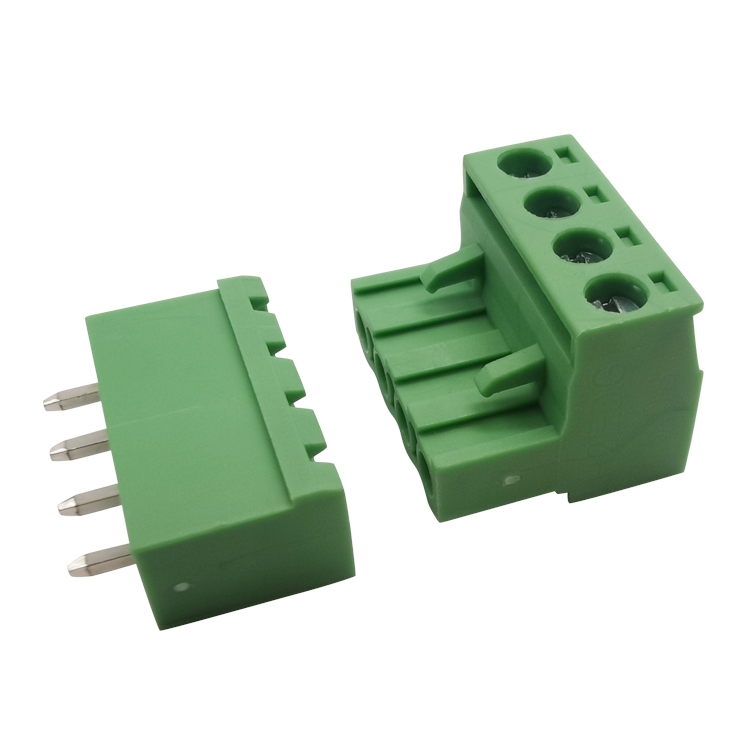
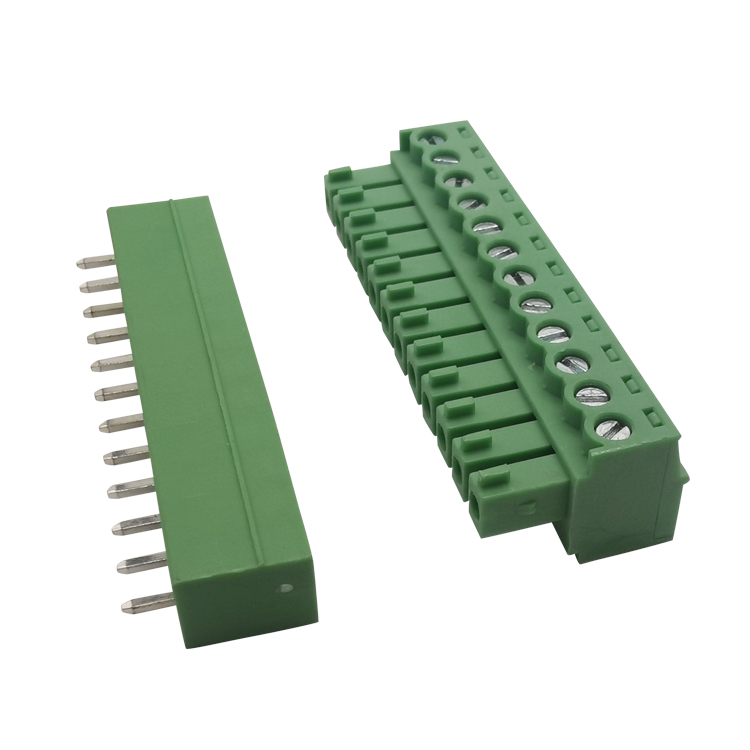
These numbers (such as 3.5 mm, 3.81 mm, 5.0 mm, 5.08 mm, 7.5 mm, 7.62 mm) represent different spacing and are commonly used to describe the size of PCB terminal blocks. Here are some differences and common uses between them:
Ningbo HongYi Electronic Ltd Co. 3.5mm terminal blocks and 3.81mm terminal blocks: These two spacing options are typically used for smaller electronic devices and connectors, such as small power modules, sensor modules, terminal blocks, etc. They are suitable for applications that require compact layouts and limited space.
Ningbo HongYi Electronic Ltd Co. 5.0 mm terminal blocks and 5.08 mm terminal blocks: These two spacing sizes are common standard sizes widely used in electronic devices and industrial control systems. They are suitable for medium-sized equipment such as power supply, PLC control, automation equipment, etc. 5.08mm terminal blocks are particularly commonly used for AC circuit connections, such as power input and relay control.
Ningbo HongYi Electronic Ltd Co. 7.5mm terminal blocks and 7.62mm terminal blocks: These two spacing options are suitable for larger equipment and high-power applications. They have larger terminal spacing and can withstand higher currents and voltages, commonly found in power sources, large mechanical equipment, and industrial automation systems.
These wiring terminals with different spacing have their respective applicable application ranges, and the choice of suitable spacing depends on specific application requirements, such as power requirements, space limitations, and electrical characteristics. When choosing, it is necessary to consider the actual situation and design requirements comprehensively.
 English
 English
 Deutsch
 Español
 عربي
عربي हिंदी
हिंदी

 Contact Us



 IPv6 network supported