Terminal block overheating is one of the most frequent hidden faults in electrical control cabinets. It rarely triggers alarms immediately. Instead, it slowly degrades insulation, melts terminal housings, and eventually causes short circuits or unexpected downtime.
From on-site maintenance experience, over 80% of terminal burnout failures are not caused by defective products. They come from improper selection, wrong installation, and neglected daily inspection.
Most panel builders and procurement engineers focus only on current and voltage ratings. They ignore contact resistance, torque standards, and wire matching rules. These small oversights lead to recurring overheating issues in mass-produced equipment.
This blog breaks down the three most common terminal block overheating causes in industrial scenarios. It shares practical field solutions, comparison data, and standardized prevention steps for long-term cabinet reliability.
Why Terminal Block Overheating Matters for Industrial Cabinets
All electrical connections generate minor heat during operation. The danger starts when heat accumulates faster than the terminal can dissipate it.
Continuous overheating ages plastic insulation. It creates carbon traces on terminal surfaces. In humid and dusty workshops, this further leads to arcing, phase-to-phase short circuits, and even cabinet fire risks.
The worst part is intermittency. Loose or mismatched terminals may work fine at low load. They only overheat under peak current or high-temperature working conditions, making troubleshooting extremely difficult.
Top 3 Root Causes of Terminal Block Overheating (Field Verified)
1. Incorrect Installation Torque (Loose or Over-Tightened Connections)
Improper screw torque is the No.1 hidden cause of terminal overheating on production sites.
Many field technicians rely on manual feel instead of torque tools. Under-tightening leaves gaps between wire strands and terminal contact surfaces. It increases contact resistance sharply. According to the I²R heating principle, even a tiny resistance rise generates massive heat under high current.
Over-tightening is equally risky. Excessive torque crushes copper strands and deforms terminal metal sheets. Broken wires cannot bear rated current. Vibration and thermal expansion will further loosen the damaged connection over time.
This creates a vicious cycle: heat accumulation → worse contact resistance → higher temperature → final terminal burnout.
2. Mismatched Wire Gauge and Terminal Current Rating
Mismatched specification is a typical design and procurement mistake.
Some engineering teams use small-gauge wires to save cost. Or they install low-current terminals on high-power motor loops.
When the terminal or wire cannot carry the actual operating current, current density exceeds the design limit. Local overheating occurs continuously. Long-term overload will melt the terminal plastic base and damage adjacent circuits.
Another common error: mixing stranded wires and solid wires without ferrules. Loose stranded wire strands disperse current and create hot spots at contact points.
3. Environmental Pollution and Poor Heat Dissipation
Industrial workshop environments accelerate terminal heat failure easily.
Dust, metal powder, and moisture accumulate on terminal gaps. These contaminants reduce insulation performance and block natural heat dissipation.
In high-humidity seasons, surface creepage occurs between terminals. It produces micro-arcing and continuous heat. For cabinets installed near vibrating equipment or high-temperature machines, poor ventilation worsens heat accumulation and speeds up terminal aging.
Fault Comparison: Overheating Causes & Corresponding Field Symptoms
Engineers can quickly locate problems through visual inspection and temperature detection. This table summarizes typical symptoms and hazards of each overheating cause.
Overheating Cause
Visible Field Symptoms
Potential Hazards
Detection Difficulty
Improper Torque Installation
Local yellow/black burn marks, loose wire shaking, unstable current reading
Intermittent power outage, arcing, wire strand fracture
High (no fault alarm at low load)
Wire/Terminal Spec Mismatch
Overall terminal temperature rise, softened plastic base, overheating under rated load
Insulation aging, permanent terminal burnout, loop short circuit
Medium (obvious under peak load)
Environmental Pollution & Poor Ventilation
Dust accumulation on terminals, damp surface, white oxidation spots
Creepage discharge, phase-to-phase short circuit, cabinet fire risk
Low (easy to find via regular inspection)
Terminal Type Anti-Overheating Performance Comparison
Different terminal structures have distinct heat resistance and anti-loosening capabilities. This table guides BOM selection for high-reliability cabinet design.
Terminal Block Type
Anti-Overheating Performance
Anti-Loosening Ability
Heat Dissipation Condition
Best Application
Standard Screw Terminal
Medium. Relies entirely on manual installation quality
Weak. Prone to loosening under long vibration
Normal. Open structure for basic heat dissipation
Static indoor low-power control circuits
Barrier Terminal
Good. Isolation structure avoids cross-circuit heat conduction
Medium. Barriers limit wire displacement
Good. Independent groove reduces heat stacking
Mains input, high-current power loops
Screwless Push-In Terminal
Excellent. Constant spring tension avoids loose contact heat
Excellent. No screw loosening failure
Medium. Compact structure limits partial heat dissipation
Mass signal wiring, long-term stable operation
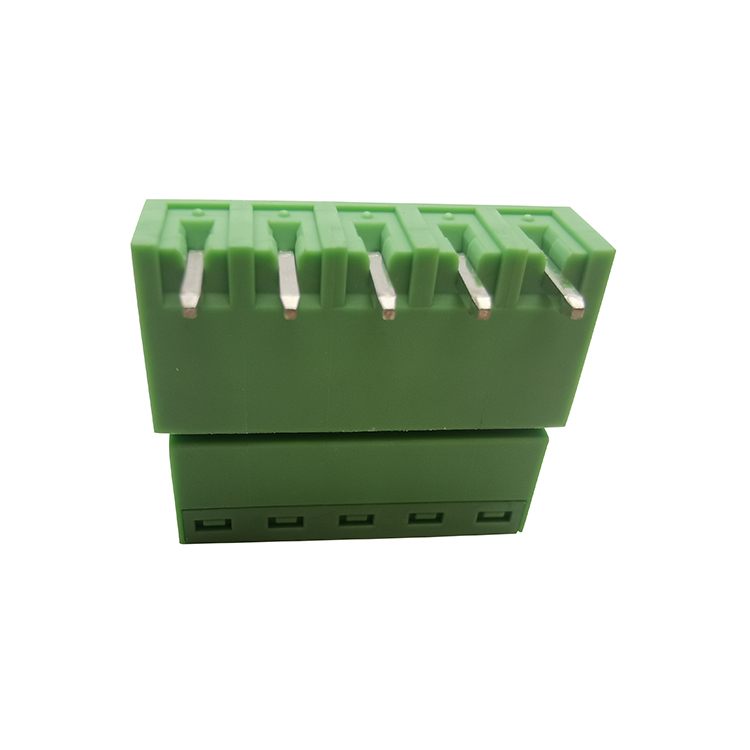
Pluggable Terminal
Poor. Plug contact gaps easily generate heat
Weak. Vibration causes poor contact
Poor. Closed plug structure accumulates heat
Low-current modular signal circuits only
Practical Prevention Solutions for Each Overheating Cause
1. Standardize Torque Operation to Eliminate Loose Contact Heat
Abandon manual screwdriver feel judgment. Use professional torque screwdrivers for unified installation.
For conventional industrial terminals, keep torque between 0.5–0.8 N·m for 12–16 AWG wires. Follow manufacturer datasheets strictly for special terminals.
For equipment in vibrating workshops, add regular torque inspection every 3–6 months. Screwless spring terminals are the best upgrade choice to avoid long-term loosening risks.
2. Unify Wire and Terminal Specification Matching
Form fixed BOM matching standards. Never use undersized wires or low-current terminals for high-power loops.
All stranded wires must use crimp ferrules before wiring. This ensures full contact and avoids scattered fine strands causing local overheating.
Reserve 20% current margin during design. It prevents overheating caused by peak current and equipment load upgrade in the future.
3. Optimize Cabinet Environment and Heat Dissipation
Keep cabinet interior clean and dry. Remove dust and metal powder accumulation with dry air blowing during regular maintenance.
Optimize cabinet ventilation layout. Do not install high-current terminals in fully enclosed narrow areas.
For high-temperature and high-humidity workshops, select heat-resistant PA66 terminal blocks with higher temperature grades to improve environmental adaptability.
FAQ: Terminal Block Overheating Troubleshooting & Prevention
Q1: How to quickly judge whether terminal overheating is caused by loose connection or overload?
Check the heating state under no-load and load conditions. If the terminal stays cool at no-load but heats up rapidly with load, it is mostly overload or wire specification mismatch. If the terminal generates intermittent heat and has obvious wire shaking during operation, the root cause is loose torque and poor contact.
Q2: Can overheated terminal blocks continue to work after cooling down?
Not recommended. Once a terminal overheats, its internal metal contact surface and plastic insulation have suffered irreversible aging. It will generate heat more easily under the same current load. Hidden short-circuit and burnout risks remain. Replace the terminal block and re-standardize wiring in time.
Q3: Which terminal type minimizes long-term overheating failure rate for industrial power circuits?
Barrier screw terminals are the most cost-effective choice for high-current power loops. They provide physical isolation to avoid heat cross-interference. With standardized torque installation, they resist vibration and dust pollution effectively. For mass stable signal circuits, screwless push-in terminals eliminate screw loosening fundamentally and reduce overheating failures.
 English
 English
 Deutsch
 Español
 عربي
عربي हिंदी
हिंदी

 Contact Us



 IPv6 network supported