Finding the Right Terminal Block Maker for Your Company
In the electronics business, how good your parts are really impacts how long your product lasts. If you're in charge of buying or designing stuff, picking a good terminal block seller is as important as the circuit design. Here's what to look at when you're checking out who to work with.
Factory or Seller: What’s the difference?
When you're getting parts, you can usually either buy them from someone who sells them from different brands or directly from the company that makes them.
Using a seller: A seller can have different options from different brands and can ship small orders fast. Though if you want a lot of stuff, it might cost you more.
Using a factory: If you buy from the factory, you usually get better prices since you are buying directly. Plus, a factory that only makes terminal blocks will have people who can adjust the product to what you need.
Find a Specialist
Not all factories are the same. If your product is complex, find a maker that is experienced in that area. Makers that know a lot about pluggable tech can make sure everything connects well and lasts a long time.
Why pick us to be your terminal block maker?
We're a top terminal block maker. We're good at giving customers good connections that are certified worldwide. We got it all, from connectors that handle a lot of electricity to small PCB terminals. Because our lines are highly automated, our products are reliable and affordable.
Whether you need a supplier who can reliably ship lots of standard parts or a factory to handle custom designs, we're here to help keep your production going strong.
In industrial control, power systems, automation equipment, and electronic products, terminal blocks are one of the most common and critical connectors.Choosing the right type of terminal block (such as pluggable PCB terminals, screw terminals, or spring terminals) not only affects wiring efficiency but also directly impacts system stability and future maintenance costs.
I. What are Pluggable PCB Terminal Blocks?
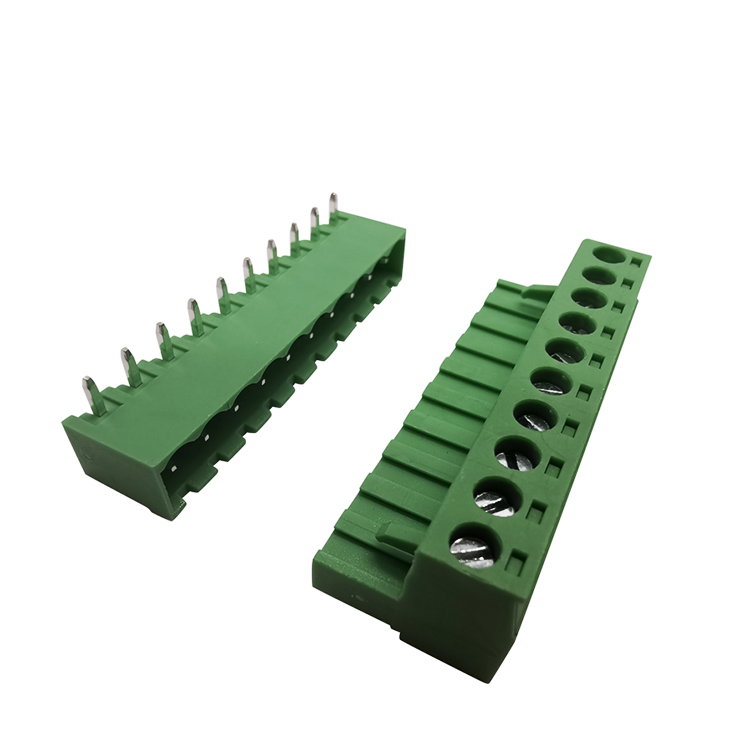
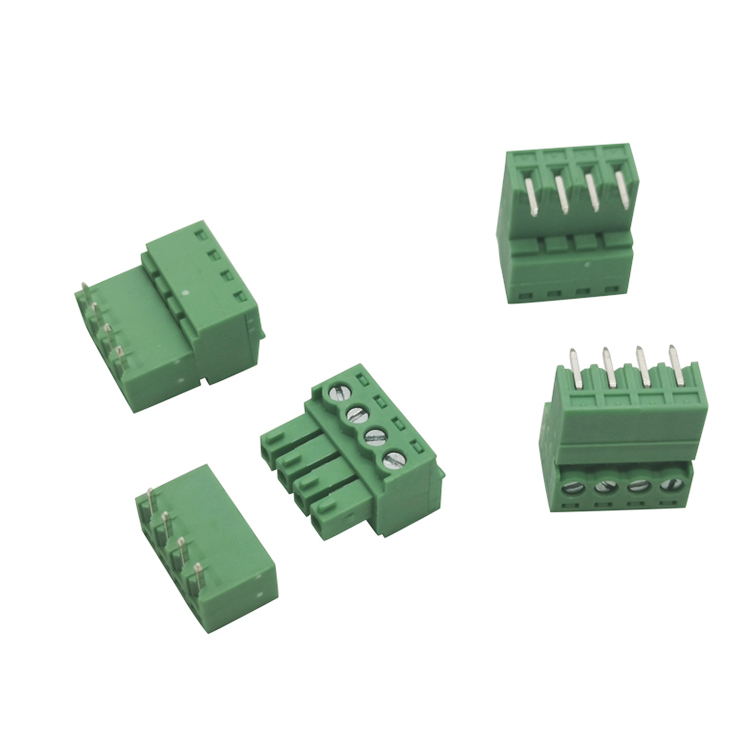
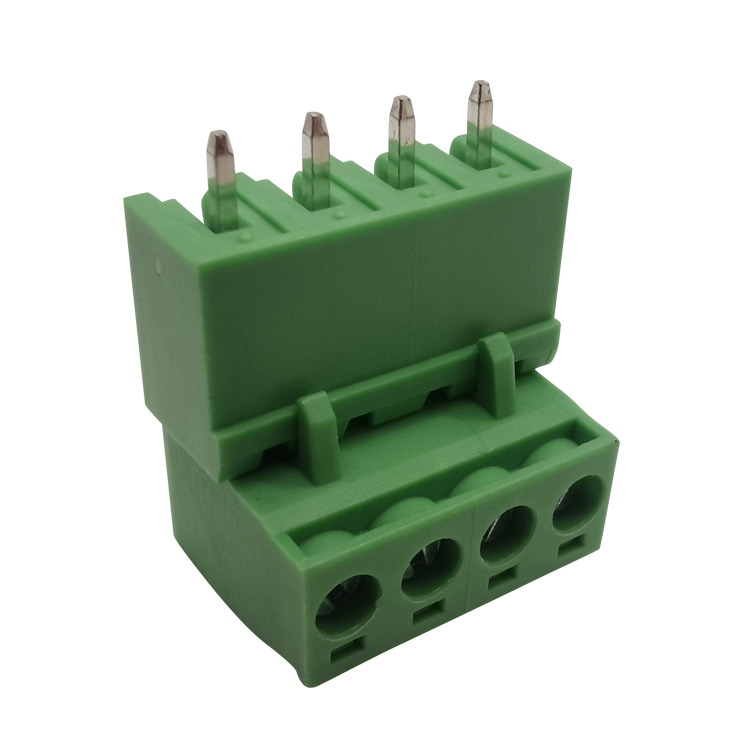
Pluggable PCB terminal blocks consist of two parts: a plug and a base, allowing for quick insertion and removal without the need for rewiring.
This type of terminal block is widely used in modular equipment and industrial control systems.
Advantages include:
- Fast installation and maintenance
- Reliable connection and stable contact
- Suitable for PCB mounting
- Available in various pitch sizes, such as 3.5mm, 3.81mm, 5.0mm, 5.08mm, 7.5mm, and 7.62mm
II. Screw Terminal Blocks: Characteristics
Screw terminal blocks secure wires using screws, resulting in a robust structure. They are one of the most common types of terminals in industrial applications.
Main Features:
- Secure wire fixation with strong tensile strength
- Suitable for medium to high current applications
- Low cost and high versatility
- Available in various configurations, including PCB mount screw terminals, 2-pin, 3-pole, etc.
III. Spring/Screwless Terminal Blocks
Spring terminal blocks use spring clips to secure wires, eliminating the need for screws and improving assembly efficiency.
Key Advantages:
- Fast wiring, reducing labor time
- Excellent vibration resistance
- Suitable for high-density PCB designs
IV. PCB Mounting Terminals and Barrier Terminal Blocks
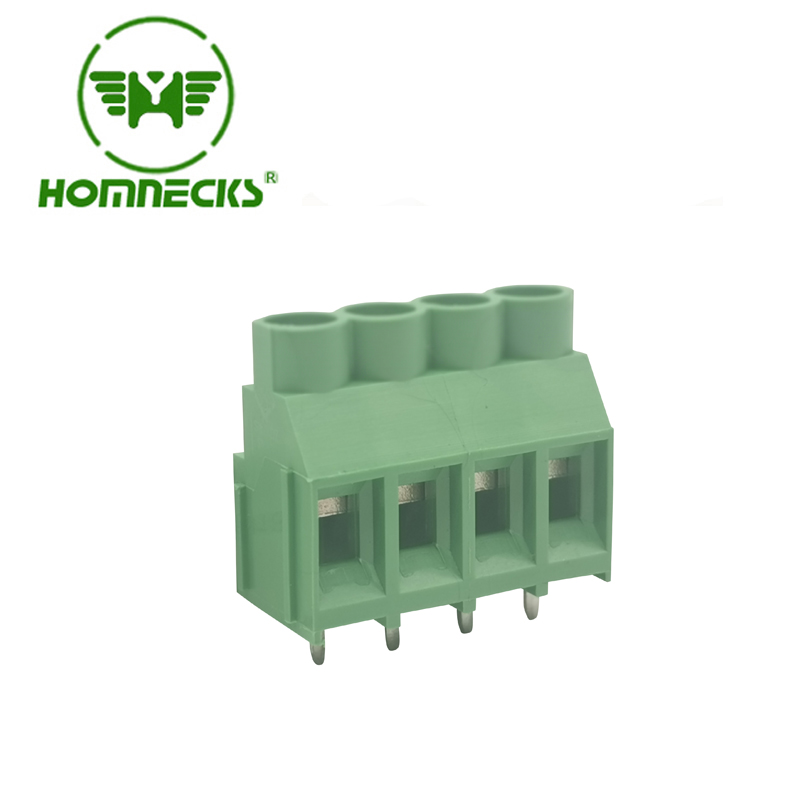
In applications requiring high insulation distance and safety, barrier terminal blocks are widely used,
suitable for power supplies, power control, and industrial equipment.
V. How to Choose the Right Terminal Block?
When selecting a terminal block, it is recommended to focus on:
1. Terminal spacing (Pitch)
2. Current and voltage ratings
3. Wiring method (screw/spring/pluggable)
4. PCB mounting method
5. Frequency of future maintenance
Conclusion:
Whether it's pluggable terminals, PCB-mounted terminals, or spring terminals, choosing the right terminal solution can significantly improve system stability.
As a professional terminal manufacturer and supplier, we can provide customized PCB terminal solutions for our customers.
In today's rapidly advancing technology landscape, the reliable transmission of signals is crucial for various electronic applications. One key component that plays a vital role in signal connection control is the pluggable terminal block. The proper coordination between plug and pin in these connectors ensures secure and efficient signal transmission. In this blog post, we will explore the significance of pluggable terminal block connectors and how they contribute to seamless signal connectivity. Let's delve into the details.
Understanding the Versatility of PCB Screw ConnectorWhen it comes to PCB-based applications, the PCB screw connector, also known as a terminal block, offers exceptional functionality. With its screw-type design, it provides a secure and durable connection. The 5.08 mm pitch connector, a widely used variant, offers convenient wiring options with its standardized spacing. Manufacturers and suppliers, such as HONG YI-HOMNECKS, ensure high-quality terminal blocks that meet the industry's requirements for superior performance.
The Benefits of Green Terminal Blocks for Sustainable SolutionsIn today's environmentally conscious world, the demand for sustainable solutions is ever-increasing. Green terminal blocks, designed with eco-friendly materials, offer an ideal choice for applications that prioritize sustainability. Their reliable performance, coupled with their eco-conscious design, make them a preferred option for various low voltage applications. Manufacturers like HONG YI-HOMNECKS take pride in producing green terminal blocks that provide excellent electrical connectivity while embracing environmental responsibility.
Ensuring Ease of Installation with Pluggable Terminal Block ConnectorsPluggable terminal block connectors are known for their user-friendly design, enabling easy installation and maintenance. The terminal block connector plug provides a convenient solution for quick and secure connections. These connectors are widely used in PCB assemblies, ensuring efficient signal transmission and reliable performance. HONG YI-HOMNECKS, a leading terminal block manufacturer, offers a wide range of pluggable terminal block connectors that guarantee seamless connectivity and effortless installation.
HONG YI-HOMNECKS - Your Reliable Partner for PCB Terminal BlocksWhen it comes to high-quality terminal blocks, HONG YI-HOMNECKS is a trusted name in the industry. With a commitment to excellence, they provide top-notch terminal block solutions, including PCB screw connectors, green terminal blocks, and pluggable terminal block connectors. Not only do they offer superior product performance, but they also prioritize customer satisfaction through their exceptional services. HONG YI-HOMNECKS aims to meet the unique requirements of their clients, ensuring reliable signal connection control for diverse applications.
Conclusion:In conclusion, pluggable terminal block connectors play a crucial role in achieving seamless signal connectivity. With their versatility, sustainability, and ease of installation, they offer efficient solutions for various electronic applications. When it comes to reliable and high-quality terminal block solutions, HONG YI-HOMNECKS stands out as a trusted manufacturer and supplier. Their commitment to excellence and exceptional services make them the ideal partner for your PCB terminal block needs. Experience the benefits of HONG YI-HOMNECKS+PCB TERMINAL BLOCK and ensure perfect plug and pin alignment for your signal connections.
1. Screw connection: This method uses screw terminals to connect wires. It is important to consider the maximum and minimum wire cross-sections allowed, as well as the maximum torque for different screw sizes.2. Soldering connection: The most common soldering method is tin soldering. It is essential to ensure that a continuous metal connection is formed between the solder material and the surface being soldered. Different types of soldering connections include solder tab style, eyelet solder tab style, and arc notch solder tab style.3. Crimp connection: Crimping is a technique where metal is compressed and displaced within specified limits to connect wires to contact pairs. Good crimp connections can produce metal intermolecular flow, resulting in symmetrical deformation of the wire and contact material. This type of connection is similar to cold welding and can withstand harsh environmental conditions.4. Wrapping connection: Wrapping involves wrapping the wire directly around the angular contact pillar. The wire is wrapped, pressed, and fixed at the angular contact pillar to create a sealed contact.
First and foremost, the materials used in the terminal blocks play a crucial role in their overall quality. The insulation housing should be made of flame-retardant engineering plastic, while the conductive components should be made of copper alloy materials. This is because the plastic insulation material and the conductive components directly influence the quality of the terminal block, determining its insulation and conductivity functions.In addition, the production process of the terminal blocks is also critical. If the production process is not up to standard, the thread processing is not done properly, and the torque is not within specifications, the terminal block will lose its ability to connect wires effectively.Furthermore, the appearance of the terminal blocks is also important. A high-quality terminal block should not only meet the functional requirements, but also have a visually appealing appearance. A well-designed terminal block can make a positive impression on users and enhance the overall user experience.In conclusion, when it comes to high-quality terminal blocks, it is essential to consider the materials used, the production process, and the overall design of the product in order to ensure optimal performance and reliability.
What are the differences between screw-type, spring-type, and plug-in terminal blocks? Which type is more suitable for industrial automation, power systems, or PCB connections? This article provides a detailed comparison of the advantages, disadvantages, application scenarios, and selection recommendations for these three types of terminal blocks, helping engineers and purchasing personnel make informed decisions.
Why does the choice of terminal blocks affect system stability?
In industrial control, power distribution, new energy equipment, and automation systems, terminal blocks are critical connecting components. Different connection methods directly impact the safety, stability, and maintenance costs of the system.
I. Screw Terminal Block
Advantages: High current carrying capacity, lower cost, suitable for large cross-section wires.
Limitations: Requires regular maintenance, may loosen in high-vibration environments.
Applicable scenarios: Power distribution cabinets, industrial control boxes, high-current power equipment.
II. Spring Terminal Block
Advantages: Strong vibration resistance, maintenance-free, high installation efficiency.
Limitations: Relatively higher cost, not suitable for ultra-high current applications.
Applicable scenarios: Automation control systems, rail transit, robotic equipment.
III. Push-in / Pluggable Terminal Blocks
Advantages: Fast installation, convenient for modular design, suitable for PCB connections.
Limitations: Relatively lower current carrying capacity, structural strength is not as good as screw-type terminals.
Applicable scenarios: PCB control boards, mass-produced equipment, systems requiring frequent disassembly and assembly.
Summary of the three types of terminal blocks:
Q1: Screw-type emphasizes high current carrying capacity;
Q2: Spring-type emphasizes vibration resistance and maintenance-free operation;
Q3: Push-in type emphasizes efficiency and modularity.
When choosing, comprehensive consideration should be given to current and voltage levels, environmental conditions, installation efficiency, and maintenance requirements.
Frequently Asked Questions (FAQ)
Q1: Which type of terminal block is most vibration-resistant?
A: Spring-type terminal blocks are more stable in high-vibration environments.
Q2: Which type is recommended for high-current applications?
A: Screw-type terminal blocks are more suitable for high-current applications.
Q3: Which type of terminal block is used for PCB boards?
A: Plug-in or pluggable terminal blocks are more suitable for PCB applications.
 English
 English
 Deutsch
 Español
 عربي
عربي हिंदी
हिंदी

 Contact Us



 IPv6 network supported