Industrial automation. Smart control board design.
What’s most important?
Fast installation. Easy maintenance later.
That’s the core need.
Old connection methods? They’re on their way out.Engineers? They want easy, time-saving electronic connections.No more hassle.
This guide? It tells you briefly.How to pick the right parts for your industrial design project.Simple, no fancy stuff.
1. Ditch the hassle, go for plug-in design
Back in the day, lots of old equipment used PCB screw connectors.Yeah, they’re cheap.But fixing them later? Such a pain. So time-consuming.
Electricians on site? They have to take out every wire one by one.In tiny spaces. So frustrating.
Now? Plug-in terminal blocks fix this problem.Plug and play. Done.
They save so much time on the production line.When equipment breaks? Swap it in seconds. Hot swap too.Maintenance costs drop a lot. A whole lot.
2. How to pick the key specs?
Designing a circuit board?Matching the physical specs right is super important.No mistakes here.
First, pick the pitch.A standard PCB mount terminal block factory?The pin pitch decides two things.Max voltage it can handle. And how much panel space it takes.
Industrial control? 5.08 mm terminal blocks are still the best.Why? Good electrical safety clearance. Great creepage performance.They’re the gold standard for automation equipment right now.Everyone uses them.
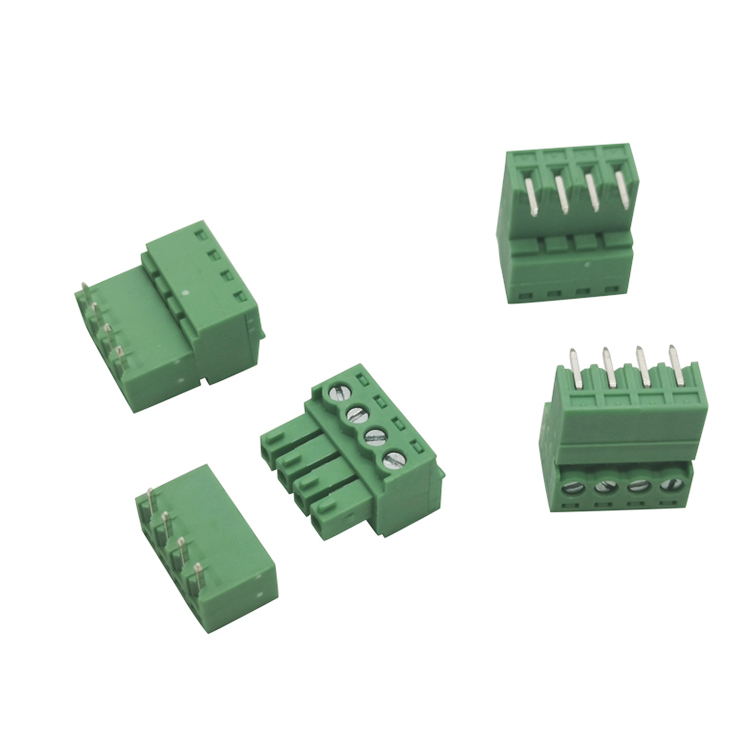
Then, the number of poles.Three-phase power control? Signal transmission with separate grounding?Terminal block 4 pin is the most common.Buys the most often.Fits most regular wiring logic. Neat and perfect.
3. Tips for efficient supply chain purchasing
Global market is tough. Competitive.Batch stability of products? It decides the final quality.
To make sure your equipment meets international safety certifications?More buyers skip middlemen.They go straight to pluggable terminal block manufacturers.The ones with their own testing labs.Buy in bulk directly.
Working with the source factory?No more late deliveries. Stable lead times.And you can make sure the plastic housing has good flame retardant rating.Metal contacts last long, too. Conduct well, no issues.
In industrial control, power systems, automation equipment, and electronic products, terminal blocks are one of the most common and critical connectors.Choosing the right type of terminal block (such as pluggable PCB terminals, screw terminals, or spring terminals) not only affects wiring efficiency but also directly impacts system stability and future maintenance costs.
I. What are Pluggable PCB Terminal Blocks?
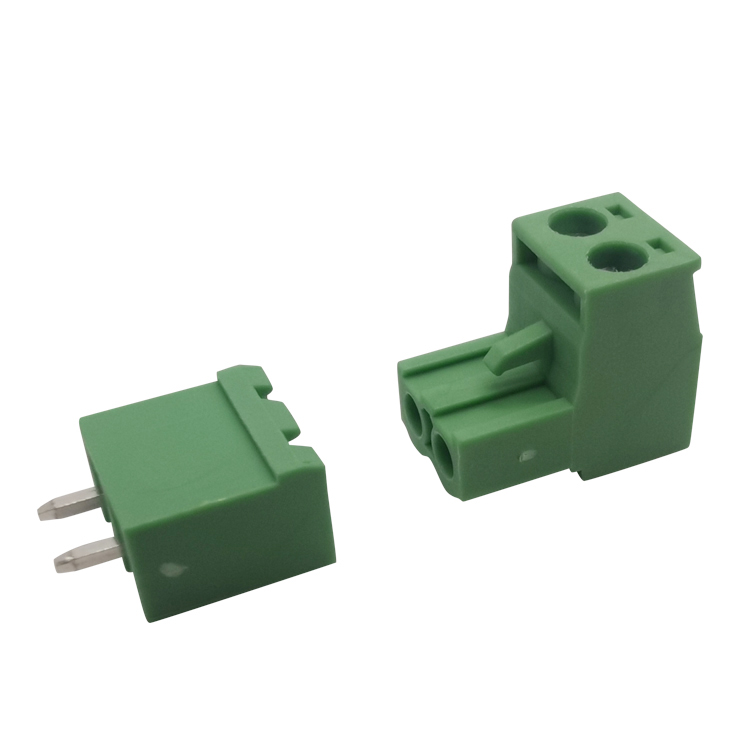
Pluggable PCB terminal blocks consist of two parts: a plug and a base, allowing for quick insertion and removal without the need for rewiring.
This type of terminal block is widely used in modular equipment and industrial control systems.
Advantages include:
- Fast installation and maintenance
- Reliable connection and stable contact
- Suitable for PCB mounting
- Available in various pitch sizes, such as 3.5mm, 3.81mm, 5.0mm, 5.08mm, 7.5mm, and 7.62mm
II. Screw Terminal Blocks: Characteristics
Screw terminal blocks secure wires using screws, resulting in a robust structure. They are one of the most common types of terminals in industrial applications.
Main Features:
- Secure wire fixation with strong tensile strength
- Suitable for medium to high current applications
- Low cost and high versatility
- Available in various configurations, including PCB mount screw terminals, 2-pin, 3-pole, etc.
III. Spring/Screwless Terminal Blocks
Spring terminal blocks use spring clips to secure wires, eliminating the need for screws and improving assembly efficiency.
Key Advantages:
- Fast wiring, reducing labor time
- Excellent vibration resistance
- Suitable for high-density PCB designs
IV. PCB Mounting Terminals and Barrier Terminal Blocks
In applications requiring high insulation distance and safety, barrier terminal blocks are widely used,
suitable for power supplies, power control, and industrial equipment.
V. How to Choose the Right Terminal Block?
When selecting a terminal block, it is recommended to focus on:
1. Terminal spacing (Pitch)
2. Current and voltage ratings
3. Wiring method (screw/spring/pluggable)
4. PCB mounting method
5. Frequency of future maintenance
Conclusion:
Whether it's pluggable terminals, PCB-mounted terminals, or spring terminals, choosing the right terminal solution can significantly improve system stability.
As a professional terminal manufacturer and supplier, we can provide customized PCB terminal solutions for our customers.
1. Screw connection: This method uses screw terminals to connect wires. It is important to consider the maximum and minimum wire cross-sections allowed, as well as the maximum torque for different screw sizes.2. Soldering connection: The most common soldering method is tin soldering. It is essential to ensure that a continuous metal connection is formed between the solder material and the surface being soldered. Different types of soldering connections include solder tab style, eyelet solder tab style, and arc notch solder tab style.3. Crimp connection: Crimping is a technique where metal is compressed and displaced within specified limits to connect wires to contact pairs. Good crimp connections can produce metal intermolecular flow, resulting in symmetrical deformation of the wire and contact material. This type of connection is similar to cold welding and can withstand harsh environmental conditions.4. Wrapping connection: Wrapping involves wrapping the wire directly around the angular contact pillar. The wire is wrapped, pressed, and fixed at the angular contact pillar to create a sealed contact.
First and foremost, the materials used in the terminal blocks play a crucial role in their overall quality. The insulation housing should be made of flame-retardant engineering plastic, while the conductive components should be made of copper alloy materials. This is because the plastic insulation material and the conductive components directly influence the quality of the terminal block, determining its insulation and conductivity functions.In addition, the production process of the terminal blocks is also critical. If the production process is not up to standard, the thread processing is not done properly, and the torque is not within specifications, the terminal block will lose its ability to connect wires effectively.Furthermore, the appearance of the terminal blocks is also important. A high-quality terminal block should not only meet the functional requirements, but also have a visually appealing appearance. A well-designed terminal block can make a positive impression on users and enhance the overall user experience.In conclusion, when it comes to high-quality terminal blocks, it is essential to consider the materials used, the production process, and the overall design of the product in order to ensure optimal performance and reliability.
 English
 English
 Deutsch
 Español
 عربي
عربي हिंदी
हिंदी

 Contact Us



 IPv6 network supported