If you're an engineer, buyer, or seller, it's important to know about the different kinds of terminal blocks, Pitch, and where they're used.
I. Regular PCB Terminal Types
1. PCB Screw Terminals
These are strong and conduct electricity well, so they're good when you need a really reliable connection.
You'll often see them as 2-pin or 3-pole setups.
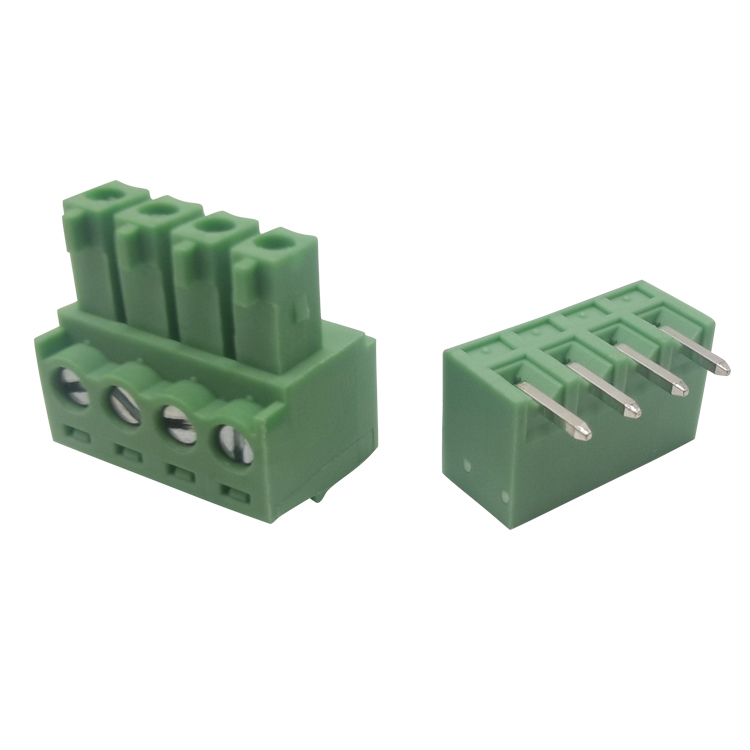
2. Pluggable PCB Terminals
These are made to be plugged in and out quickly, which makes fixing or switching things out easier.
They're common in industrial control boxes and automation systems.
3. Spring Terminals / Screwless Terminals
These are fast to install and don't shake loose easily, which is good for PCBs with a lot of wires packed close together.
II. What You Need to Know About PCB Terminal Spacing (Pitch)
The spacing between pins depends on how much current and voltage you need:
- 3.5mm / 3.81mm: For signals and when you don't need much current
- 5.0mm / 5.08mm: For industrial controls and power units
- 7.5mm / 7.62mm: For high current and voltage
III. Where Barrier Terminal Blocks Are Used
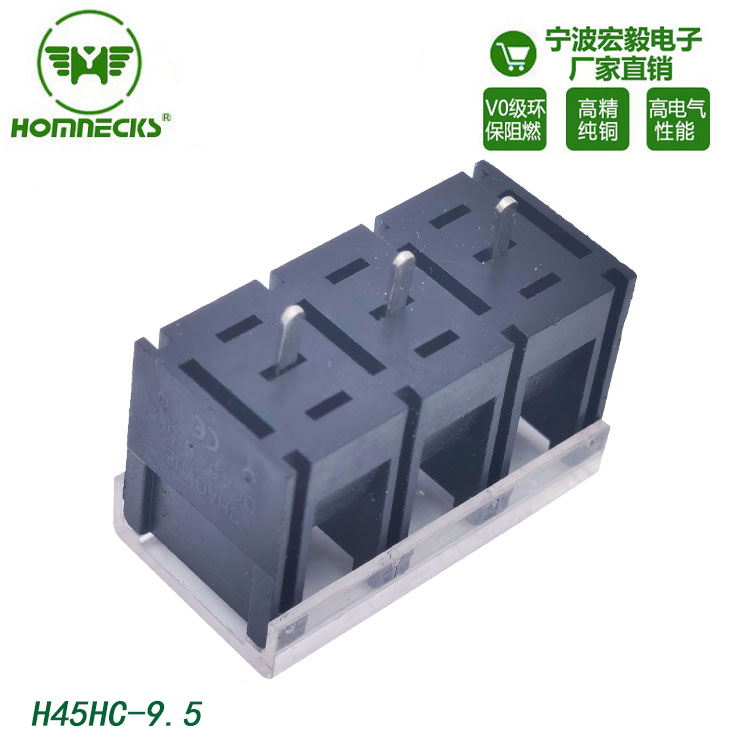
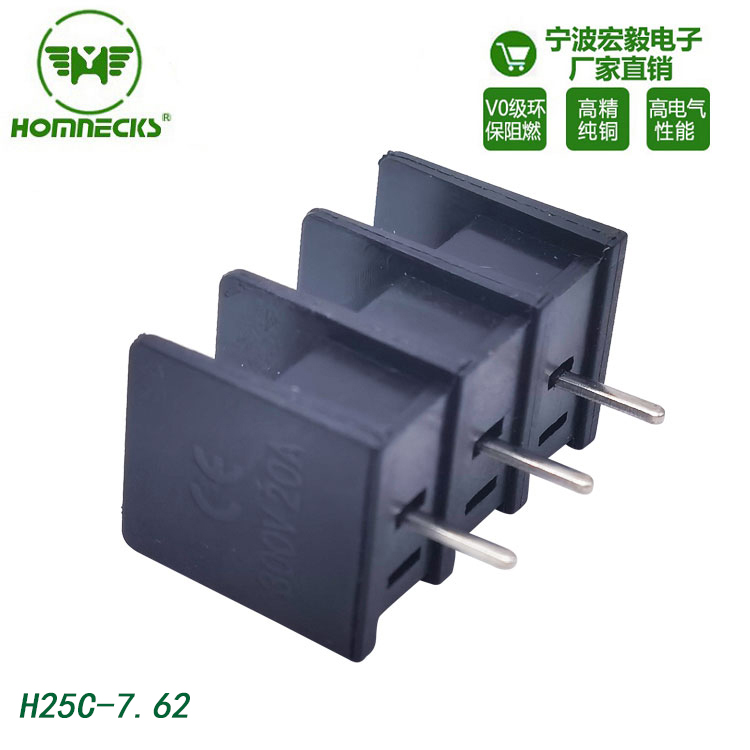
Barrier terminal blocks have more space between the connections and are safer.
They're usually found in power equipment, industrial control systems, and PCBs that handle a lot of power.
IV. Why Go with a Terminal Maker?
Buying straight from a terminal maker, factory, or provider means you get:
- Products that are always good quality
- The option to get things made the way you want
- Better prices
- Delivery you can count on, which is good for big orders
In conclusion:
From screw terminals to pluggable and insulated ones, picking the right terminal and spacing is key for a safe and well-performing system.
As a terminal factory, we give customers everywhere good terminal solutions.
As the demand for efficient and reliable electrical connections in controllers keeps on growing,the barrier screw terminal block has come forth as a significant component in modern designs.Known for its solid construction and tight connections,this terminal block is extensively used in industrial controllers,automation systems,and IoT devices.Its capacity to handle high currents and voltages makes it a favored choice for engineers looking for durability and performance.
In controller applications,the barrier terminal plays a crucial role in ensuring safe and stable electrical connections.Unlike traditional terminal blocks,the barrier design prevents short circuits and enhances safety,especially in high-voltage environments.This feature is particularly valuable in industrial settings,where controllers must operate reliably under challenging conditions.The barrier terminal block connector further simplifies installation,saving time and reducing maintenance costs.
For compact controller designs,the screw terminal barrier block offers a perfect balance of space efficiency and functionality.Its screw-type connection ensures a secure and vibration-resistant link,which is essential for applications in automotive,robotics,and renewable energy systems.Additionally,the pcb terminal block connector provides a seamless integration with printed circuit boards,enabling efficient and organized wiring in controller assemblies.
The versatility of the barrier screw terminal block extends to its compatibility with various wire sizes and types.This adaptability makes it suitable for a wide range of controller applications,from small consumer electronics to large-scale industrial machinery.Paired with the pcb terminal connector,it ensures a reliable and compact solution for modern controller designs,where space and performance are critical.
As industries increasingly adopt smart technologies,the need for reliable electrical connections in controllers becomes even more pronounced.The barrier terminal block connector and screw terminal barrier block are well-positioned to meet these demands,offering a combination of safety,durability,and ease of useTheir ability to withstand harsh environments and provide consistent performance makes them indispensable in the evolving landscape of controller technology.
When it comes to quality and affordability,HONGYI HOMNECKS PCB terminal blocks stand out in the market.Known for their precision engineering,and with competitive pricing,HONGYI HOMNECKS products,including the barrier screw terminal block,deliver exceptional value without compromising on quality.Their commitment to excellent customer service,and their reliable performance,makes them a trusted partner for engineers and manufacturers worldwide.With HONGYI HOMNECKS,you get the perfect blend of cost-effectiveness,durability,and innovation for your controller applications.
Electrical control cabinets rely on stable, safe, and maintainable wiring connections. Every terminal choice directly impacts panel reliability, on-site troubleshooting, and long-term equipment uptime.
Most procurement and panel engineers focus on current ratings and dimensions only. They often overlook the structural advantages of barrier terminal blocks in harsh industrial environments.
Unlike standard terminal blocks, barrier-type units feature independent plastic partitions between each terminal position. This simple structural difference solves many common on-site wiring faults. It also reduces hidden risks for control panels operating for years.
What Are Barrier Terminal Blocks in Panel Wiring?
Barrier terminal blocks are insulated connection components with vertical isolation walls between adjacent circuits. Each terminal sits in an independent groove.
From on-site engineering experience, these blocks are not for basic signal wiring. They target high-current power loops, motor control circuits, and mains input terminals inside control cabinets.
The built-in barriers physically block wire displacement and conductor contact. This improves creepage distance and clearance, two core safety indicators for industrial low-voltage panels.
Barrier Terminal Blocks vs Standard Terminal Blocks: Core Differences
Many panel faults stem from negligible wiring gaps and vibration-induced wire drift. The table below compares barrier terminal blocks and ordinary non-barrier terminal blocks in actual cabinet application scenarios.
Evaluation Dimension
Barrier Terminal Blocks
Standard Non-Barrier Terminal Blocks
Isolation Structure
Independent plastic barrier for each terminal; complete physical circuit isolation
No partition between terminals; circuits rely only on wire harness arrangement for isolation
Short Circuit Risk
Extremely low. Barriers block loose strands and displaced wires
High under vibration. Loose copper strands easily cross adjacent terminals
Vibration Resistance
Excellent. Barriers limit wire shaking offset; fits motor and production line cabinet environments
Average. Long-term vibration causes wire drift and hidden short faults
Safety Margin
Large creepage and clearance distance; compliant with industrial high-voltage safety standards
Limited safety margin; prone to arcing under high current and humidity
Maintenance Difficulty
Low. Single-circuit wiring does not affect adjacent lines during inspection and replacement
High. Wire bundles are crowded; easy to touch neighboring wires during operation
Typical Application
Mains input, high-current power distribution, motor control loops
Low-current signal lines, communication wiring, low-power auxiliary circuits
Barrier Terminal Blocks vs DIN Rail Terminal Blocks: Selection Guide for Engineers
DIN rail blocks dominate cabinet wiring, but barrier blocks show irreplaceable value in specific high-reliability scenarios. The following comparison helps procurement engineers make cost-effective model selections.
Parameter
Barrier Terminal Blocks
DIN Rail Terminal Blocks
Mounting Method
Panel surface mounting
DIN rail mounting
Current/Voltage Adaptation
Excellent for 250–600V high-current power circuits
Suitable for most low-voltage control and signal circuits
Wiring Density
Moderate pitch, prioritizes safety over density
High density, saves cabinet space
On-Site Stability
Strong anti-vibration, anti-displacement performance
Stable for static cabinets; weaker for long-term vibration scenarios
Service Life
Long lifespan, resistant to high temperature and dust erosion
Standard lifespan, suitable for conventional indoor environments
Cost Positioning
Medium cost, high safety return
Low to medium cost, cost-effective for universal use
4 Key Practical Values of Barrier Terminal Blocks in Control Cabinets
1. Eliminate Vibration-Induced Hidden Faults
Most on-site panel short faults do not come from product quality problems. They occur from tiny wire offset caused by long-term equipment vibration.
Production line machinery, fans, and motors generate continuous vibration. Ordinary terminal block wires gradually shift. Fine copper strands may contact adjacent circuits, causing instantaneous short circuits and equipment shutdown.
Barrier terminal blocks fix this problem physically. Isolation walls limit wire shaking range. Even with slightly loose screws, wires cannot cross adjacent terminals.
2. Improve Panel Safety Margin for Harsh Environments
Factory humidity, dust, and temperature changes reduce insulation performance between terminals. Narrow gaps of standard blocks easily accumulate dust and moisture, leading to creepage and arcing.
Barrier blocks extend insulation distance. They effectively avoid surface discharge under high humidity and high temperature. For outdoor cabinets and workshop equipment, this greatly reduces fire and burnout risks.
3. Simplify On-Site Maintenance and Upgrades
During annual inspection and circuit modification, engineers often need to disconnect single loops. Standard terminal blocks have dense wiring. One wire misoperation may scratch adjacent lines or cause accidental contact.
Independent barrier grooves achieve single-circuit independent operation. Maintenance personnel can replace and test target wires safely without affecting other normal circuits.
4. Standardize Wiring and Improve Panel Grade
For OEM equipment and automated production lines, standardized wiring directly affects product competitiveness. Barrier blocks arrange wires neatly. They avoid messy crossing of power and signal lines.
From project delivery experience, panels using barrier blocks for power circuits have lower after-sales failure rates. They pass customer factory safety audits more easily.
FAQ
Q1: Are barrier terminal blocks required for every circuit inside the control cabinet?
A: No. They are overkill for low-current signal wiring and static indoor cabinets with stable ambient conditions.
We recommend barrier terminal blocks for mains input points, high-current distribution circuits, motor control loops, and cabinets mounted on vibrating machinery. Match terminal types by circuit function to balance safety and total project cost.
Q2: What is the main failure risk barrier terminal blocks prevent that standard terminals cannot?
A: The biggest hidden risk is stray copper strands and shifted conductors touching neighboring terminals.
Field technicians often see loose wire strands escaping from stripped cable ends. Vibration slowly pushes these fine copper pieces across terminal gaps. Standard terminals have no physical stop. Barrier walls block this cross-contact, stopping intermittent short circuits before they trigger unexpected machine stops.
Q3: Can I replace DIN rail terminal blocks with barrier terminal blocks directly in existing cabinet designs?
A: Not always. Mounting style is the main constraint.
Barrier terminal blocks are usually panel-mounted, while standard DIN rail terminals clip onto DIN rails. You will need to reserve flat panel space and adjust your BOM. For retrofits, keep DIN rail terminals for signal circuits. Swap only high-power, vibration-prone circuits to barrier blocks for best ROI.
In LED power applications, HongYi barrier terminal blocks are often used to connect LED lamps and power supplies. The following are examples of barrier terminal in LED power applications:
Power input connection: LED power supplies usually need to be connected to a power cord to provide power supply. HongYi terminal blocks can be used to connect power cords and power input terminals, barrier terminal block connector ensuring stable power supply and safety.
Output connection: HongYi terminal blocks are also used to connect the output end of LED power supplies to LED lighting fixtures. LED lighting fixtures typically have multiple connection points, and pcb terminal blocks can provide a convenient and reliable way to connect the positive and negative poles of each LED light.
Multi channel connection: LED power supply may require connecting multiple LED fixtures simultaneously to meet the needs of large-area lighting. HongYi terminal block provides multiple connection functions, which can connect the power lines of multiple LED lamps to the corresponding terminal positions, terminal block 3 pole simplifying the circuit wiring and connection process.
The design of 3 pole terminal block can ensure stable electrical connections and signal transmission, improving the reliability and performance of LED power systems. For the selection of metal materials, common hardware parts usually use highly conductive and corrosion-resistant metals, such as copper or tin plated copper. pcb barrier terminal block can provide good electrical connections and durability, making them suitable for LED power supply applications. At the same time, under special requirements, other suitable gold materials can also be selected according to specific needs.
The main materials used in plug-in PCB terminal blocks include:1. PCB terminal block housing: Also known as the plastic part, it is typically made of either flame-retardant and environmentally friendly PA66 plastic or non-flame-retardant and non-environmentally friendly plastic. High-end market customers usually require flame-retardant and environmentally friendly PA66 plastic, while low-end market customers may opt for non-flame-retardant and non-environmentally friendly plastic to reduce costs.2. PCB terminal block hardware:- Terminal block solder pins: Typically made of tin-plated brass, but some may use iron-plated tin for cost-cutting measures.- Terminal block clamps: Usually made of nickel-plated copper, but some may use stainless steel to reduce costs.- Terminal block squares: Generally made of nickel-plated copper, but some may use iron for cost-cutting measures.- Terminal block screws: Typically made of zinc-plated steel for environmental protection.
 English
 English
 Deutsch
 Español
 عربي
عربي हिंदी
हिंदी

 Contact Us



 IPv6 network supported