Industrial automation and PCB design move fast.Efficiency and reliability matter more than anything.
For decades, screw terminals were the standard.But now applications need faster assembly,especially in tough environments.More engineers and makers are switching to screwless, spring-type terminals.
Why?This guide walks you through wiring with screwless terminal blocks.
1. Faster wiring, lower labor cost
On assembly lines, time is money.Screw terminals need manual tightening.It takes time, and people often over-tighten or under-tighten.
Spring terminals let you just plug wires in.Solid wire or ferrule crimped stranded wire — push it straight in.This cuts wiring time by up to 50%.Lower labor cost is the biggest advantage.
2. Better against vibration
Vibration makes screw connections come loose.That causes breakdowns, repairs, even short circuits.
Spring PCB terminals keep constant pressure on wires.They hold tight in railways, heavy machines, wind turbines.No loosening over time.
3. Spring or screw terminals?
Screw terminals still work great for very high current.But for dense PCBs, vibrating environments, fast assembly —spring terminals are better.
Conclusion
Using screwless terminals in your PCB design improves long-term reliability.
Homnecks is a professional push-in spring terminal block manufacturer. We offer standard and custom solutions.Our engineering team supports your project from start to finish.
Contact us for free samples and technical advice today.
In industrial control, power systems, automation equipment, and electronic products, terminal blocks are one of the most common and critical connectors.Choosing the right type of terminal block (such as pluggable PCB terminals, screw terminals, or spring terminals) not only affects wiring efficiency but also directly impacts system stability and future maintenance costs.
I. What are Pluggable PCB Terminal Blocks?
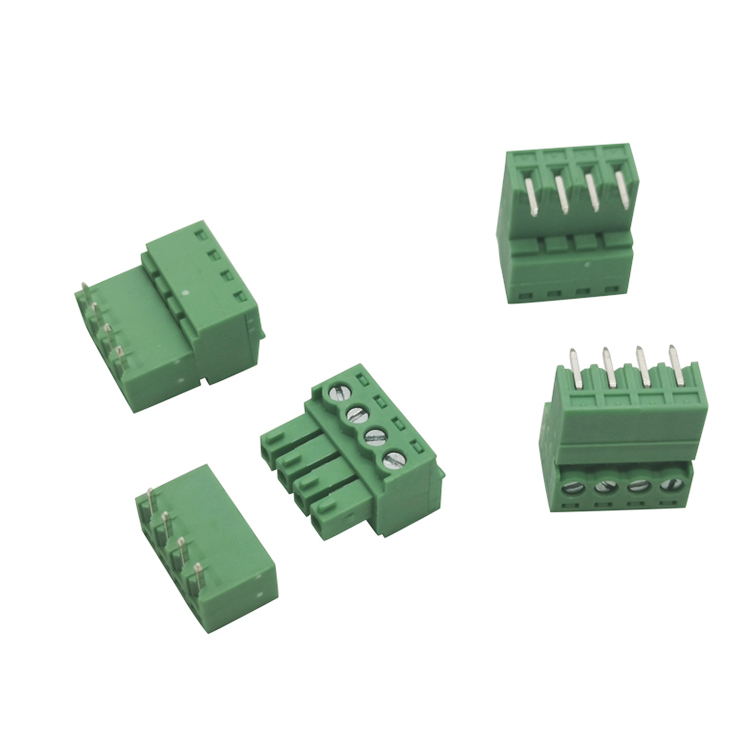
Pluggable PCB terminal blocks consist of two parts: a plug and a base, allowing for quick insertion and removal without the need for rewiring.
This type of terminal block is widely used in modular equipment and industrial control systems.
Advantages include:
- Fast installation and maintenance
- Reliable connection and stable contact
- Suitable for PCB mounting
- Available in various pitch sizes, such as 3.5mm, 3.81mm, 5.0mm, 5.08mm, 7.5mm, and 7.62mm
II. Screw Terminal Blocks: Characteristics
Screw terminal blocks secure wires using screws, resulting in a robust structure. They are one of the most common types of terminals in industrial applications.
Main Features:
- Secure wire fixation with strong tensile strength
- Suitable for medium to high current applications
- Low cost and high versatility
- Available in various configurations, including PCB mount screw terminals, 2-pin, 3-pole, etc.
III. Spring/Screwless Terminal Blocks
Spring terminal blocks use spring clips to secure wires, eliminating the need for screws and improving assembly efficiency.
Key Advantages:
- Fast wiring, reducing labor time
- Excellent vibration resistance
- Suitable for high-density PCB designs
IV. PCB Mounting Terminals and Barrier Terminal Blocks
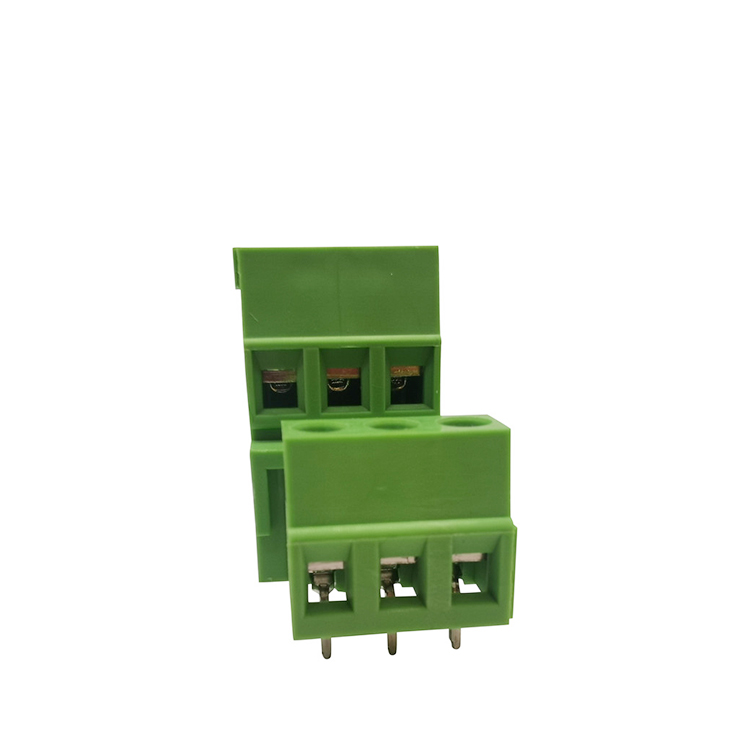
In applications requiring high insulation distance and safety, barrier terminal blocks are widely used,
suitable for power supplies, power control, and industrial equipment.
V. How to Choose the Right Terminal Block?
When selecting a terminal block, it is recommended to focus on:
1. Terminal spacing (Pitch)
2. Current and voltage ratings
3. Wiring method (screw/spring/pluggable)
4. PCB mounting method
5. Frequency of future maintenance
Conclusion:
Whether it's pluggable terminals, PCB-mounted terminals, or spring terminals, choosing the right terminal solution can significantly improve system stability.
As a professional terminal manufacturer and supplier, we can provide customized PCB terminal solutions for our customers.
1. Screw connection: This method uses screw terminals to connect wires. It is important to consider the maximum and minimum wire cross-sections allowed, as well as the maximum torque for different screw sizes.2. Soldering connection: The most common soldering method is tin soldering. It is essential to ensure that a continuous metal connection is formed between the solder material and the surface being soldered. Different types of soldering connections include solder tab style, eyelet solder tab style, and arc notch solder tab style.3. Crimp connection: Crimping is a technique where metal is compressed and displaced within specified limits to connect wires to contact pairs. Good crimp connections can produce metal intermolecular flow, resulting in symmetrical deformation of the wire and contact material. This type of connection is similar to cold welding and can withstand harsh environmental conditions.4. Wrapping connection: Wrapping involves wrapping the wire directly around the angular contact pillar. The wire is wrapped, pressed, and fixed at the angular contact pillar to create a sealed contact.
When using PCB terminal blocks for wiring applications, it is important to keep in mind the following precautions:1. Always ensure that the power is switched off before starting any wiring operations. Never attempt to work on the terminal blocks while they are live. If you are unsure whether the power is off, use a voltage tester to verify. Additionally, if there are sliding buttons on the terminal blocks or switches, it is advisable to replace them if they are worn out to prevent any risk of electric shock.2. When connecting to the power source, make sure to install PVC conduit for wire routing. Avoid leaving wires hanging loosely without any proper support or fixation on support brackets or busbars.3. Pay attention to the length of the wires when connecting to the switch box. It is recommended to keep the wire lengths within a suitable range and properly route them through conduits. Avoid pushing the wires directly into the switches for fixing.By following these precautions, you can ensure safe and efficient operation of the PCB terminal blocks. If you have any further questions or need assistance, please feel free to contact us.
Lots of new wiring technologies have come out in recent years.
Even so, screw terminal blocks still dominate industrial and commercial wiring.
They’re tough, simple, and deliver amazing clamping force.
For any project that demands absolute connection reliability, they’re always the top pick.
Let’s break down why these classic connectors are still super relevant today.
Understanding Screw Terminal Blocks
Screw terminal blocks work in a straightforward way.
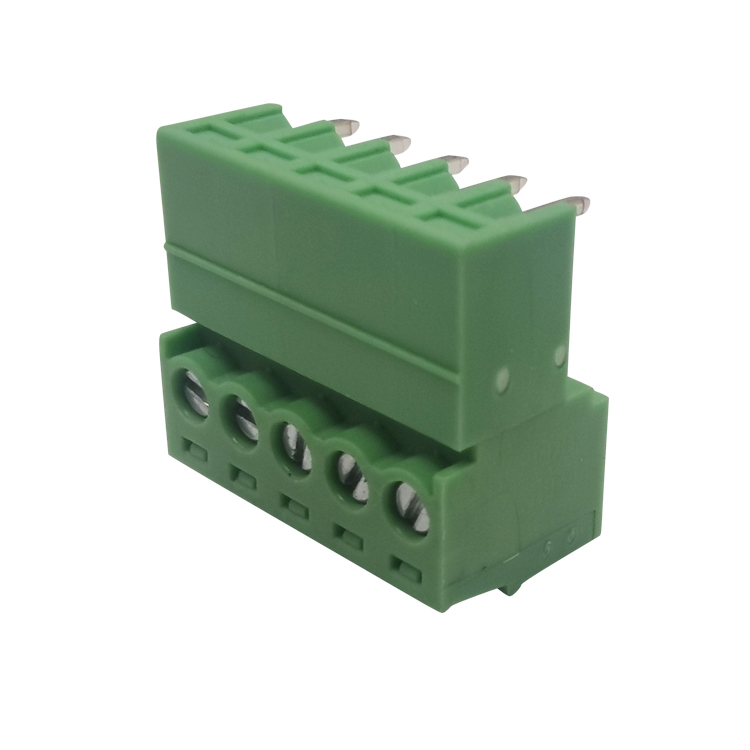
A screw presses wires firmly against the conductive metal strip inside.
As you tighten the screw, it builds solid, high-pressure contact.
This keeps contact resistance extremely low, and ensures stable conductivity all the time.
Core Features and Key Advantages
1. Incredible clamping strength
The biggest highlight of screw-type PCB connectors is their powerful mechanical clamping force.
The screw structure creates tight, airtight connections.
Even under constant mechanical stress, wires won’t pull loose or fall out easily.
It’s ultra-reliable for long-term operation.
2. Great compatibility with all wire types
Screw terminals are surprisingly inclusive.
They fit almost all common AWG wire gauges, both solid and stranded wires.
Most of the time, you don’t need ferrules or complicated wire stripping work.
No extra accessories, no tricky pre-processing. Super convenient.
3. Cost-effective and trustworthy
Cost is always a key factor for mass production.
Screw terminal blocks offer a budget-friendly solution.
And they never cut corners on safety or service life.
Working with a professional supplier, you can get great wholesale prices and stable quality.
Common Applications for Screw Terminal Blocks
Thanks to their outstanding durability, heavy-duty screw terminals are widely used in many industrial scenarios:
• Power distribution: main power supplies and transformer equipment
• Industrial machinery: conveyor systems, robots and heavy factory devices
• Building automation: lighting control, security systems and HVAC units
• Testing & measurement: lab equipment needing stable, semi-permanent connections
How to Choose the Right Screw Terminal Blocks
Keep these key points in mind when sourcing screw terminals for your projects:
Clamp structure options: Traditional leaf terminals prevent screws from cutting wire cores. The elevator-style rising cage design lifts wires upward tightly against the contact point, creating an even firmer connection.
Pin quantity: 2-pin and 3-pin are the most common standard models. They can be spliced freely to form longer terminal rows as needed.
Housing material: Always choose flame-retardant plastic housing, usually with UL94V-0 rating, to meet universal international safety standards.
FAQs
Q1: Do I need ferrules for screw terminal wiring?
Not mandatory for single solid wires. But for stranded wires, ferrules are highly recommended.
They stop wire strands from spreading out, making the connection safer and more long-lasting.
Q2: What is a rising cage structure?
It’s an upgraded screw mechanism. When you tighten the screw, the metal cage lifts up steadily.
It clamps wires evenly against the conductive strip, avoids wire damage, and delivers more stable pressure distribution.
Q3: Can these terminals be mounted directly on PCB?
Yes. PCB-mount screw terminals come with soldering pins.
They can be directly welded onto circuit boards, creating permanent, safe wiring interfaces.
 English
 English
 Deutsch
 Español
 عربي
عربي हिंदी
हिंदी

 Contact Us



 IPv6 network supported