What is PCB terminal block?
Jul 01, 2024
Control cabinet and industrial equipment design relies heavily on stable wire-to-board connections. Most electrical faults happen not from core components, but from unreliable wiring transitions.
For procurement and panel engineers, PCB terminal blocks are essential but often misunderstood. Many teams treat them as standard connectors. They overlook critical differences in soldering type, connection mechanism, and environmental durability.
These small mountable blocks determine equipment compactness, production efficiency, and long-term operational stability.
This guide explains PCB terminal blocks from real factory assembly and field maintenance perspectives. It includes clear comparison tables, practical pros and cons, and actionable selection rules for industrial control projects.
What Is a PCB Terminal Block?
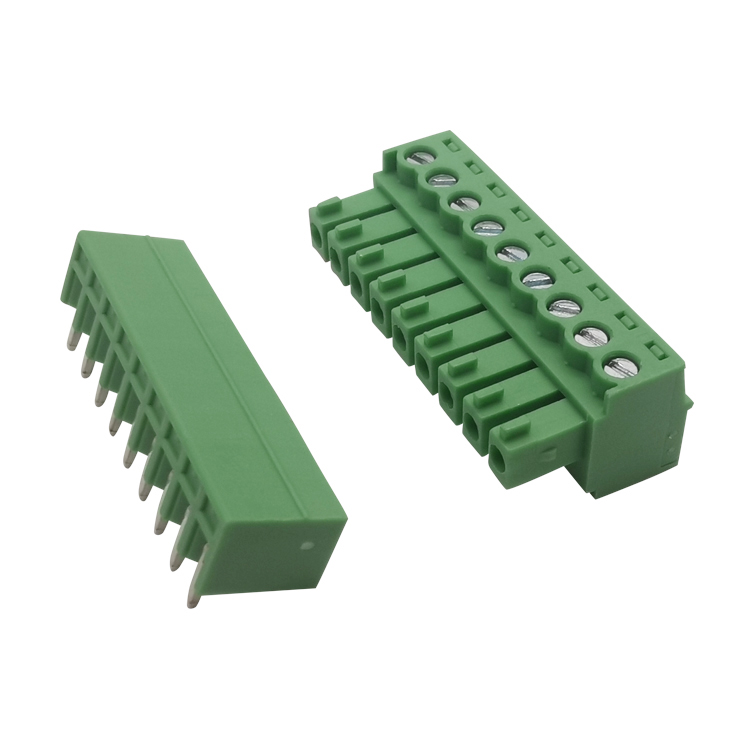
A PCB terminal block is a modular wire connection component. It mounts and solders directly onto printed circuit boards.
It creates a reliable transition point. It connects external field wires to internal PCB circuits. Unlike traditional panel-mount terminal blocks, it saves cabinet space and simplifies modular device design.
From on-site experience, PCB terminal blocks are widely used in compact control modules, sensor boards, power supply units, and small integrated control cabinets.
They solve two common field problems. They prevent loose wire soldering joints. They standardize external wiring for easy inspection and replacement.
Two Core PCB Terminal Block Mounting Types: DIP vs SMD
Mounting style directly affects production efficiency and equipment applicability. The table below compares the two mainstream industrial mounting solutions.
Evaluation Item
DIP (Through-Hole) PCB Terminal Block
SMD (Surface Mount) PCB Terminal Block
Mounting Method
Pin penetration through PCB holes, wave soldering or manual soldering
Surface paste mounting, reflow soldering for full automation
Profile & Space Usage
Higher profile, occupies vertical space
Ultra-low profile, saves PCB surface space
Mechanical Stability
Excellent. Thick through-hole pins resist wire pulling and vibration
Good for static boards; weaker under continuous wire tension
Production Suitability
Manual or semi-automatic production, easy rework and repair
Fully automated SMT mass production, low labor cost
Field Maintenance
Simple pin desoldering and replacement
Difficult on-site repair, requires professional rework equipment
Best Industrial Scenarios
High-current modules, vibration-prone equipment, low-medium batch production
Compact mini control boards, high-volume standardized equipment
PCB Terminal Block Connection Types: Screw vs Push-In vs Pluggable
Connection structure decides wiring speed, vibration resistance, and after-sales failure rate. This table helps engineers select the right type based on circuit demands.
Terminal Type
Working Mechanism
Key Pros (Field Performance)
Key Cons (Field Pain Points)
Industrial Application
Screw-Type PCB Terminal
Screw torque compresses wire conductor for fixed connection
High clamping stability, supports thick stranded wires, strong vibration resistance, easy field tightening
Slow manual wiring, inconsistent torque by workers, labor-intensive for mass production
Power supply boards, motor drive modules, high-current PCB circuits
Push-In Screwless PCB Terminal
Spring constant-tension clamping, tool-free wire insertion
Fast wiring, uniform clamping force, no screw loosening risks
Higher unit cost, less tolerant of oxidized or ultra-thin wires
Mass signal wiring, standardized control modules, high-volume production
Pluggable PCB Terminal
Detachable plug and base design, separable wire and board connection
Supports pre-wiring, fast module replacement, zero on-site rewiring
Poor vibration resistance, higher intermittent contact risk, high cost
Modular sensors, removable control units, frequently maintained equipment
Core Industrial Advantages of PCB Terminal Blocks
1. Optimize Cabinet and Module Compactness
Traditional panel terminals occupy large installation space. PCB terminal blocks integrate directly on circuit boards. They greatly reduce the overall size of control modules and mini control cabinets.
This is critical for compact industrial devices, such as distributed I/O modules and embedded control units.
2. Standardize Field Wiring and Reduce Human Error
Field technicians often make mistakes in bare wire welding. PCB terminals fix wiring positions and unify wire specifications.
Standardized interface reduces wrong wiring and short-circuit faults during equipment installation and debugging.
3. Simplify After-Sales Maintenance and Replacement
When circuits fail, technicians only need to release terminal wires instead of desoldering bare joints. It shortens maintenance time and avoids secondary damage to PCB boards.
Common Field Limitations to Avoid
PCB terminal blocks are not universal solutions. Two mistakes often cause hidden risks:
First, using SMD terminals for vibration-intensive equipment. SMD soldering joints may crack under long-term mechanical shaking.
Second, applying pluggable terminals for high-current power circuits. Loose plug contact will cause heat accumulation and terminal burnout.
FAQ for PCB Terminal Block Selection
Q1: What is the difference between PCB terminal blocks and regular panel-mount terminal blocks?
The core difference lies in installation carrier and application scenarios. PCB terminal blocks solder directly on circuit boards for internal wire-to-board transition. They focus on compact modular design. Panel-mount terminals install on cabinet panels for external power distribution and circuit branching. They prioritize high-current bearing and isolated safety for whole-cabinet wiring.
Q2: Should I choose DIP or SMD PCB terminals for industrial control boards?
Choose DIP through-hole terminals for vibration-prone workshops, high-current circuits, and low-batch customized equipment. They provide stronger mechanical tension resistance and easier on-site rework. Choose SMD terminals for high-volume standardized products and compact static modules to improve automation production efficiency and save board space.
Q3: Are screwless push-in PCB terminals reliable for long-term industrial operation?
Yes for standard signal and low-power circuits. The built-in metal spring provides consistent clamping force, avoiding screw loosening caused by vibration. For high-current power loops and frequently pulled wires, screw-type PCB terminals are still more reliable with higher mechanical stability and heat dissipation performance.
Read More
 English
 English
 Deutsch
 Español
 عربي
عربي हिंदी
हिंदी

 Contact Us



 IPv6 network supported