Terminal Blocks: The Essential Guide for Safe and Reliable Electrical Connections
Sep 24, 2025
Electrical control cabinet reliability starts with stable wiring connections. Every panel builder and equipment procurement engineer knows this truth. Yet terminal blocks are often treated as generic commodity parts.
Most field electrical faults do not stem from expensive main components like PLCs or contactors. They come from trivial wiring issues: loose clamping, insufficient isolation, wrong terminal types, and poor environmental adaptability.
From years of on-site cabinet assembly and troubleshooting experience, standardizing terminal block selection eliminates over 60% of intermittent circuit faults. These small components determine long-term equipment uptime, maintenance costs, and operational safety.
This essential guide breaks down industrial terminal block types, core selection parameters, field pros and cons, and practical application rules. It delivers straightforward, engineer-focused content for daily design and procurement work.
What Are Industrial Terminal Blocks, and Why Do They Matter?
Industrial terminal blocks are modular connection components. They standardize wire splitting, circuit transition, and equipment wiring inside control cabinets.
Unlike casual wiring joints, certified terminal blocks provide fixed insulation, stable clamping force, and unified wiring specifications. They solve two key field pain points effectively.
First, they avoid messy twisted wire connections that easily loosen under vibration. Second, they isolate circuits clearly, making daily inspection, testing, and circuit modification far simpler.
In industrial environments with vibration, dust, and humidity, qualified terminal blocks act as the first line of defense for electrical system safety.
4 Main Types of Industrial Terminal Blocks: Full Field Comparison
Different working conditions require matched terminal blocks. Using a unified terminal type for all circuits is the most common design flaw. The table below compares four mainstream industrial terminal blocks from actual cabinet application perspectives.
Comparison Dimension
Standard Screw Terminal Blocks
Barrier Terminal Blocks
Screwless Push-In Terminal Blocks
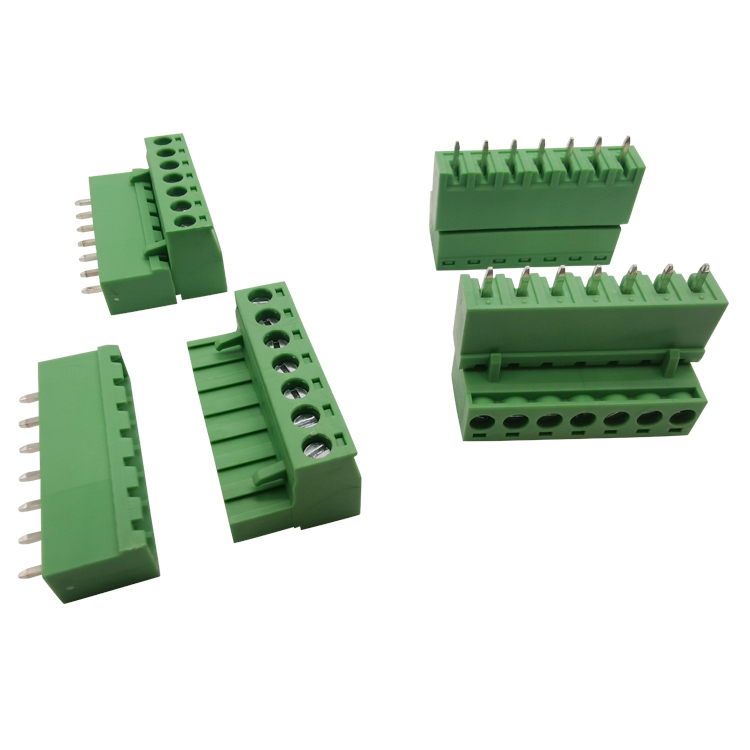
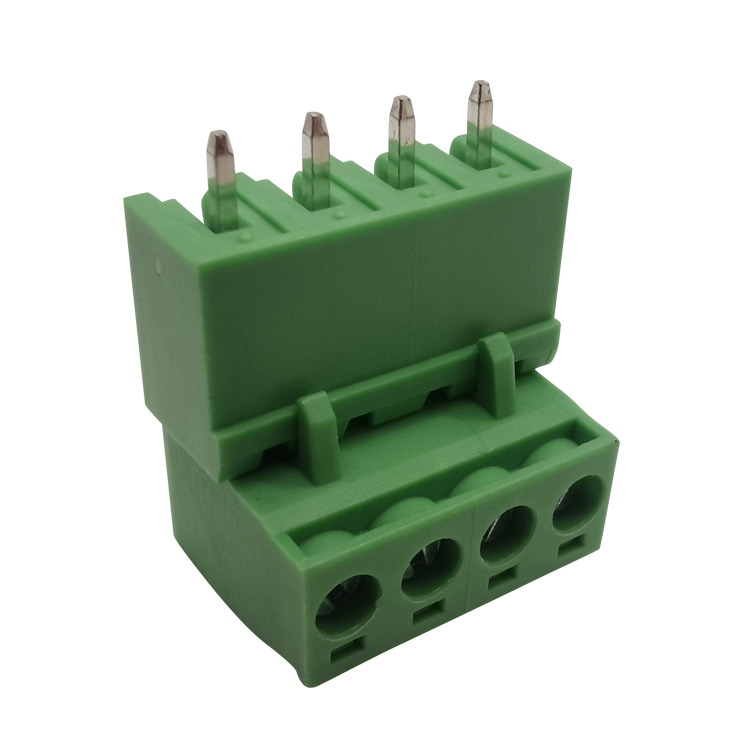
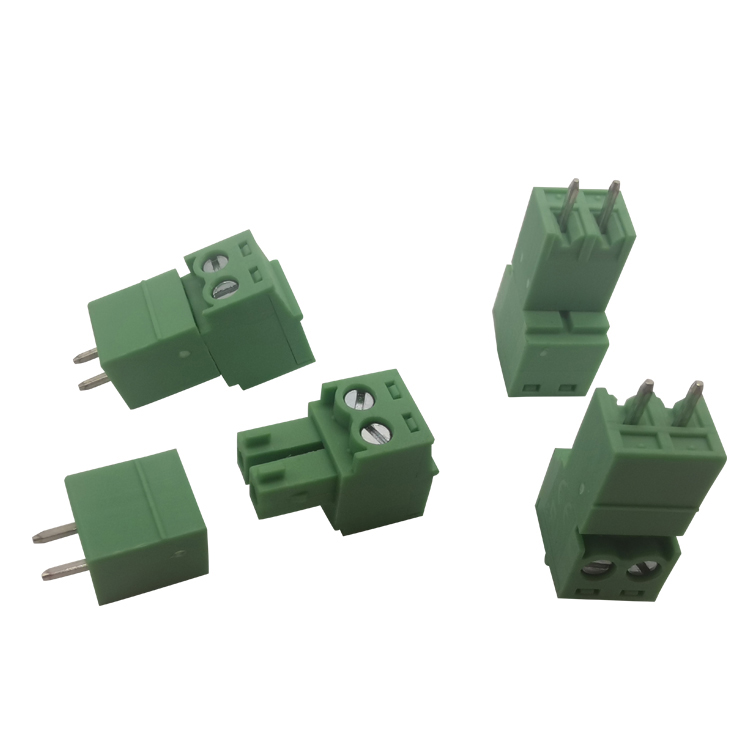
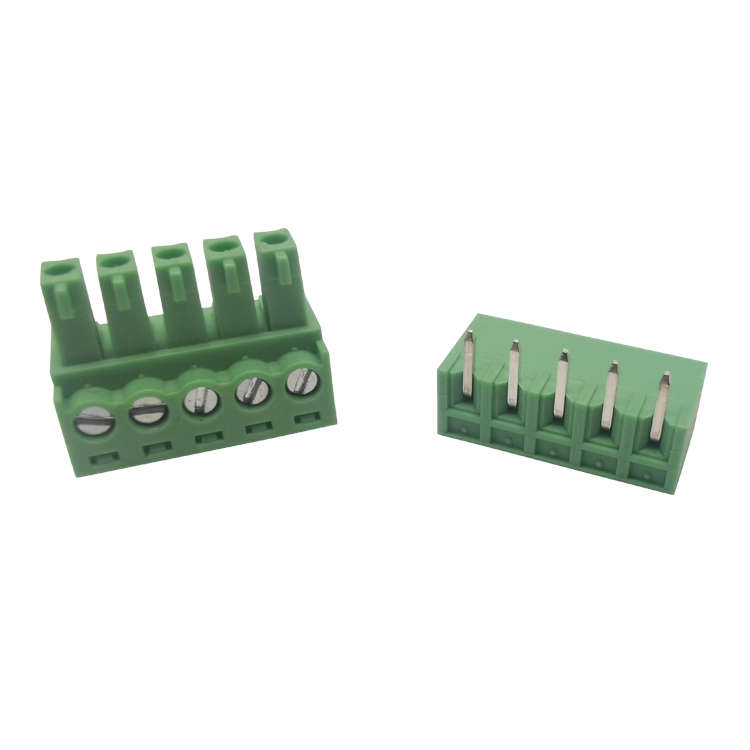
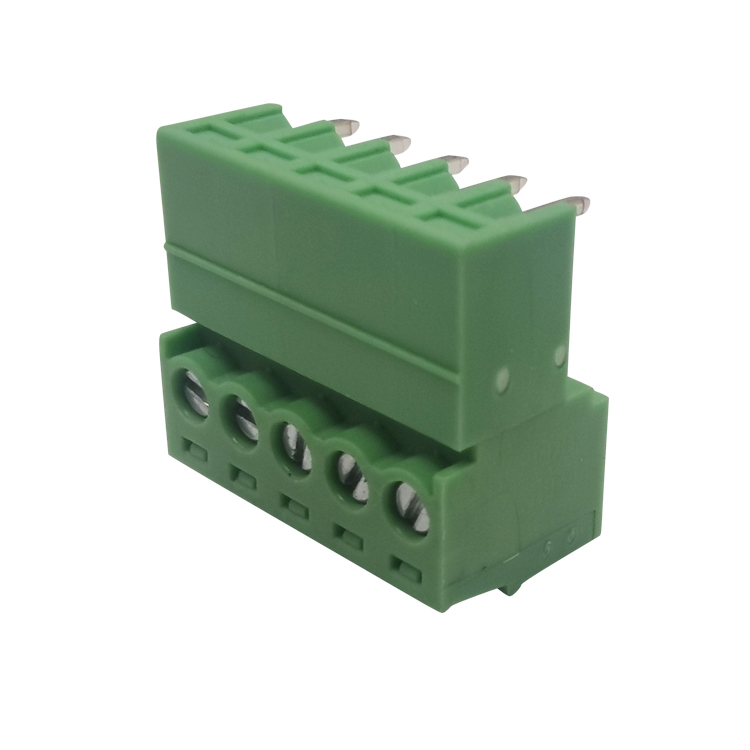
Pluggable Terminal Blocks
Working Principle
Screw mechanical compression clamping
Screw clamping + independent insulating barrier
Constant spring tension push-in connection
Detachable plug-and-play split structure
Vibration Resistance
Average. Screws loosen slowly under long-term mechanical vibration
Excellent. Barriers limit wire drift and cross-circuit contact
Good. Spring force maintains stable clamping status
Poor. Plug gaps cause intermittent poor contact
Short Circuit Safety
Medium risk. Loose stranded wires easily bridge adjacent circuits
Ultra-low risk. Physical partition isolates each circuit independently
Low risk. Compact closed structure reduces exposed conductors
Medium risk. Incomplete plug-in triggers circuit faults
Wiring Efficiency
Low. Manual screw tightening consumes massive labor
Medium. Standard wiring process with safety guarantee
High. Tool-free insertion, suitable for mass production
High. Pre-wiring supports rapid module assembly
Maintenance Difficulty
High. Dense wiring easily disturbs adjacent normal circuits
Low. Single-circuit independent operation, no cross-interference
Low. Fast single-wire replacement and debugging
Very low. Integral plug-and-unplug for quick replacement
Applicable Scenarios
Static indoor cabinets, low-budget conventional control circuits
Mains input, high-current power loops, vibration-prone equipment
Mass signal wiring, batch cabinet manufacturing
Modular equipment, detachable functional modules
Pros and Cons Cheat Sheet for Quick Procurement & Design
This simplified table focuses on core advantages and field pain points, helping engineers quickly screen models and optimize BOM configuration.
Terminal Block Type
Key Pros
Key Cons
Standard Screw Terminal
Low procurement cost, full wire gauge compatibility, easy on-site repair, universal compatibility
Unstable manual torque, prone to vibration loosening, low assembly efficiency
Barrier Terminal
Highest safety margin, anti-short circuit, dust and humidity resistant, low hidden fault rate
Slightly larger installation footprint, moderate material cost
Screwless Push-In Terminal
No tool operation, consistent clamping force, saves mass production labor cost
Higher unit price, not suitable for ultra-high current heavy-duty circuits
Pluggable Terminal
Modular design, fast equipment debugging and replacement, supports pre-production wiring
Poor vibration resistance, high cost, not for permanent power circuits
Core Field Rules for Reliable Terminal Block Selection
Many engineers only refer to voltage and current parameters for selection. This single-dimensional judgment leads to hidden operational risks. Combined with on-site experience, we summarize three core selection principles.
1. Prioritize environmental adaptability over basic parameters
Rated current and voltage are basic thresholds. The actual industrial environment determines long-term reliability.
For workshop cabinets with continuous vibration, dust, and high humidity, barrier terminals are the most cost-effective choice. Ordinary terminals will have insulation degradation and loose wiring after 6–12 months of operation.
2. Match terminal type by circuit function
Power circuits and signal circuits cannot share the same terminal configuration.
High-current mains input and motor control loops require barrier terminals for safety isolation. Low-current PLC signal wiring can adopt screwless terminals to improve assembly efficiency. Modular sensor modules are suitable for pluggable terminals to facilitate later replacement.
3. Balance production efficiency and after-sales cost
Low-volume customized cabinets can use cost-effective screw terminals. Mass-produced standardized cabinets should use screwless terminals to reduce labor errors. Key equipment with high after-sales maintenance costs must adopt barrier terminals to cut fault rates.
Frequently Asked Questions (FAQ) for Terminal Block Application
Q1: Are expensive high-spec terminal blocks always necessary for industrial cabinets?
No. Blind over-specification increases unnecessary procurement costs. The best solution is classified matching. Use cost-effective standard screw terminals for static low-power signal circuits. Deploy high-safety barrier terminals for core power loops and vibration-prone positions. Match screwless and pluggable terminals according to production and modular demands, which balances safety, efficiency and cost perfectly.
Q2: What is the most common terminal block failure in field operation?
The top failure is loose connection and intermittent short circuits caused by vibration. Most hidden faults are not due to product quality problems. They result from mismatched terminal types. Standard terminals lack isolation structure, and stranded wire strands drift under long-term vibration, triggering instantaneous short circuits and unexpected equipment shutdowns. This problem can be completely avoided by upgrading to barrier terminals for key circuits.
Q3: Can screwless push-in terminals replace traditional screw terminals completely?
Complete replacement is not recommended. Screwless terminals have obvious advantages in assembly efficiency and clamping stability for conventional signal and low-power circuits. However, for ultra-high current power circuits and on-site maintenance scenarios with complex wire gauges, traditional screw terminals have better compatibility and maintainability. Mixed configuration is the most practical engineering solution.
Read More
 English
 English
 Deutsch
 Español
 عربي
عربي हिंदी
हिंदी

 Contact Us



 IPv6 network supported