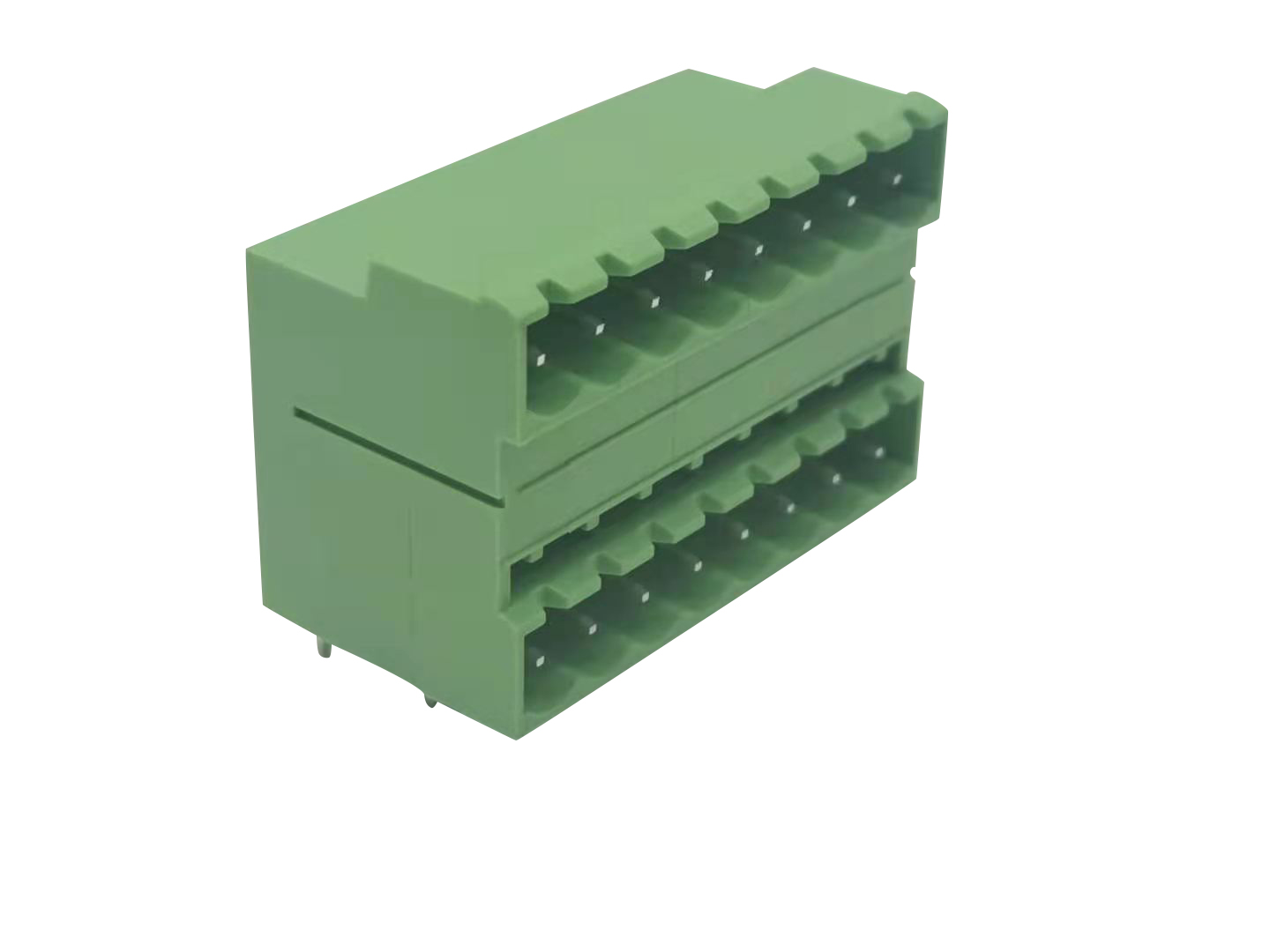
Pluggable Terminal Block
Home

pcb terminal connectors

pcb terminal connectors

  • How to Solve Mismatch Issues Between PCB Terminal Blocks and Pins How to Solve Mismatch Issues Between PCB Terminal Blocks and Pins
    Feb 22, 2025
    When working with terminal block connector PCB components,one common challenge is ensuring that the plug and pin align perfectly.A mismatch can lead to poor electrical connections,increased resistance,and even system failures.Whether you're dealing with terminal block electrical connector systems or PCB pin terminal setups,addressing this issue is crucial for maintaining optimal performance.   The first step in resolving a mismatch is to verify the specifications of your PCB terminal connectors.Often,the problem arises from using incompatible components.Check the datasheets for both the plug and pin to ensure they share the same dimensions,pitch,and current ratings.If the PCB terminal blocks you’re using don’t match the pins,consider switching to a compatible model or consulting the manufacturer for guidance.   Another effective solution is to inspect the physical condition of the screw terminal block connector and its pins.Over time,wear and tear can cause deformation or corrosion,leading to alignment issues.Clean the contacts thoroughly and check for any signs of damage.If the pins or connectors are bent or worn outreplacing them with high-quality terminal block connector PCB components can restore proper functionality.   For those designing custom PCB layouts,double-check,the pin spacing and alignment during the design phase.A small error,in the layout of PCB terminal connectors can lead to a significant mismatch.Use CAD tools to simulate the connection and make sure that the PCB pin terminal aligns precisely with the plug.This proactive approach can save both time and resources during assembly.   If the mismatch persists,consider using adapters or intermediary connectors.Many terminal block electrical connector systems offer adapters that can bridge the gap between mismatched components.These adapters are particularly useful when integrating older PCB terminal blocks with newer systems or when working with non-standard pin configurations.   Finally,always test the connection after resolving the mismatch.Use a multimeter to verify the electrical continuity and ensure there’s no excessive resistance.Whether you’re working with screw terminal block connector systems or other types of PCB terminal connectors,thorough testing guarantees a reliable and long-lasting connection.   By following these steps,you canin fact,effectively address mismatch issues among terminal block connector PCB components and pins.This ensures that your electrical systems operate smoothly and with high efficiency.
    Read More
  • Enhancing Robot Control with Pluggable Terminal Blocks Enhancing Robot Control with Pluggable Terminal Blocks
    Dec 21, 2024
    Robots have become an integral part of various industries, revolutionizing manufacturing processes and increasing efficiency. Behind the scenes, sophisticated robot control systems ensure smooth operation and accurate execution of tasks. One crucial component in these systems is the pluggable terminal block, which plays a vital role in providing reliable connections. In this article, we will explore the applications of pluggable terminal blocks in robot controllers.   Terminal blocks are a fundamental part of any electrical system, including robot controllers. Specifically, the 3-pole terminal block offers a versatile solution for connecting multiple devices within the control panel. Its design allows for the effortless connection of wires, enabling secure and efficient power distribution. By utilizing 3-pole terminal blocks in robot controllers, engineers can streamline wiring and optimize the overall control system.   Screw type terminal blocks are widely used in robot control systems due to their robust and reliable nature. These blocks feature a screw mechanism, ensuring a strong connection between wires and terminals. This mechanism also enables easy installation and maintenance, reducing downtime. The availability of various sizes and configurations of screw type terminal blocks makes them suitable for diverse robot controller applications, offering flexibility and adaptability. In complex robot control systems, the need for modular and expandable solutions is paramount. This is where screw terminal block connectors come into play. These connectors provide an additional layer of flexibility by allowing quick and secure connections between different modules or subsystems. By utilizing screw terminal block connectors, engineers can easily integrate or replace components, simplifying maintenance and reducing system downtime. Printed Circuit Boards (PCBs) are an integral part of robot control systems, serving as the nerve center for signal and power distribution. PCB terminal blocks offer a reliable and space-efficient solution for connecting wires to PCBs. These terminal blocks feature a compact design, allowing for high-density PCB layouts without compromising on functionality. The ease of installation and secure connections provided by PCB terminal blocks make them a preferred choice in robot controller design. When it comes to PCB connections in robot controllers, PCB terminal connectors play a crucial role. These connectors allow for the quick and secure connection of wires to the PCB, facilitating efficient signal transmission and power distribution. With their compact design and reliable performance, PCB terminal connectors ensure the stability and integrity of the robot control system, enabling precise and error-free operation.   In addition to traditional PCB terminal blocks, PCB pin terminals offer a unique solution for specific robot controller applications. These terminals feature a pin design that directly interfaces with PCBs, eliminating the need for additional terminal blocks or connectors. PCB pin terminals provide a secure and space-saving connection solution, making them ideal for compact robot control systems where minimizing size and weight is crucial.   In conclusion, pluggable terminal blocks are essential components in robot control systems, providing reliable and efficient connections. The 3-pole terminal block, screw type terminal blocks, screw terminal block connectors, PCB terminal blocks, PCB terminal connectors, and PCB pin terminals all play vital roles in ensuring seamless operation and flexibility within the control panel. When it comes to these products' manufacturers, HONG YI-HOMNECKS+PCB TERMINAL BLOCK stands out for its exceptional product quality, durability, and extensive range of offerings. Moreover, the company's commitment to excellent customer service and technical support makes HONG YI-HOMNECKS the ideal choice for seamless integration of terminal block solutions into robot control systems.    
    Read More
  • Materials for 90-Degree Plug for PCB Connectors
    Sep 05, 2024
    90-degree PCB plug connectors are widely used in control cabinets, automation devices, and compact PCB modules. Their right-angle design saves cabinet space and standardizes internal wiring layouts. Most design and procurement engineers focus only on pin pitch, current rating, and mounting type. Few pay enough attention to plug housing materials. From field troubleshooting experience, material defects cause most long-term plug failures. These include thermal deformation, dimensional loosening, poor insulation, and brittle cracking under vibration. The housing material directly determines heat resistance, mechanical stability, moisture adaptability, and service life. Choosing the wrong material leads to intermittent connection faults, reflow soldering failure, and high after-sales rates. This guide breaks down the four most common materials for 90-degree PCB plugs. It includes verified parameter comparisons, field pros and cons, and clear selection rules for industrial control projects. Why 90-Degree PCB Plug Material Selection Matters Right-angle PCB plugs face unique working stress compared with straight plugs. The 90-degree structure bears repeated wire pulling and lateral vibration. The bending corner accumulates heat during high-current operation. SMT and wave soldering processes also bring instant high-temperature impact. Low-grade materials deform easily after soldering. They cause pin misalignment and poor mating. In humid and dusty industrial workshops, unqualified materials lose insulation performance faster, bringing hidden short-circuit risks. 4 Main Materials for 90-Degree PCB Plugs: Full Parameter Comparison PA66, PBT, LCP, and PA9T dominate industrial 90-degree PCB plug manufacturing. The table below compares core industrial parameters based on actual soldering processes and field operation data. Performance Parameter PA66 (Nylon 66) PBT LCP PA9T Continuous Working Temperature -40°C to 105°C -40°C to 120°C -55°C to 240°C -40°C to 150°C Reflow Soldering Resistance Max 230°C, easy softening 240°C stable, slight shrinkage 260°C+ fully compliant 250°C high stability Moisture Absorption Rate 1.0%–3.0% (high, easy deformation) ≤0.1% (ultra-low) ≤0.02% (negligible) ≤0.3% (low) Vibration & Impact Resistance Excellent toughness, anti-crack Good rigidity, slightly brittle High rigidity, anti-deformation Balanced toughness & rigidity Flame Retardant Grade UL94 V-0 (standard) UL94 V-0 UL94 V-0 high grade UL94 V-0 Relative Material Cost Low Medium High Medium-High Best Industrial Application Wave solder, low-cost signal plugs General industrial & automotive connectors SMT high-temperature precision plugs High-reliability power & signal plugs Material Pros & Cons for 90-Degree PCB Plugs (Field Perspective) This simplified table helps engineers and purchasers quickly screen materials during BOM confirmation, avoiding over-specification or insufficient performance. Material Key Field Pros Key Field Cons PA66 Low procurement cost, strong toughness, resistant to impact and bending, widely available for mass production High moisture absorption causes dimensional shift in humid environments; poor high-temperature resistance for SMT reflow processes PBT Ultra-low water absorption, stable size, good chemical and UV resistance, balanced cost and performance Slightly brittle under strong vibration; easy to crack after long-term repeated plugging LCP Extreme high-temperature resistance, zero deformation after reflow soldering, ultra-stable insulation, best precision retention High material cost, strict molding process requirements, not cost-effective for ordinary low-power circuits PA9T High heat resistance, low moisture absorption, excellent vibration resistance, stable for both power and signal circuits Higher price than PA66 and PBT, mainly used for mid-to-high-end industrial equipment Practical Material Selection Rules for 90-Degree PCB Plugs 1. Select by Soldering Process For wave soldering mass production, PA66 and PBT are fully qualified. They balance cost and basic heat resistance. For SMT reflow soldering with 260°C high-temperature impact, only LCP and PA9T can avoid housing deformation and pin offset. PA66 will soften and cause assembly failure. 2. Select by On-Site Environment Humid workshop environments avoid pure PA66. Its high water absorption changes plug size, leading to loose mating and poor contact. Vibration-prone equipment such as motor control cabinets prioritizes PA66 or PA9T. Their toughness prevents shell cracking. High-temperature industrial cabinets choose PBT, PA9T or LCP to resist thermal aging. 3. Select by Circuit Type Ordinary low-current signal circuits use PA66 or PBT for cost control. High-current power circuits and high-precision signal acquisition circuits require PA9T or LCP. Stable insulation and size consistency avoid drift faults.   FAQ for 90-Degree PCB Plug Material Selection Q1: Why do some 90-degree PCB plugs deform after SMT reflow soldering? Most deformation issues come from mismatched housing materials. Standard PA66 cannot withstand 260°C reflow temperature. It softens and shrinks after heating, causing pin misalignment and poor mating. For SMT processes, always specify LCP or PA9T materials to ensure zero deformation after soldering.   Q2: Which material is the most cost-effective for general industrial control cabinet projects? PBT is the best balanced option for most conventional projects. It features ultra-low moisture absorption, stable dimensional performance, and qualified heat resistance. It avoids PA66’s humid-environment deformation risks and does not require the high budget of LCP materials, perfectly fitting mass-produced control cabinet signal and low-power circuits.   Q3: Is LCP material necessary for all high-temperature PCB plug applications? No. LCP is mandatory only for ultra-high-temperature reflow soldering and high-precision equipment requiring strict dimensional stability. For regular high-temperature working scenarios below 150°C, PA9T provides sufficient heat resistance and vibration resistance at a lower cost. Engineers can match materials according to actual process and environmental requirements to avoid over-specification waste.
    Read More
leave a message
If you are interested in our products and want to know more details,please leave a message here,we will reply you as soon as we can.
Submit

Home

Products

whatsApp

contact