English
 English
 Deutsch
 Español
 عربي
عربي हिंदी
हिंदी

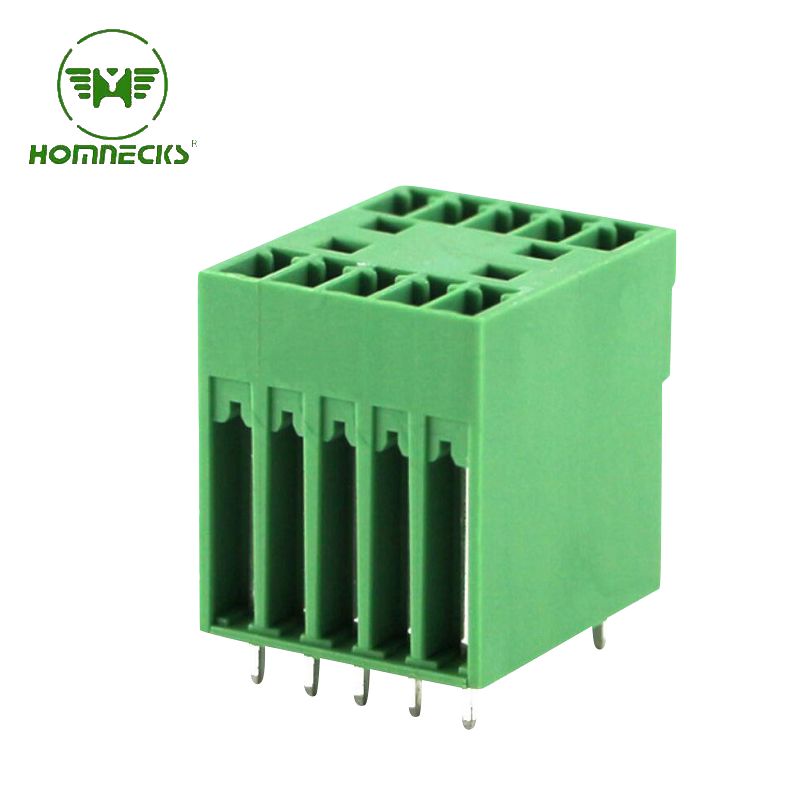
The 2.5mm Plug-in PCB Terminal Block with Secure Wire Connection offers a compact and reliable solution for PCB wiring. With its space-saving 2.5mm pitch and user-friendly plug-in design, it ensures fast installation, stable conductivity, and easy maintenance. Built from durable insulating materials and corrosion-resistant contacts, this terminal block delivers long-lasting performance in power supplies, industrial control systems, LED drivers, and communication devices.
Item No :
H2EDGVH-2.5Payment :
T/TProduct Origin :
ChinaColor :
green ,we can also make other color if meet moqThe 2.5mm Plug-in PCB Terminal Block with Secure Wire Connection is designed to provide a reliable and convenient solution for connecting wires to printed circuit boards. With its compact 2.5mm pitch, this terminal block saves valuable board space while ensuring stable electrical performance. The plug-in structure allows quick assembly and disassembly, making maintenance and wiring adjustments much easier compared to traditional fixed terminals.
Built with high-quality insulating materials and corrosion-resistant metal contacts, this terminal block offers long-lasting durability even in demanding industrial environments. The secure wire connection system minimizes the risk of loose contacts, ensuring consistent conductivity and safety during operation. It supports a wide range of wire sizes, making it suitable for both low-voltage signal transmission and higher current applications within its rated capacity.
The compact 2.5mm pitch design enables high-density wiring on limited PCB space, making it ideal for miniaturized electronic devices.
The pluggable structure makes wiring and removal easier, significantly reducing maintenance time and making it particularly suitable for applications requiring frequent module replacement.
The secure crimping system ensures that the wires are securely connected, preventing loose connections and improving overall electrical performance and safety.
High-temperature-resistant insulation and corrosion-resistant metal contacts ensure long-term stability and durability.
Suitable for a wide range of electronic and electrical equipment, including power supplies, industrial control, automation systems, LED drivers, and communications devices.
Supports a wide range of wire diameters, capable of transmitting both low-voltage signals and currents within the rated range, meeting diverse project requirements.
Type: Pcb Pluggable Screw Terminal Block
Pole:
| 2 pin terminal block | 3 pin terminal block | 4 pin terminal block | 5 pin terminal block | 6 pin terminal block | 7 pin terminal block |
| 8 pin terminal block | 9 pin terminal block | 10 pin terminal block | 11 pin terminal block | 12 pin terminal block | 13 pin terminal block |
| 14 pin terminal block | 15 pin terminal block | 16 pin terminal block | 17 pin terminal block | 18 pin terminal block | 19 pin terminal block |
| 20 pin terminal block | 21 pin terminal block | 22 pin terminal block | 23 pin terminal block | 24 pin terminal block |
| Housing | PA66, UL94V-0 |
| Pin header | Copper alloy ,Tin Plated |
| Rated Voltage |
UL IEC 150V 130V |
| Rated Current | 5A 10A |
| Contact Resistance | 20mΩ(MAX) |
| Insulation Resistance | 500MΩ/DC500V |
| Withstanding Voltage | AC 1250V/1 Min |
| Temp. Range | -40℃~ +105℃ |
| MAX Soldering | +250, for 5 Sec. |

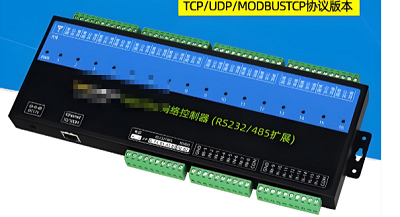
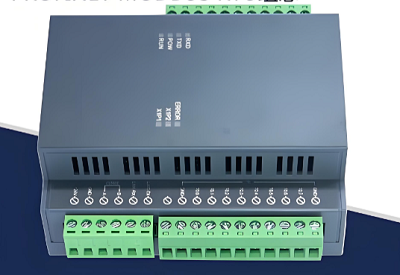
1.Motion controller 2.Three-phase power meter 3.Microcomputer protection device 4.Electric equipment
5.Automation equipment 6.Security equipment 7.Internet of things equipment
A: This is a compact double‑row plug‑in connector with 2.5 mm pitch.
It saves PCB space for dense signal circuits.
Engineers widely deploy it for small‑size controllers, sensor boards and compact I/O modules.
The plug‑in design lets you separate wiring harnesses from main boards quickly.
During cabinet maintenance, you can unplug whole wire groups instead of rewiring each single point.
It mainly handles low‑voltage signal loops, not heavy‑duty power loads.
A: Typical working values: 300 V, 6‑8 A per pin under IEC and UL conditions.
Matching wire size covers 0.2‑1.0 mm² solid or stranded conductors.
Fine‑strand wires are recommended to use wire ferrules.
Do not run motor power outputs through these compact contacts.
Field reality: most unstable connections come from undersized ferrules or improper wire stripping, not header defects.
A: Pin spacing is narrow on 2.5 mm double‑row versions.
Bent pins are one of the most common issues during production assembly.
Partial mating creates hidden intermittent faults that are hard to debug on‑site.
Never force the plug into position. Hard pushing bends pins and damages plastic housings.
Check full seating after insertion. You should feel a clear lock‑in click.
Avoid excessive pull force on the cable harness; solder joints may crack under sustained tension.
A: 2.5 mm is a standard pitch, so parts may physically fit together.
But pin thickness, contact depth and locking geometry vary between manufacturers.
Cross‑brand combinations risk poor contact after vibration and temperature cycling inside cabinets.
Use plug‑header pairs from the same supplier for mass cabinet manufacturing.
If cross‑brand matching cannot be avoided, complete vibration and thermal cycle validation before mass production.
A: Inspect pin straightness on incoming batches. Reject units with tilted or deformed pins.
Check that plugs slide on and off smoothly without jamming.
During cabinet commissioning, confirm complete plug engagement.
Give wiring a light pull test to verify locking holds.
Keep metal dust and cabinet cutting debris away from contact zones.
Tiny metal particles between narrow pins can cause hidden short‑circuit risks later in service.
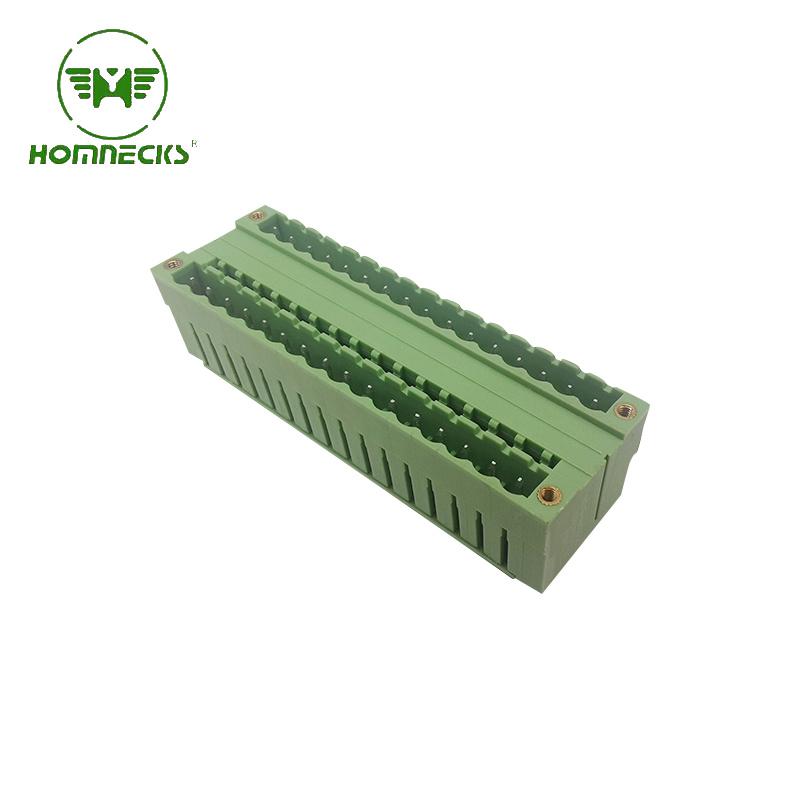
Brand:HOMNECKS Crafted with utmost precision and adhering to the highest industry standards, our 5.08mm Pitch Dual Row Straight Needle Terminal boasts exceptional reliability and durability. This makes it a perfect choice for your diverse range of electronic applications.
Details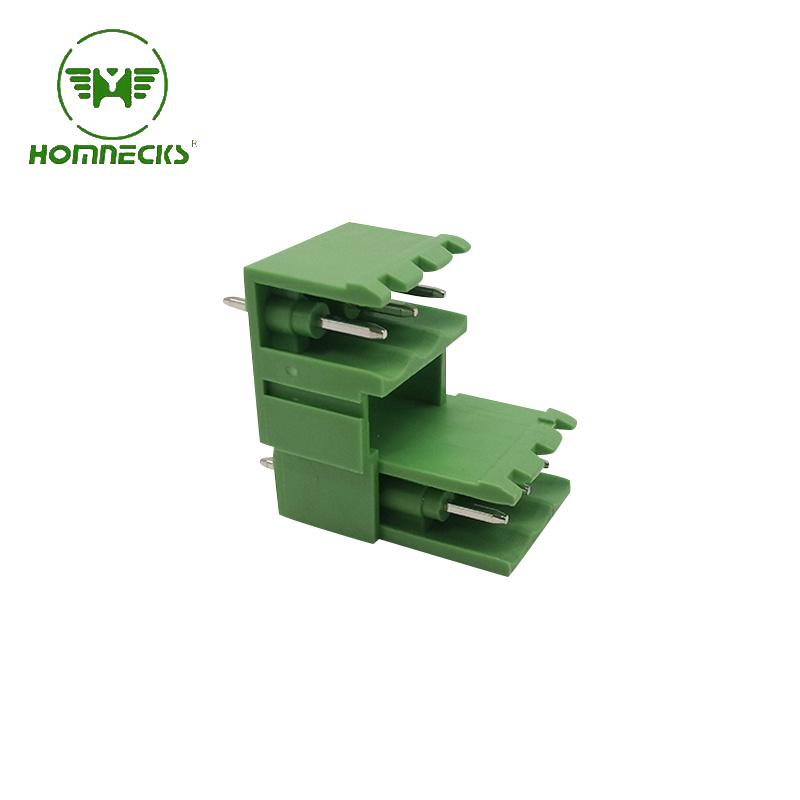
Brand:HOMNECKS 5.08 Dual Row Pluggable Straight Needle Terminal revolutionizes the way you operate in the world of electrical engineering.
Details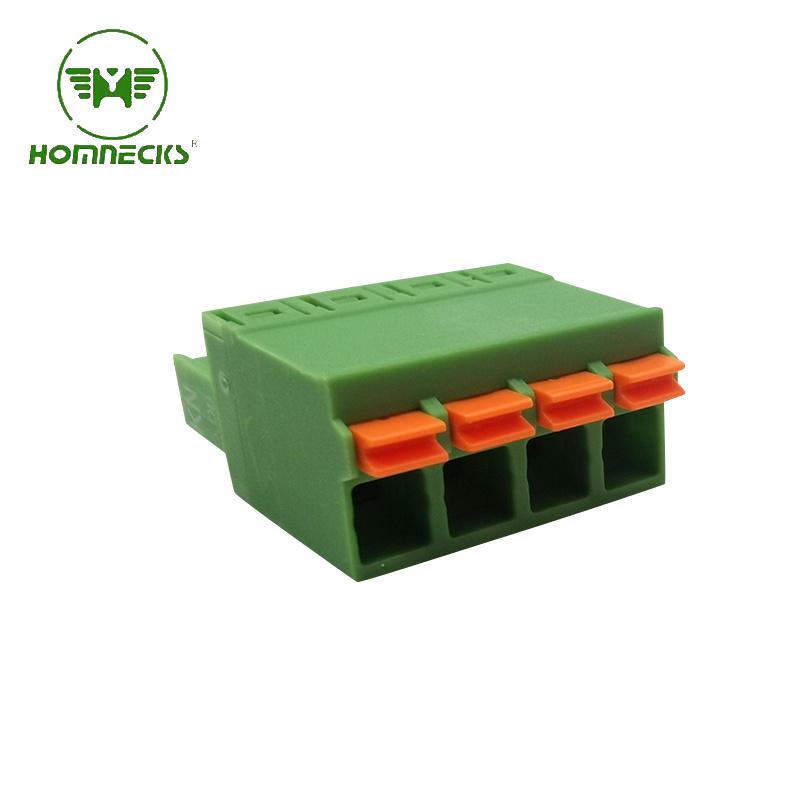
Brand:HOMNECKS Head for Pluggable Terminal Block , 5.08 Pitch,Screwless Numble Of Pole: we can make from 2P to 24P
Details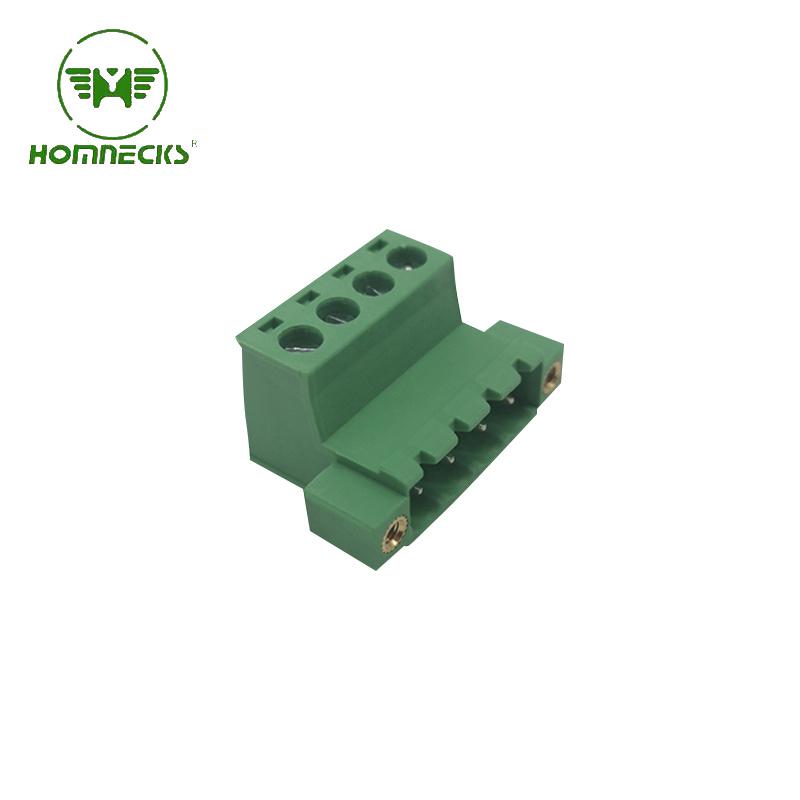
Brand:HOMNECKS 5.08 Pitch Pluggable Terminal Block Numble Of Pole: we can make from 2P to 24P
Details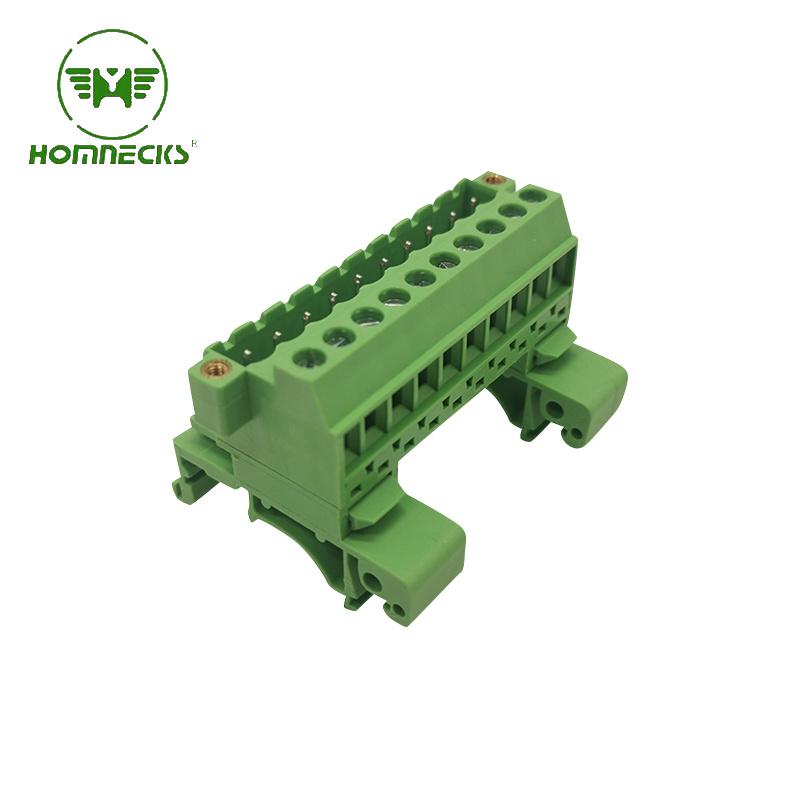
Brand:HOMNECKS Rail Plug-in type terminal block H2EUDBM-5.08
Details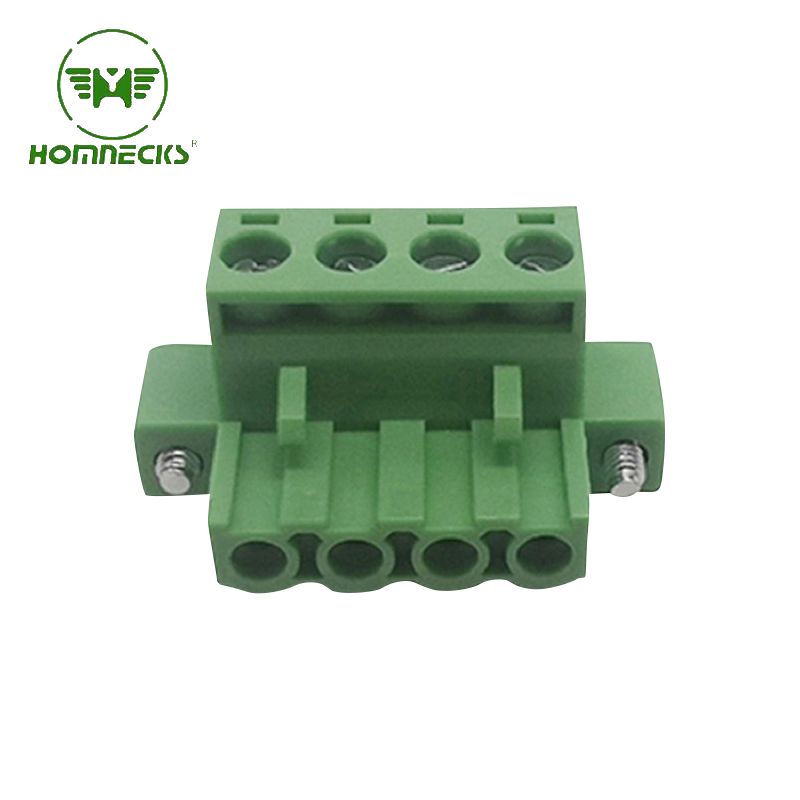
Brand:HOMNECKS Crafted with utmost precision, the housing is constructed from flame-retardant PA66 material, guaranteeing superior fire resistance. Complementing this, the metal components are expertly manufactured using copper plated with nickel, endowing the terminal with exceptional electrical conductivity.
Details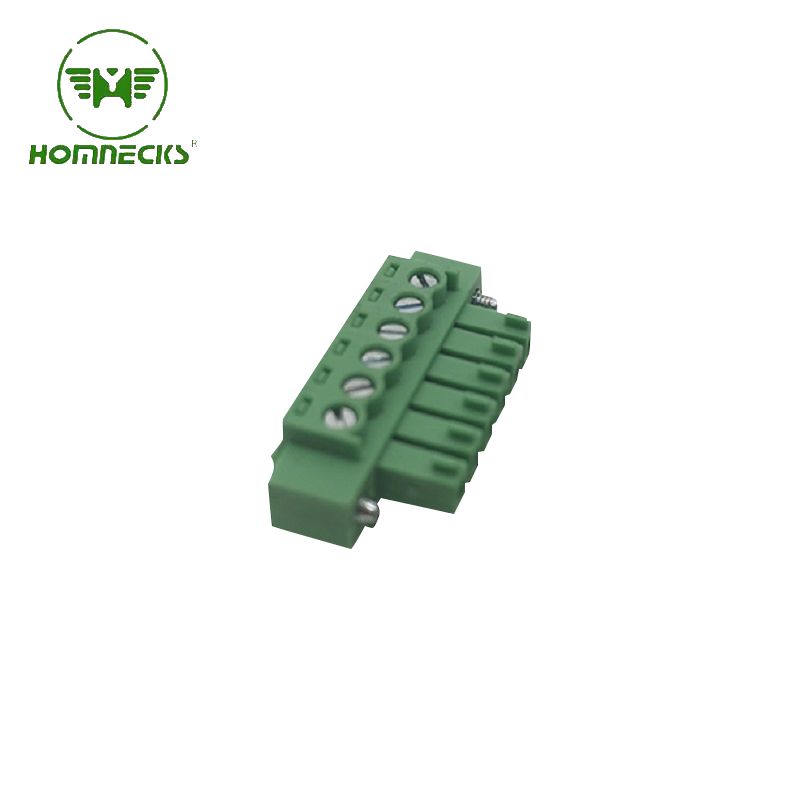
Brand:HOMNECKS Embrace professionalism and technical prowess with this phenomenal 3.81mm pitch PCB terminal. Take advantage of its remarkable features and unleash the full potential of your electronic endeavors. Experience excellence. Experience reliability. Experience progress.
Details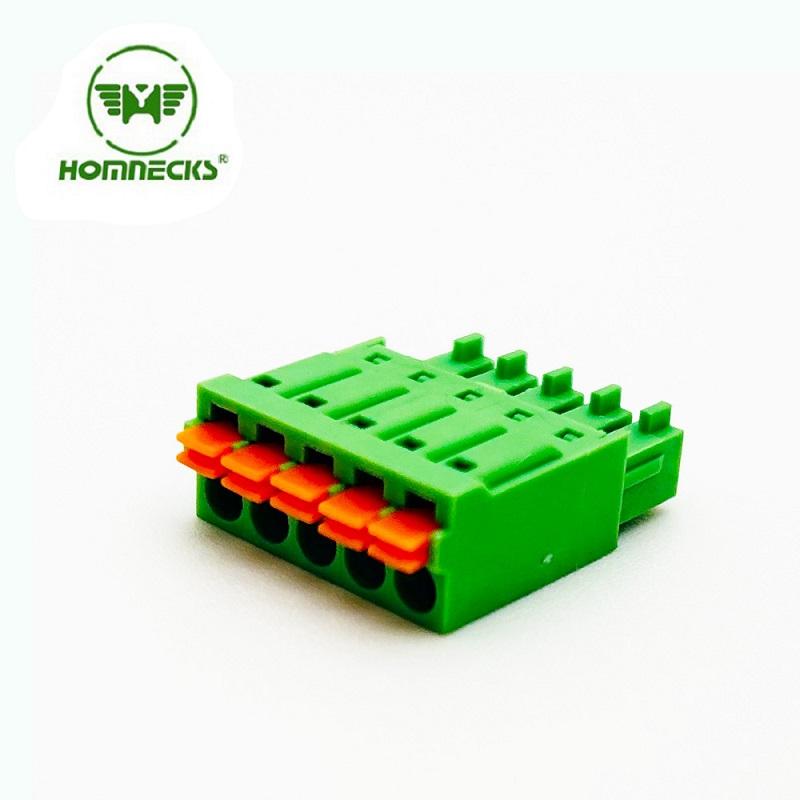
Brand:HOMNECKS 3.5mm pitch screw-less terminal connectors! Designed to optimize efficiency in your electrical projects
Details Contact Us
Signup our newsletter to get update information, promotion and insight.



 IPv6 network supported